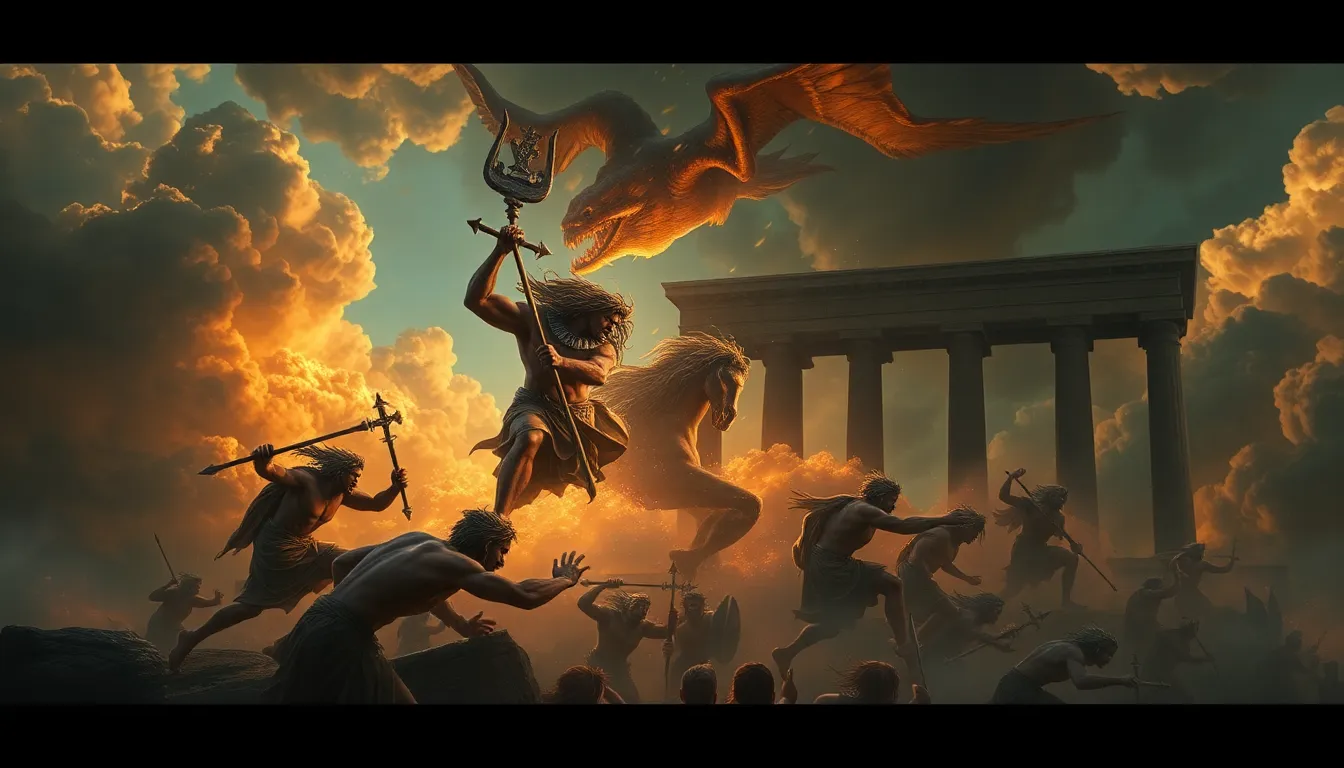
The Titanomachy: The Titans’ Struggle Against the Olympians
I. Introduction
The Titanomachy is one of the most significant events in Greek mythology, representing the epic struggle between the Titans, the elder deities, and the Olympians, the younger gods. This monumental conflict not only shaped the pantheon of Greek gods but also set the stage for the moral and philosophical underpinnings of ancient Greek culture. Through this article, we will explore the origins of the Titans, the rise of the Olympians, the war itself, and the aftermath of the Titanomachy.
II. The Titans: Origins and Characteristics
The Titans were a race of powerful deities who ruled during the legendary Golden Age. They were the children of Uranus (the sky) and Gaia (the earth), and their lineage is crucial to understanding their characteristics and powers.
A. Description of the Titans and their lineage
The Titans are often depicted as gigantic and formidable beings. Each Titan embodies specific natural forces or aspects of life. Their lineage is extensive, with twelve original Titans commonly recognized:
- Coeus – Titan of intelligence
- Crius – Titan of the constellations
- Hyperion – Titan of light
- Iapetus – Titan of mortality
- Theia – Titaness of sight and the bright sky
- Rhea – Titaness of fertility and motherhood
- Themis – Titaness of divine law and order
- Mnemosyne – Titaness of memory
- Phoebe – Titaness of prophecy and intellect
- Tethys – Titaness of the nourishing flow of water
- Oceanus – Titan of the ocean
- Cronus – The leader of the Titans
B. Major Titans and their domains
Each Titan had particular domains that they presided over, influencing various aspects of the natural world and human life:
- Cronus: God of time and harvest, known for his role in the overthrow of his father, Uranus.
- Rhea: Mother of the Olympians, representing fertility and motherhood.
- Oceanus: Personification of the ocean, often depicted as encircling the earth.
- Hyperion: Representing light, he was a father to the sun, moon, and dawn.
C. The role of Cronus and Rhea
Cronus and Rhea played pivotal roles in the Titanomachy. Cronus, fearful of being overthrown by his children, swallowed each of them at birth, while Rhea hid her youngest son, Zeus, to save him from this fate. Their actions set the stage for the eventual rebellion against the Titans.
III. The Olympians: Rise to Power
As the Titans reigned, a new generation of gods began to emerge, leading to the eventual rise of the Olympians.
A. Introduction of the Olympian gods
The Olympians were the children of Cronus and Rhea, consisting of twelve principal deities who would become the rulers of the new order. They were characterized by their human-like qualities, emotions, and relationships.
B. Key figures: Zeus, Hera, Poseidon, and others
The key figures among the Olympians include:
- Zeus: King of the gods, god of the sky and thunder.
- Hera: Queen of the gods, goddess of marriage and family.
- Poseidon: God of the sea, earthquakes, and horses.
- Demeter: Goddess of the harvest and agriculture.
- Hestia: Goddess of the hearth and domestic life.
- Athena: Goddess of wisdom and warfare.
- Apollo: God of the sun, music, poetry, and prophecy.
- Aphrodite: Goddess of love and beauty.
- Ares: God of war.
- Hephaestus: God of fire and craftsmanship.
- Hermes: Messenger of the gods, god of trade and thieves.
- Dionysus: God of wine, pleasure, and festivity.
C. The prophecy concerning the overthrow of Cronus
It was foretold that Cronus would be overthrown by one of his children. This prophecy, coupled with Rhea’s actions to save Zeus, fueled the tensions that would ultimately lead to the Titanomachy.
IV. The Prelude to War
Before the Titanomachy erupted, a series of events unfolded that heightened the conflict between the Titans and the Olympians.
A. The events leading up to the Titanomachy
After Zeus was saved, he grew up in secret, nurtured by Gaia and Rhea. Upon reaching adulthood, he devised a plan to free his siblings from Cronus’s stomach and rally them for a rebellion. He gave Cronus a potion that forced him to regurgitate his swallowed children, who joined him in the fight against their father.
B. Conflicts and tensions between Titans and Olympians
As the Olympians gathered their forces, tensions escalated. The Titans, feeling threatened by the uprising, prepared for war. Key Titans like Atlas and Prometheus took sides, with Prometheus choosing to aid the Olympians.
C. Role of Prometheus and other dissenting Titans
Prometheus, known for his intelligence and foresight, sided with Zeus, believing in the Olympians’ cause. His actions would have lasting repercussions, as he later stole fire from the gods to give to humanity, incurring the wrath of Zeus.
V. The War of the Titans
The Titanomachy was a ten-year-long war filled with epic battles and divine strategies.
A. Description of the battles and key strategies employed
The Olympians, with Zeus at the helm, launched a series of attacks against the Titans. They were aided by various beings, including the Cyclopes and the Hecatoncheires, who were imprisoned by Cronus.
B. Key events and turning points in the conflict
One of the significant turning points was when the Cyclopes, in gratitude for their release, gifted Zeus with thunderbolts, which became his primary weapon. This powerful tool turned the tide in favor of the Olympians.
C. Major battles and the involvement of monsters and allies
The battles were fierce, with both sides suffering heavy losses. Major encounters included:
- The Battle of the Titans at Mount Olympus
- The conflict in the depths of Tartarus, where the Titans were eventually imprisoned
- The alliance of the Giants and monsters, who fought alongside the Titans but were ultimately defeated
VI. The Aftermath of the Titanomachy
With the defeat of the Titans, a new order emerged in the Greek pantheon.
A. The defeat of the Titans and their punishment
The Titans were vanquished and imprisoned in Tartarus, a deep abyss used as a dungeon of torment. Cronus, once a feared ruler, was now shackled and powerless, symbolizing the end of his tyrannical reign.
B. Establishment of the Olympian order
With the Titans defeated, the Olympians established their rule from Mount Olympus, creating a new hierarchy of gods. Zeus became the king, and a new era of mythology began, characterized by the exploits of the Olympians and their interactions with humanity.
C. Impact on the world of Greek mythology
The Titanomachy set the stage for many subsequent myths and stories. It established themes of power, rebellion, and the cyclical nature of history, influencing countless works of literature and art throughout the ages.
VII. Thematic Analysis of the Titanomachy
The Titanomachy is