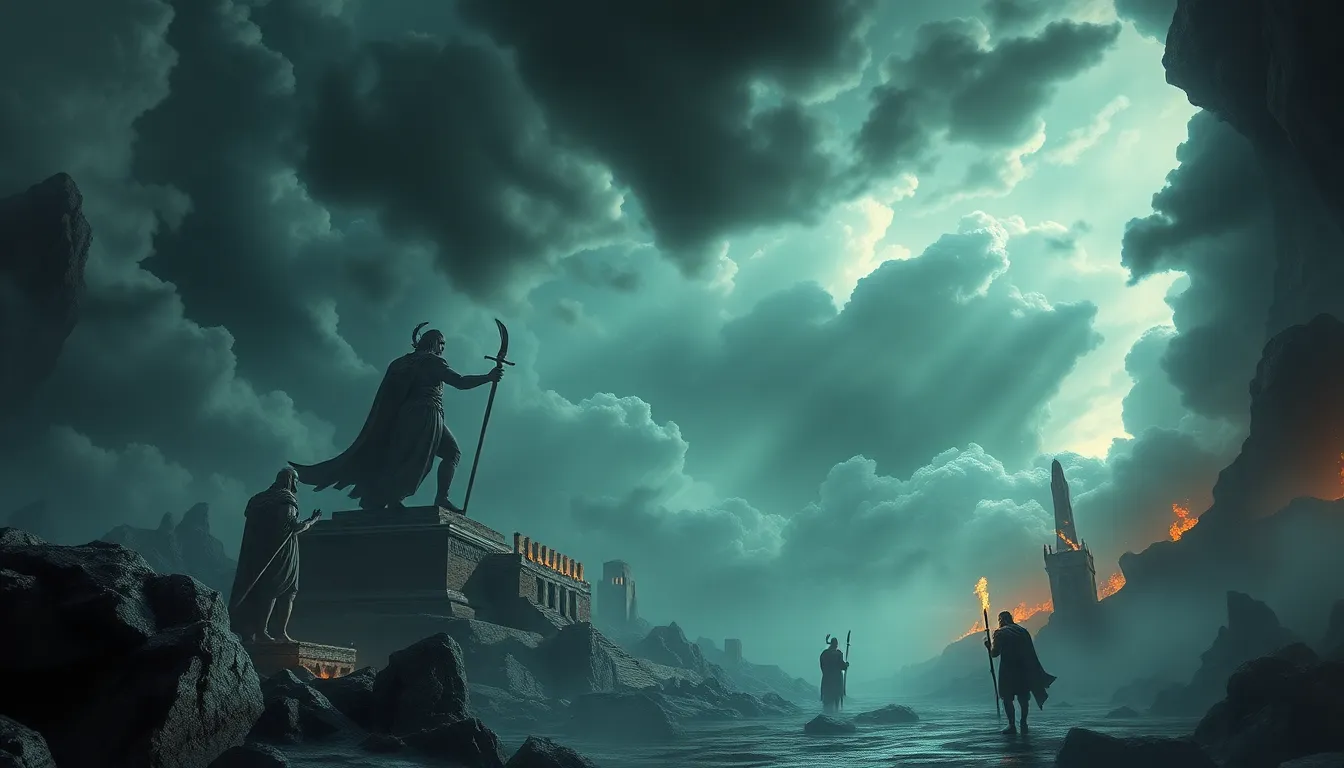
The Titanomachy: The War for the Throne of the Gods
I. Introduction to the Titanomachy
The Titanomachy refers to the legendary war between the Titans, the elder gods, and the younger Olympian gods led by Zeus. This monumental conflict holds a significant place in Greek mythology, symbolizing the transition of power from one generation of deities to another. The Titanomachy encapsulates themes of rebellion, authority, and the struggle for supremacy, providing deep insights into the character and dynamics of the Olympian gods.
This war is pivotal for understanding not only the relationships among the gods but also the cultural values and narratives that shaped ancient Greek society. By exploring the Titanomachy, one can unravel the complexities of divine authority and its implications on both the mortal and immortal realms.
II. The Titans: Rulers of the Primordial World
The Titans were the offspring of Gaia (Earth) and Uranus (Sky), representing the primordial forces of nature. They were a race of powerful deities, each embodying different aspects of the world. The twelve original Titans included:
- Cronus
- Rhea
- Oceanus
- Tethys
- Hyperion
- Theia
- Coeus
- Phoebe
- Iapetus
- Themis
- Mnemosyne
- Chronos
Among these, Cronus and Rhea played crucial roles in the events leading to the Titanomachy. Cronus, fearing a prophecy that foretold his overthrow by his own child, devoured each of his offspring. Rhea, seeking to save her youngest son, Zeus, hid him away and tricked Cronus into swallowing a stone instead.
The Titans’ reign was characterized by their immense power and control over the cosmos. They represented the forces of nature and were often depicted as more archaic and less sophisticated than their Olympian successors.
III. The Rise of the Olympians
The Olympians, led by Zeus, emerged as the new generation of gods who would eventually challenge the Titans for supremacy. They were the children of Cronus and Rhea, and included:
- Zeus
- Hera
- Poseidon
- Demeter
- Hestia</li
- Hades
The prophecy that ignited the conflict was pivotal; it stated that one of Cronus’s children would overthrow him. This prophecy drove Cronus to paranoia, leading him to consume his children. However, Zeus’s survival and eventual rebellion against Cronus set the stage for the Titanomachy.

IV. The Prelude to War: Tensions and Alliances
As the Olympians grew in power and number, tensions escalated between them and the Titans. The dissatisfaction among the younger gods fueled their desire for freedom and authority. Key events leading up to the war included:
- Rhea’s concealment of Zeus and the rescue of his siblings.
- The growing unrest among the younger gods regarding Cronus’s tyrannical rule.
- Zeus’s gathering of allies, including the Cyclopes and the Hecatoncheires, who were imprisoned by Cronus.
The Cyclopes, known for their craftsmanship, gifted Zeus with the thunderbolt, a powerful weapon that would play a crucial role in the upcoming battle. The Hecatoncheires, with their hundred arms, provided immense strength and support to the Olympians.
V. The Great Battle: Key Events and Strategies
The Titanomachy took place over a decade on the plains of Thessaly. The battlefield was marked by chaos and destruction, as the Titans and Olympians clashed in a titanic struggle for supremacy. The key events and strategies included:
- The Initial Assault: The Olympians launched a surprise attack, catching the Titans off guard.
- The Titans’ Counterattack: Utilizing their immense size and power, the Titans retaliated fiercely, leading to massive confrontations.
- Turning Points: The introduction of Zeus’s thunderbolt and the Hecatoncheires’ overwhelming strength turned the tide in favor of the Olympians.
One of the most notable moments was when Zeus unleashed his thunderbolts, causing devastation among the Titans. The combined might of the Olympians, bolstered by their allies, ultimately overwhelmed the Titans, marking a significant shift in the balance of power.
VI. The Aftermath of the Titanomachy
The Titanomachy concluded with the defeat of the Titans, leading to profound consequences for both the victors and the vanquished. The aftermath saw:
- The imprisonment of the Titans in Tartarus, a deep abyss used as a dungeon of torment.
- The establishment of Zeus as the supreme ruler of the gods, solidifying the Olympian order.
- The distribution of realms among the Olympians, with Zeus taking the sky, Poseidon the sea, and Hades the underworld.
This new order marked the beginning of the Age of the Olympians, where they would reign over both mortals and other divine beings, establishing a pantheon that would influence Greek religion and culture for centuries.
VII. Cultural Impact and Legacy of the Titanomachy
The Titanomachy has left an indelible mark on ancient Greek literature and art, symbolizing the eternal conflict between generations. Key influences include:
- Literature: The Titanomachy is referenced in works by Hesiod, particularly in “Theogony,” which details the genealogy of the gods and the events of the war.
- Art: Numerous ancient artifacts depict scenes from the Titanomachy, showcasing the dramatic clashes and the might of the gods.
- Modern Adaptations: The themes of the Titanomachy resonate in contemporary literature, film, and art, often symbolizing struggles for power and authority.
The Titanomachy serves as a powerful metaphor for generational conflict, representing the inevitable transition of power and the cyclical nature of authority.
VIII. Conclusion: The Enduring Significance of the Titanomachy
In summary, the Titanomachy embodies key themes of rebellion, power dynamics, and the evolution of authority within Greek mythology. It highlights the struggles faced by each generation as they seek to assert their dominance over the previous one.
As we reflect on the Titanomachy, we can draw parallels to contemporary discussions about power, governance, and the conflicts that arise when new ideas challenge established norms. The legacy of the Titanomachy endures, reminding us of the complexities of power and the timeless nature of myth. It remains a cornerstone of Greek mythology and continues to influence cultural narratives around the world.