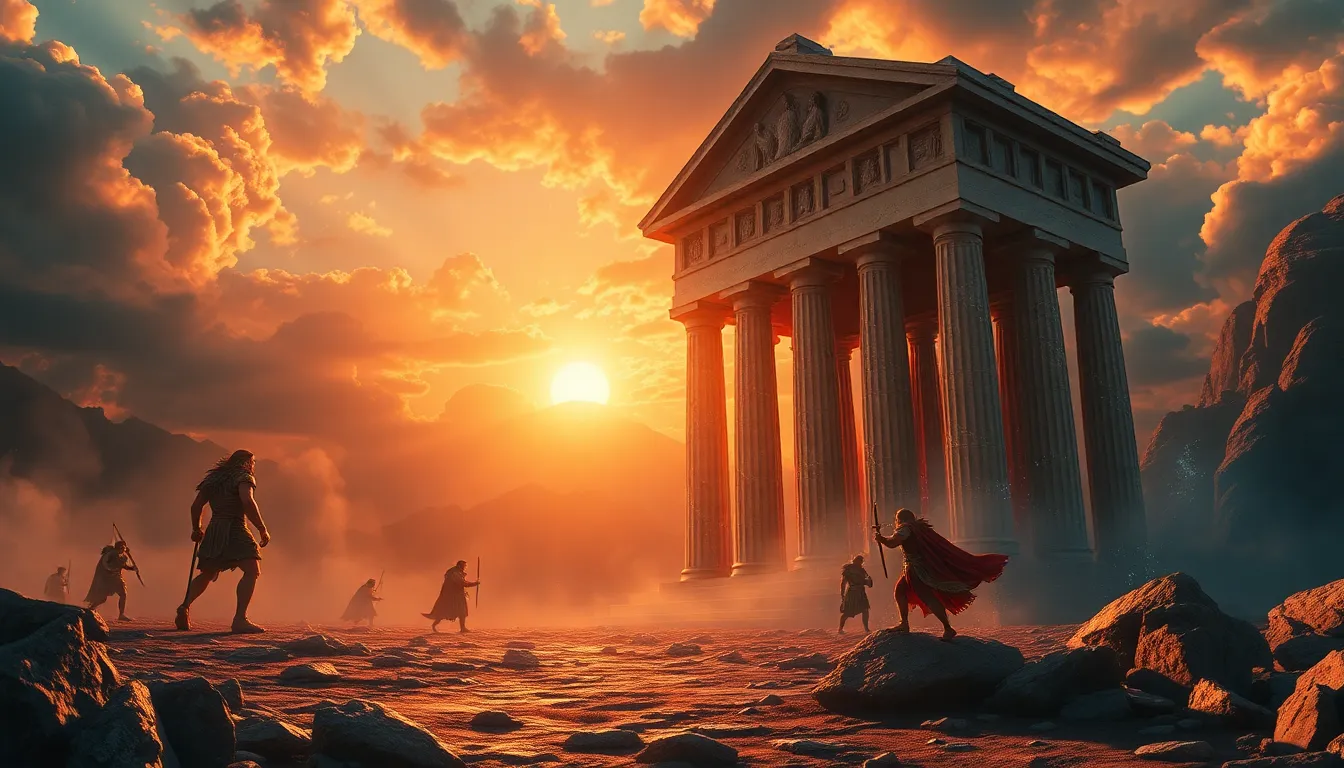
The Titanomachy: The War That Changed the Fate of the Gods
I. Introduction
The Titanomachy, a monumental conflict in Greek mythology, represents the epic battle between the Titans, the elder gods, and the Olympians, led by Zeus. This cataclysmic war not only determined the fate of the divine hierarchy but also reshaped the cosmos itself. Understanding the Titanomachy is crucial for grasping the fundamental dynamics of power, rebellion, and destiny within Greek mythological narratives.
In this article, we will explore the origins of the Titans, the rise of Zeus and the Olympians, the events leading up to the war, the course of the conflict, its aftermath, and its lasting cultural legacy. By delving into these aspects, we can appreciate the profound significance of the Titanomachy in shaping not only the pantheon of gods but also the moral and philosophical underpinnings of ancient Greek culture.
II. The Origins of the Titans
The Titans were the primordial beings who ruled during the Golden Age before the rise of the Olympians. They were descendants of Gaia (the Earth) and Uranus (the Sky), and their generation embodied the forces of nature and the fundamental principles of existence.
A. Description of the Titan generation
The Titans were twelve in number, often referred to as the first generation of deities:
- Oceanus
- Coeus
- Crius
- Hyperion
- Theia
- Rhea
- Themis
- Mnemosyne
- Phoebe
- Chronos
- Iapetus
- Atlas
These Titans personified various aspects of the universe, such as the ocean, intelligence, and memory, and played a vital role in the myths that followed.

B. Key figures: Cronus, Rhea, and their progeny
Among the Titans, Cronus and Rhea stand out as pivotal figures. Cronus, the youngest of the Titans, overthrew his father Uranus, becoming the ruler of the cosmos. He married his sister Rhea, and together they bore several children, including:
- Hestia
- Demeter
- Hera
- Hades
- Poseidon
- Zeus
However, fearing a prophecy that one of his children would overthrow him, Cronus swallowed each of them at birth, leading to a complex familial conflict that would set the stage for the Titanomachy.
C. Relationship between Titans and the Olympian gods
The relationship between the Titans and the Olympians was fraught with tension. The Olympians, led by Zeus, were destined to challenge the authority of the Titans, reshaping the divine order. This conflict was rooted in themes of power and destiny, as the younger generation sought to overthrow the established order represented by their Titan predecessors.
III. The Rise of Zeus and the Olympians
A. The prophecy and its implications for Cronus
The prophecy that foretold Cronus’s downfall was central to the Titanomachy. It stated that one of his children would dethrone him, leading Cronus to take drastic measures to prevent it. This act of paranoia resulted in the devouring of his offspring, but Rhea, determined to save her youngest son, Zeus, devised a plan.
B. Zeus’s upbringing and the gathering of allies
Rhea hid Zeus in a cave on the island of Crete, where he was raised by nymphs and nourished with the milk of the divine goat, Amalthea. As Zeus grew, he learned of his fate and sought to gather allies to challenge Cronus. He enlisted the help of:
- Metis, the goddess of wisdom
- Hecate, the goddess of magic
- The Cyclopes, who forged powerful weapons
These alliances would prove vital in the impending conflict against the Titans.
C. The formation of the Olympian coalition against the Titans
With the help of the Cyclopes, Zeus obtained the thunderbolt, a weapon that would become synonymous with his power. Together with his siblings, who he freed from Cronus’s belly after making him regurgitate them, they formed a coalition of Olympians ready to confront the Titans.
IV. The Prelude to War
A. Tensions between Titans and Olympians
The stage was set for a monumental clash as tensions escalated between the Titans and the newly formed coalition of Olympians. The Titans, confident in their strength and experience, were unwilling to yield their power to their younger counterparts.
B. Key events leading up to the Titanomachy
Several key events led to the eruption of war:
- Zeus’s declaration of war after rallying his siblings and allies.
- The Titan’s refusal to relinquish their power and the increasing hostility between the two factions.
- Gaia’s involvement, as she encouraged her children, the Titans, to fight against the Olympians.
C. The role of Gaia and Uranus in the conflict
Gaia, the Earth, played a dual role in the conflict, as she was the mother of both the Titans and the Olympians. She supported the Titans initially but later shifted her allegiance to Zeus, recognizing the potential of the Olympians to bring a new order. Uranus, on the other hand, remained largely uninvolved, having been overthrown by Cronus earlier in mythological history.
V. The Course of the Titanomachy
A. Major battles and strategies employed by both sides
The Titanomachy lasted for a decade, characterized by fierce battles and strategic maneuvers. Both sides employed various tactics, with the Olympians using their newfound powers and alliances to gain the upper hand.
- The Titans fought valiantly, relying on their brute strength and experience.
- The Olympians utilized lightning bolts, cunning strategies, and the support of their monstrous allies.
B. The involvement of monstrous allies and other deities
Throughout the war, both sides sought additional allies. The Olympians were joined by:
- The Cyclopes, who provided them with formidable weapons.
- The Hecatoncheires, the hundred-handed giants, who played a crucial role in the battles.
Meanwhile, some Titans, such as Atlas, remained fiercely loyal to Cronus, lending their strength to the Titan cause.
C. Turning points in the war
Several significant events marked turning points in the Titanomachy:
- The Titans initially held the upper hand due to their sheer numbers and power.
- However, the Olympians gained momentum when Zeus unleashed his thunderbolt, creating havoc among the Titans.
- The arrival of the Hecatoncheires, who overwhelmed the Titans with their strength, shifted the tide of the battle.
VI. The Aftermath and Consequences
A. The defeat of the Titans and imprisonment in Tartarus
The Titanomachy culminated in a decisive victory for the Olympians. The Titans were defeated and subsequently imprisoned in Tartarus, a deep abyss that served as a dungeon for the vanquished. This marked the end of the Titan rule and the dawn of the Olympian age.
B. The establishment of Zeus’s rule and the new order of the Olympians
With the Titans vanquished, Zeus ascended as the supreme ruler of the gods. He established a new order, with the Olympians taking their place on Mount Olympus, where they would govern the universe and interact with mortals. This shift in power also led to the creation of new myths and the redefinition of divine relationships.
C. The impact on the relationships among gods and mortals
The aftermath of the Titanomachy significantly affected relationships among gods and mortals. The Olympians were seen as more approachable and relatable, often intervening in human affairs, unlike their Titan predecessors. This change fostered a new dynamic in Greek mythology, emphasizing themes of justice, retribution, and the favor of the gods.
VII. Cultural Legacy of the Titanomachy
A. Interpretations in ancient literature and art
The Titanomachy has been depicted