The Titanomachy: The War That Defined Ancient Greek Beliefs
I. Introduction
The Titanomachy, the epic war between the Titans and the Olympians, stands as one of the most pivotal events in Greek mythology. This monumental conflict not only shaped the landscape of divine power in ancient Greece but also echoed throughout the culture, reflecting the values, fears, and aspirations of the people. The Titanomachy represents a struggle for supremacy that highlights themes of power, betrayal, and the eternal conflict between generations. This article aims to explore the mythological context, causes, major events, and the profound cultural impact of the Titanomachy, providing a comprehensive understanding of its significance in the tapestry of Greek mythology.
II. The Mythological Context of the Titanomachy
A. Origins of the Titans and Olympians
The Titans were the primordial beings born from Gaia (Earth) and Uranus (Sky), representing the first generation of gods in Greek mythology. They were powerful entities, associated with various aspects of the natural world and human experience. The Olympians, led by Zeus, were their descendants, emerging from the union of the Titans and various other divine entities. The chief conflict arose when the younger generation sought to overthrow their elders, challenging the established order.
B. Key figures in the conflict
- Zeus: The chief of the Olympians and god of the sky, who led the rebellion against Cronus.
- Cronus: The leader of the Titans, who feared being overthrown by his own children.
- Gaia: The Earth goddess, whose actions significantly influenced the course of the war.
- Rhea: Cronus’s wife and mother of the Olympians, who aided Zeus in his quest.
C. The role of prophecy and fate
Prophecy plays a crucial role in the Titanomachy. A prophecy foretold that Cronus would be overthrown by one of his children, leading him to swallow each of them at birth. However, Rhea saved Zeus by hiding him, setting the stage for the eventual conflict. The theme of fate versus free will is prevalent, as the characters struggle against the prophecies that dictate their actions, showcasing the intricate relationship between destiny and personal choice in Greek mythology.
III. The Causes of the Titanomachy
A. The desire for power and control
The Titanomachy was fundamentally driven by the desire for power. Cronus’s tyrannical rule over the Titans created a climate of fear and resentment among his children, who longed for autonomy and control over their destinies. The Olympians, led by Zeus, sought to establish a new order that would allow them to rule without the oppressive shadow of their father.
B. Conflicts between generations of gods
This generational conflict is a recurring theme in mythology, illustrating the inevitable clash between the old and the new. The Titans, representing the old guard, were challenged by the Olympians, symbolizing innovation and change. This struggle is not only a literal battle for supremacy but also an allegory for the natural progression of time and the evolution of belief systems.
C. The influence of Gaia and Uranus
Gaia and Uranus played pivotal roles in the events leading to the Titanomachy. Gaia, disillusioned with Uranus’s tyranny, urged her children to rebel against him, leading to the birth of the Titans. Similarly, her support for Zeus and the Olympians during the Titanomachy underscores her influence as a primordial force of nature. The duality of creation and destruction embodied by Gaia is a central theme in the mythology surrounding this conflict.
IV. Major Events of the Titanomachy
A. Key battles and strategies employed
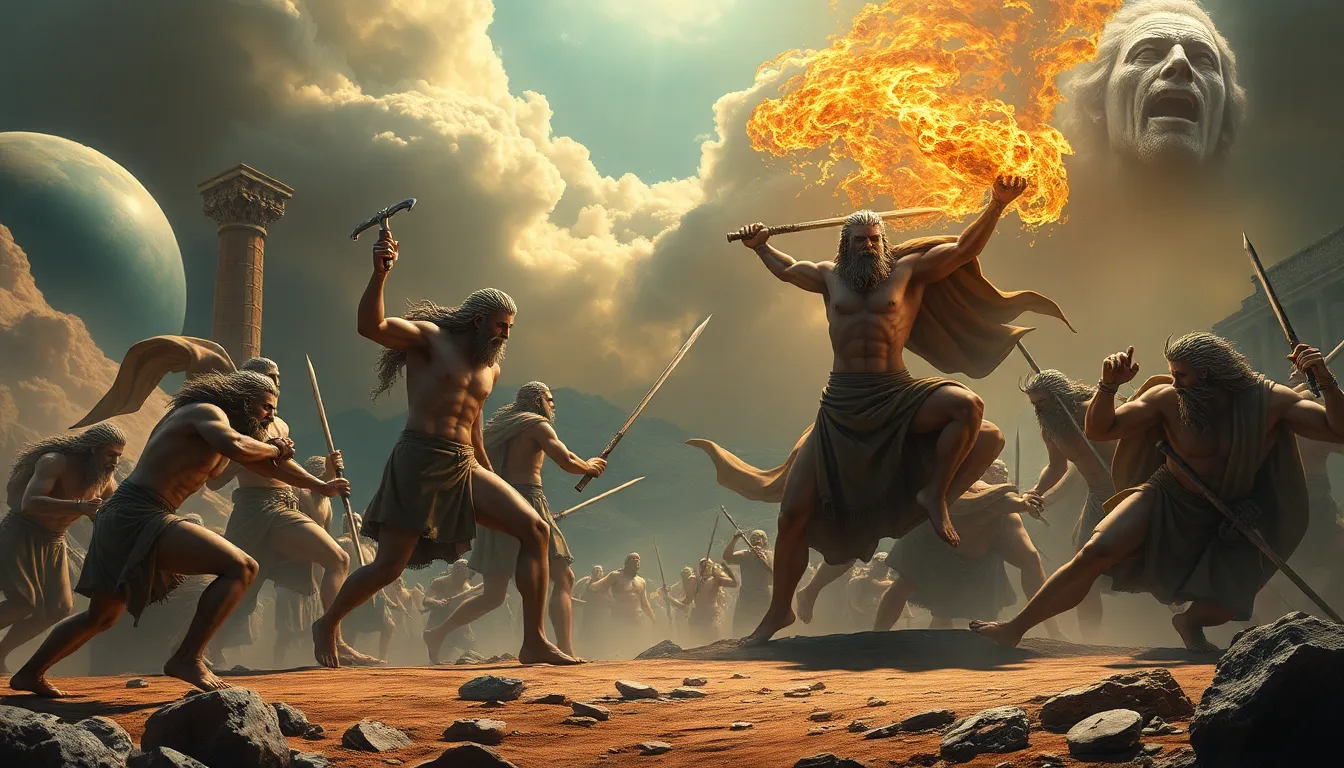
The Titanomachy lasted for ten years, characterized by numerous battles between the Titans and the Olympians. The Olympians, initially outmatched, sought alliances with other beings, including the Cyclopes and the Hecatoncheires, who provided them with crucial support. The Cyclopes gifted Zeus his thunderbolt, while the Hecatoncheires fought with their hundred hands, turning the tide of battle in favor of the Olympians.
B. The role of notable characters (e.g., Zeus, Cronus)
- Zeus: As the leader of the Olympians, he orchestrated the rebellion and ultimately defeated Cronus.
- Cronus: His fear of losing power led him to make irrational decisions, ultimately contributing to his downfall.
- Rhea: Her actions in saving Zeus were critical in the Olympians’ victory, highlighting her role as a protector.
C. The significance of allies and enemies
Alliances were crucial during the Titanomachy. The support of the Cyclopes and the Hecatoncheires not only provided the Olympians with formidable strength but also symbolized the importance of unity in the face of adversity. Conversely, the Titans’ inability to maintain their dominance and their failure to secure similar alliances contributed to their defeat.
V. The Aftermath of the Titanomachy
A. The establishment of the Olympian order
With the defeat of the Titans, the Olympians established a new order of gods, with Zeus reigning as the supreme deity. This transition marked a significant shift in divine authority, as the Olympians began to assume control over various aspects of life, including justice, war, and the harvest. The establishment of this new pantheon laid the groundwork for the beliefs and practices of ancient Greek religion.
B. The fate of the defeated Titans
The defeated Titans faced various fates. Many were imprisoned in Tartarus, a deep abyss used as a dungeon of torment. Some, like Atlas, were condemned to hold up the heavens, while others were allowed to roam free but were stripped of their former powers. This punishment reflected the consequences of their rebellion and served as a cautionary tale about the dangers of hubris.
C. Changes in divine hierarchy and power dynamics
The Titanomachy resulted in a profound change in the divine hierarchy. The Olympians, once overshadowed by the Titans, emerged as the new ruling class, establishing a pantheon that would dominate Greek mythology for centuries. This shift not only altered the power dynamics among the gods but also influenced the relationships between gods and mortals, as the Olympians were more directly involved in human affairs than their predecessors.
VI. Cultural Impact of the Titanomachy
A. Reflections in literature and art
The Titanomachy has inspired countless works of literature and art throughout history. Poets like Hesiod and Homer referenced the conflict in their epics, emphasizing its importance in the collective consciousness of ancient Greeks. Artists depicted scenes from the Titanomachy in pottery, sculpture, and frescoes, capturing the drama and intensity of the battles between the Titans and Olympians.
B. Influence on Greek religion and rituals
The war and its aftermath influenced Greek religious practices and rituals. The Olympian gods became central figures in worship, with temples dedicated to them across the Greek world. Festivals celebrated their victories and reinforced the narrative of the Titanomachy, reminding worshippers of the triumph of order over chaos.
C. The Titanomachy in modern interpretations
In contemporary times, the Titanomachy continues to resonate, serving as a metaphor for various struggles in society. Numerous adaptations in literature, film, and other media have reinterpreted the themes of the Titanomachy, showcasing its relevance to modern audiences. The conflict symbolizes the perpetual human struggle for power and the consequences of ambition and betrayal.
VII. The Symbolism of the Titanomachy
A. Representation of chaos vs. order
The Titanomachy epitomizes the tension between chaos and order, a fundamental theme in Greek mythology. The Titans, representing primordial chaos, are ultimately subdued by the Olympians, who signify a new order. This conflict reflects humanity’s ongoing quest for stability in a world often characterized by uncertainty and upheaval.
B. Themes of power, betrayal, and justice
Power struggles and betrayal are central to the Titanomachy. Cronus’s fear of being overthrown leads him to betray his own children, while Zeus’s rise to power is marked by acts of rebellion and justice. These themes resonate deeply with human experiences, illustrating the complexities of relationships and the often tragic consequences of ambition.
C. The Titanomachy as a metaphor for