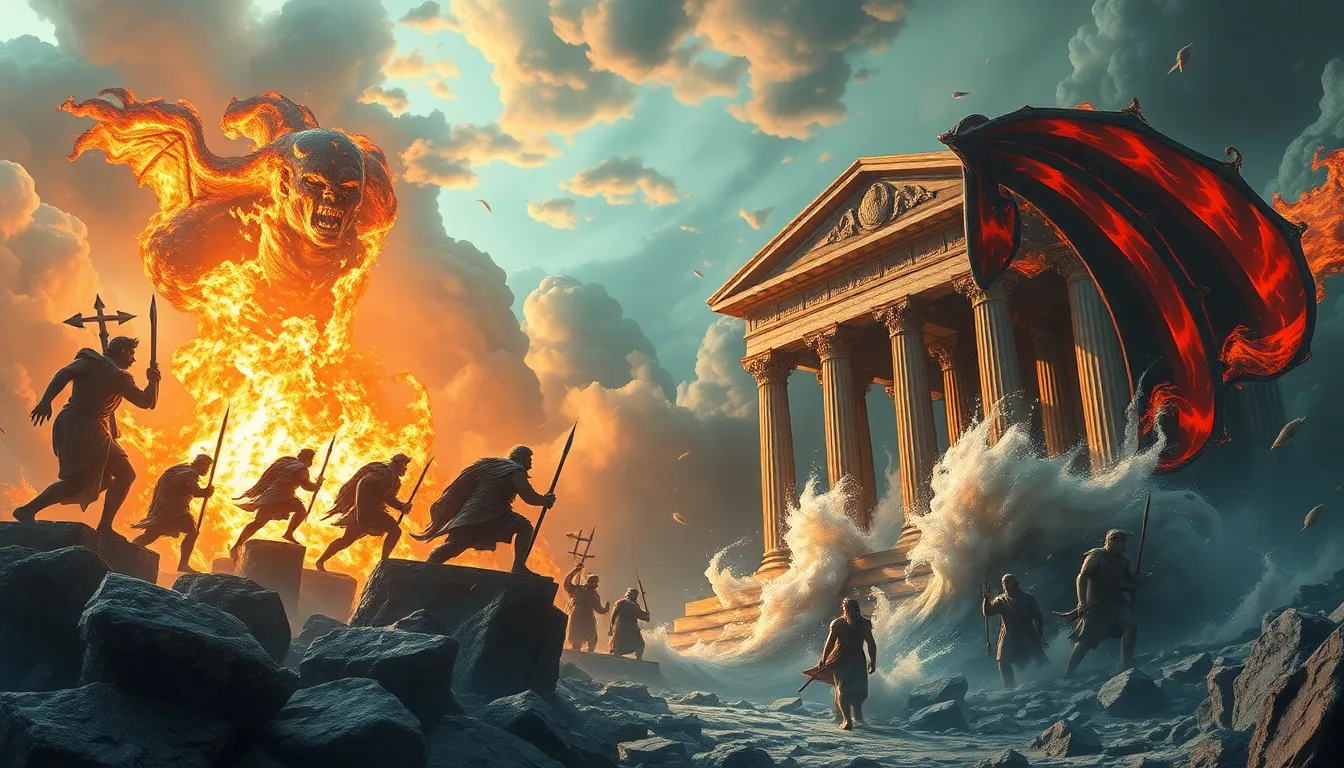
The Titanomachy: The War That Defined Good vs. Evil in Mythology
I. Introduction to the Titanomachy
The Titanomachy, a significant event in Greek mythology, is the legendary war between the Titans and the Olympian gods. This epic conflict not only represents the struggle for power among the divine beings but also embodies the broader themes of good versus evil that permeate ancient Greek narratives.
In the context of ancient Greece, mythology served as a means to explain natural phenomena, human behavior, and societal norms. The Titanomachy is particularly notable as it marks the transition from the primordial rule of the Titans to the more human-like Olympians, establishing a new moral order.
The war is crucial in defining concepts of good and evil, with the Olympians often viewed as the embodiments of order, justice, and civilization, while the Titans are frequently associated with chaos and tyranny. This dichotomy resonates deeply with human experiences and moral dilemmas, making the Titanomachy a timeless tale.
II. The Titans: Origins and Characteristics
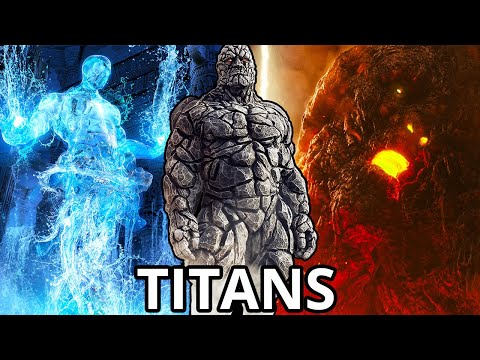
The Titans, the children of Gaia (the Earth) and Uranus (the Sky), are primordial beings who represent various aspects of the natural world. They are often depicted as gigantic and powerful figures, embodying the raw forces of nature. The most notable Titans include:
- Cronus: The leader of the Titans, associated with time and harvest.
- Rhea: The mother of the Olympian gods and goddess of fertility.
- Oceanus: The Titan god of the ocean, representing the vastness of the sea.
- Tethys: The goddess of the nourishing flow of water, wife of Oceanus.
- Hyperion: The Titan of light, often associated with the sun.
- Themis: The personification of divine order and law.
Before the conflict, the Titans ruled the cosmos, establishing an era of power and dominance. Their reign was characterized by a lack of order and governance, which ultimately sowed the seeds of discontent among their offspring and led to their downfall.
III. The Rise of the Olympians
The Olympian gods, descendants of the Titans, emerged as a new generation determined to challenge their forebears. The most prominent Olympians include:
- Zeus: The king of the gods, god of the sky and thunder.
- Hera: The queen of the gods, goddess of marriage and family.
- Poseidon: God of the sea, earthquakes, and horses.
- Demeter: Goddess of agriculture and the harvest.
- Athena: Goddess of wisdom and warfare.
- Apollon: God of the sun, music, and prophecy.
The Olympians were motivated by a desire for justice and order, as they perceived the Titans’ rule as oppressive and chaotic. This generational conflict was fueled by the Titans’ fear of being overthrown, leading to the eventual rebellion led by Zeus and his siblings.
IV. The Catalyst for War: Prophecy and Betrayal
The Titanomachy was precipitated by a powerful prophecy that foretold the downfall of Cronus and the rise of his children. Cronus, having overthrown his father Uranus, was deeply fearful of a similar fate. To prevent this, he swallowed each of his children at birth.
However, Rhea, desperate to save her youngest child, Zeus, hid him away in a cave on the island of Crete. She presented Cronus with a stone wrapped in swaddling clothes, which he swallowed, believing it to be his son.
This act of betrayal within the Titan ranks, coupled with the prophecy, created the perfect storm for war. Zeus, once grown, returned to challenge Cronus and liberate his siblings, igniting the conflict that would become known as the Titanomachy.
V. The Course of the Titanomachy
The Titanomachy was marked by a series of intense battles between the Titans and the Olympians. The war lasted for ten years and involved various strategies and alliances, notably:
- The Olympians secured the support of the Cyclopes and the Hecatoncheires, formidable creatures who provided them with powerful weapons.
- Zeus wielded the thunderbolt, a gift from the Cyclopes, which became a symbol of his power and authority.
- The Titans, led by Cronus, fought fiercely, utilizing their vast strength and experience.
Key events included the pivotal battle at Mount Olympus, where the tides of war shifted in favor of the Olympians due to their superior organization and the involvement of allied forces. The climactic confrontation eventually led to the defeat of the Titans, marking a significant turning point in mythology.
VI. The Aftermath: Consequences of the Titanomachy
The outcome of the Titanomachy had profound implications for both the Titans and the newly ascendant Olympians. The defeat of the Titans resulted in the establishment of Olympian rule, which brought about a new order characterized by laws, civilization, and the establishment of moral codes.
The fate of the Titans was grim; they were imprisoned in Tartarus, a deep abyss used as a dungeon of torment. This imprisonment served as a stark reminder of the consequences of tyranny and chaos.
Culturally and religiously, the Titanomachy reinforced the societal values of ancient Greece. The Olympians became central figures in worship and storytelling, embodying ideals such as heroism, justice, and the triumph of order over chaos.
VII. Themes of Good vs. Evil in the Titanomachy
The Titanomachy serves as a powerful narrative exploring the moral dichotomy between good and evil. The Titans, often portrayed as tyrants, symbolize chaos, oppression, and a disregard for natural order. In contrast, the Olympians represent the ideals of justice, order, and the advancement of civilization.
This conflict mirrors human struggles with morality, highlighting the complexities of good versus evil. The Titanomachy illustrates how power can corrupt and lead to downfall, while also showing the importance of resilience and the fight for justice.
Lessons drawn from this myth remain relevant today, as they encourage reflection on moral choices and the consequences of one’s actions in the quest for power and influence.
VIII. Conclusion: The Legacy of the Titanomachy
In conclusion, the Titanomachy stands as a monumental event in Greek mythology, symbolizing the eternal struggle between good and evil. Its significance extends beyond ancient narratives, influencing literature, art, and modern storytelling.
The themes of the Titanomachy resonate with contemporary audiences, serving as a reminder of the importance of justice, the dangers of tyranny, and the complex nature of morality. As we reflect on this ancient tale, we recognize its lasting legacy and relevance in our understanding of human nature and societal values.