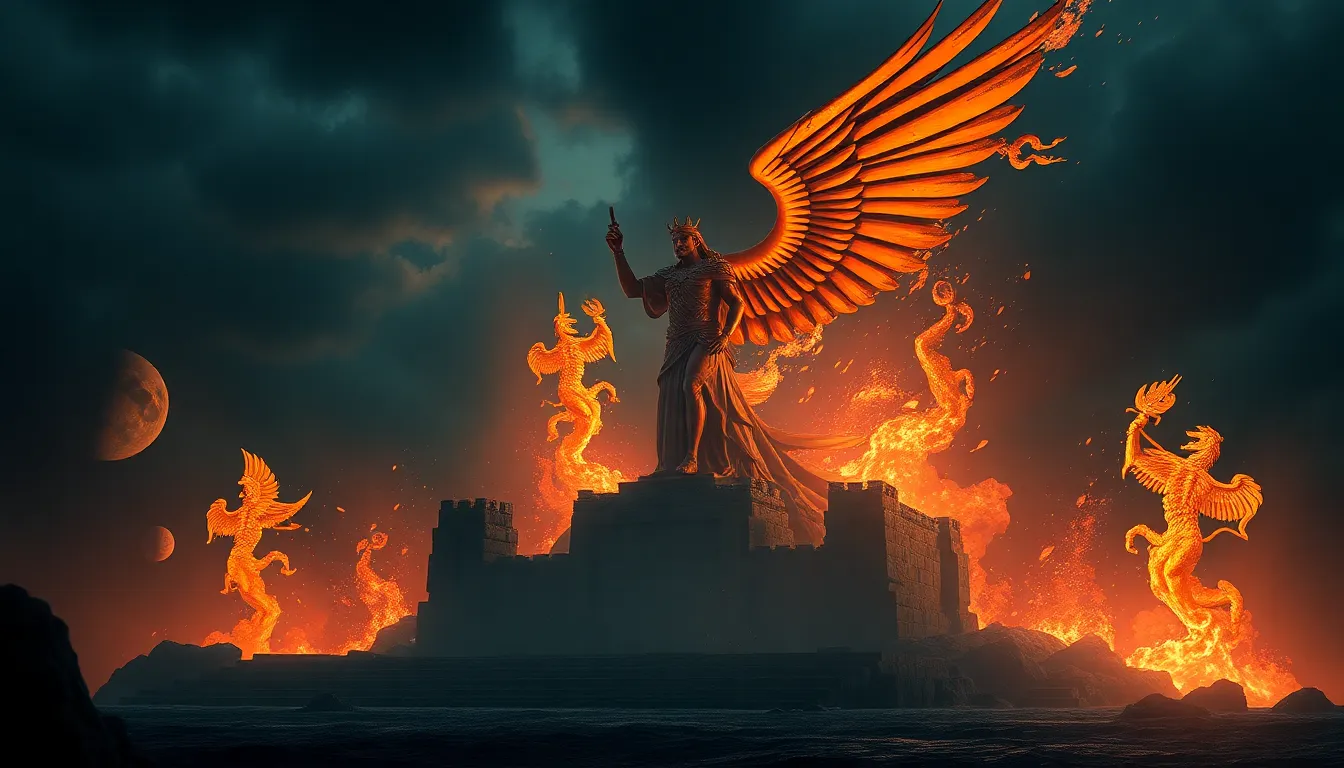
The Titanomachy: Unveiling the Secrets of the Great War
I. Introduction to the Titanomachy
The Titanomachy, a monumental conflict in Greek mythology, represents the epic battle between the Titans, the elder gods, and the Olympians, who were their descendants. This war is not merely a tale of conflict but signifies a pivotal transition in the ancient Greek cosmology and the establishment of a new order under the Olympian gods.
In this article, we will delve into the significance of the Titanomachy, exploring its mythological context and its importance in Greek literature and culture. The Titanomachy serves as a foundational myth that reflects themes of power, rebellion, and the struggle for supremacy among the divine beings of the ancient Greek pantheon.
II. The Titans vs. The Olympians
A. Who were the Titans?
The Titans were the primordial deities who ruled during the Golden Age of Greek mythology. They were the offspring of Uranus (the sky) and Gaia (the earth) and played a crucial role in the formation of the universe.
- Cronus: The leader of the Titans, associated with time and often depicted with a sickle.
- Rhea: The sister and wife of Cronus, known as the mother of the Olympian gods.
- Oceanus: The Titan of the ocean, representing the vast waters that encircled the earth.
- Tethys: The Titaness of the nourishing flow of fresh water, often depicted alongside Oceanus.
- Hyperion: The Titan of light, father of the sun, moon, and dawn.
- Themis: The Titaness of divine law and order, symbolizing justice.
The Titans personified various aspects of the natural world and were instrumental in the early creation of humanity and the cosmos.
B. Introduction of the Olympians
The Olympians emerged as the new ruling gods after the Titanomachy, led by Zeus, the youngest son of Cronus and Rhea. These deities were characterized by their distinct personalities, domains, and relationships with humanity.
- Zeus: The king of the gods, god of the sky and thunder.
- Hera: Zeus’s wife and sister, goddess of marriage and family.
- Poseidon: God of the sea, earthquakes, and horses.
- Demeter: Goddess of agriculture and the harvest.
- Athena: Goddess of wisdom and warfare, born from Zeus’s forehead.
- Apollo: God of the sun, music, and prophecy.
The transition from the Titans to the Olympians marks a significant evolution in the Greek pantheon, with the Olympians taking on more anthropomorphic qualities and complex relationships with humans.
III. The Causes of the Titanomachy
A. Power struggles within the divine hierarchy
The Titanomachy was fueled by intense power struggles among the gods. Cronus, fearing a prophecy that one of his children would overthrow him, swallowed each of his offspring at birth. Rhea, desperate to save her youngest son, Zeus, hid him in a cave and gave Cronus a stone wrapped in swaddling clothes instead.
B. The role of prophecy and fate
Prophecies played a crucial role in the events leading up to the Titanomachy. The oracle foretold that Cronus would be overthrown by his own son, driving him to paranoia and tyranny, ultimately leading to his downfall.
C. The influence of rebellion and ambition
The desire for freedom and power among the younger gods fueled the rebellion against the Titans. Zeus, aided by his siblings, sought to reclaim their rightful place in the cosmos, leading to the epic confrontation known as the Titanomachy.
IV. Key Events of the Titanomachy
A. Major battles and turning points
The Titanomachy lasted for ten years and was marked by several significant battles. The Olympians, initially disadvantaged, gained strength through strategic alliances and the support of powerful entities.
B. The involvement of key allies and neutral parties
Throughout the conflict, various allies played pivotal roles:
- The Cyclopes: Released from Tartarus by Zeus, they forged Zeus’s thunderbolts, his primary weapon.
- The Hecatoncheires: Hundred-handed giants who fought alongside the Olympians, providing immense strength.
- Prometheus: Although a Titan, he sided with the Olympians, bringing fire to humanity.
C. The role of Zeus and the lightning bolt
Zeus emerged as the central figure in the war, wielding his thunderbolt with devastating effect against the Titans. His leadership and determination rallied the Olympians and ultimately led to the defeat of Cronus and his followers.
V. The Aftermath of the Titanomachy
A. Consequences for the Titans and Olympians
With the defeat of the Titans, many were imprisoned in Tartarus, a deep abyss used as a dungeon of torment. Others, like Prometheus, faced severe punishment for their defiance. The Olympians established a new order, with Zeus reigning supreme.
B. The establishment of new order in the cosmos
The Titanomachy resulted in the establishment of the Olympian gods as the new rulers of the universe. This new order was characterized by a more structured divine hierarchy and a focus on human affairs.
C. Changes in divine governance and mythology
Post-war, the governance of the gods shifted significantly. The Olympians took on more relatable traits, engaging more directly with humanity and often intervening in mortal affairs, thus reshaping Greek mythology.
VI. Cultural Impact and Legacy
A. Influence on later Greek literature and art
The Titanomachy inspired countless works of art, literature, and philosophy throughout Greek history and beyond. It served as a narrative framework for exploring themes of power, justice, and the human condition.
B. The Titanomachy in modern interpretations
In contemporary culture, the Titanomachy is often revisited in various forms, from literature to film, emphasizing its enduring relevance. Modern adaptations explore the timeless themes of rebellion against tyranny and the quest for justice.
C. Symbolism and themes derived from the war
The Titanomachy embodies several key themes:
- Chaos vs. Order: The conflict represents the struggle to establish order in a chaotic universe.
- Generational Conflict: The war illustrates the inevitable clash between generations, as the old must yield to the new.
- Power and Responsibility: The responsibilities that come with power are highlighted, showing the consequences of tyranny and the need for just governance.
VII. Comparative Analysis with Other Mythological Wars
A. Parallels with other mythologies (e.g., Norse, Hindu)
The Titanomachy shares similarities with other mythological conflicts, such as the Norse Ragnarok and the Hindu battles between the Devas and Asuras. Each of these myths reflects cultural values surrounding order, chaos, and the cyclical nature of power.
B. Themes of chaos and order in mythic battles
Across cultures, the battle between chaos and order is a recurring theme in mythic narratives. These stories often depict the rise of new powers after the fall of the old, mirroring societal changes and the human experience.
C. The universal archetype of the great war
The archetype of the great war serves as a powerful narrative tool, exploring human conflicts on both divine and mortal levels. It highlights the struggle for supremacy and the moral complexities of power.
VIII. Conclusion
A. Summary of key insights from the Titanomachy
The Titanomachy stands as a significant mythological event in Greek culture, encapsulating the transition of power from the Titans to the Olympians. It reflects the universal themes of rebellion, prophecy, and the consequences of power