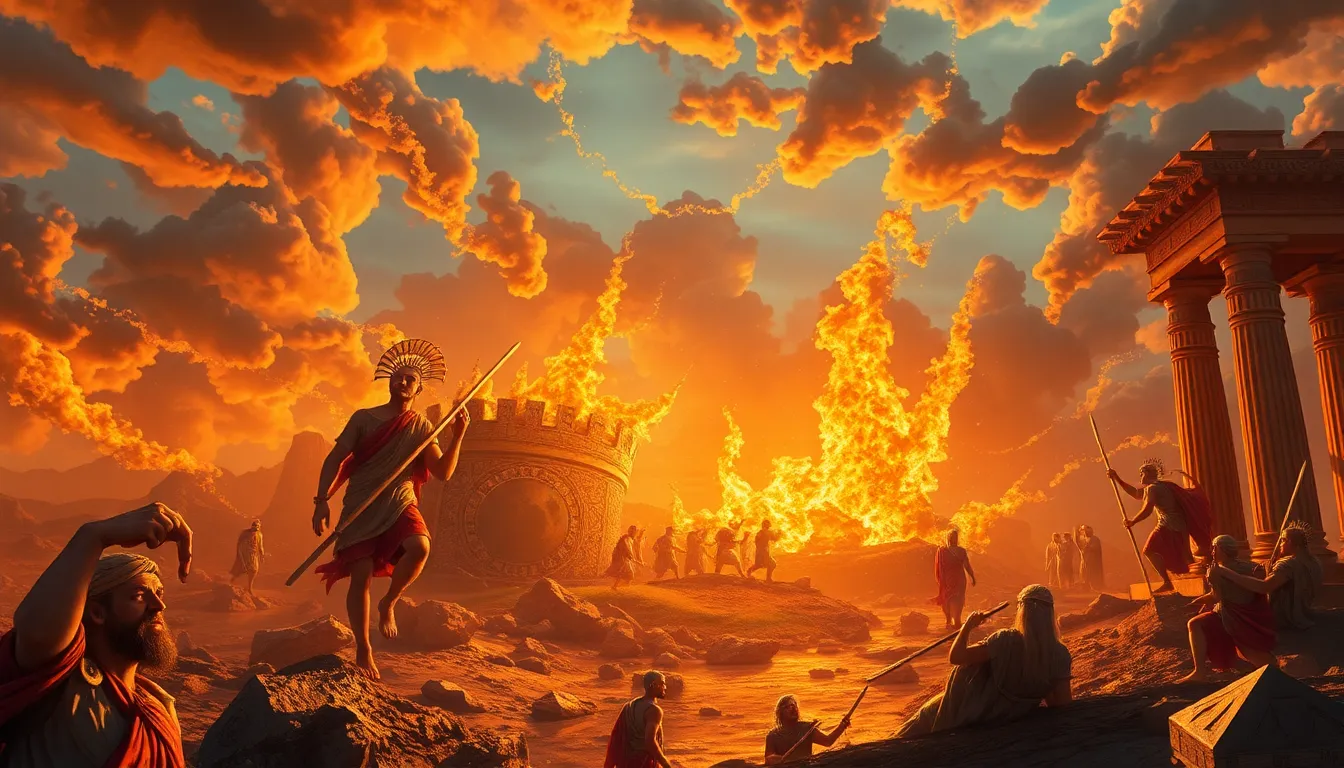
The Titans’ Downfall: What Really Happened During the Titanomachy?
I. Introduction
The Titanomachy, a monumental conflict in Greek mythology, marks the epic struggle between the Titans, the elder gods, and the younger Olympian gods led by Zeus. This war not only determined the hierarchy of divine beings but also set the stage for the myths and stories that have shaped ancient Greek culture and religion.
The significance of the Titanomachy extends beyond mere conflict; it represents themes of power, rebellion, and the cyclical nature of authority in mythological narratives. This article aims to explore the intricate details of the Titanomachy, from the origins of the Titans to the eventual rise of the Olympians, and the lasting impact of this legendary battle.
II. The Origin of the Titans
The Titans were born from primordial entities, emerging at the dawn of creation in Greek mythology. Their lineage is traced back to Gaia (Earth) and Uranus (Sky), who gave birth to the first generation of Titans.
A. Creation myths and the birth of the Titans
According to various myths, the universe began with Chaos, a void from which Gaia and Uranus emerged. Together, they produced the Titans, a powerful race that included twelve principal figures:
- Oceanus
- Coeus
- Crios
- Hyperion
- Iapetus
- Theia
- Rhea
- Themis
- Mnemosyne
- Phoebe
- Tethys
- Cronus
B. Key figures among the Titans: Cronus, Rhea, and others
Among the Titans, Cronus and Rhea stand out prominently. Cronus, the youngest of the Titans, feared losing his power and sought to prevent a prophecy that foretold he would be overthrown by his own child. This fear drove him to commit heinous acts against his offspring.
Rhea, his sister and wife, played a crucial role in the narrative as the mother of the Olympians. She managed to save her youngest son, Zeus, from Cronus’s wrath, setting the stage for the eventual conflict.
C. The role of Gaia and Uranus in Titan lineage
Gaia and Uranus’s relationship was tumultuous, leading to discord among their children. Uranus, fearing the power of his offspring, imprisoned some of them in Tartarus. This act of betrayal prompted Gaia to conspire with Cronus to overthrow Uranus, illustrating the complex dynamics within the Titan family and their eventual downfall.
III. The Rise of the Olympians
The Olympians, a new generation of gods, emerged from the shadows of the Titans, destined to challenge their authority. Their rise is marked by significant events that shaped their identities and motivations.
A. Background of the Olympian gods
The Olympians were born to Cronus and Rhea, including Zeus, Hera, Poseidon, Hades, Demeter, and Hestia. Each god held distinct domains and attributes, contributing to their unified strength against the Titans.
B. Key figures: Zeus, Hera, Poseidon, and Hades
Zeus, the king of the gods, wielded thunder and lightning, while his brothers Poseidon and Hades ruled the sea and the underworld, respectively. Hera, the goddess of marriage and family, played a vital role in the divine hierarchy.
C. Factors leading to the Olympians’ rebellion
The prophecy concerning Cronus’s downfall, coupled with the oppressive rule of the Titans, fueled the Olympians’ desire for rebellion. They sought not only freedom from their father’s tyranny but also the establishment of a new order in the cosmos.
IV. The Prelude to War
The build-up to the Titanomachy was marked by tension and strategic planning on both sides. The seeds of conflict were sown in the hearts of the Olympians, who were determined to challenge the status quo.
A. The prophecy of Cronus and its implications
As foretold, Cronus learned that one of his children would rise against him. In a desperate attempt to thwart fate, he swallowed each of his offspring at birth. Rhea, heartbroken and determined, devised a plan to save Zeus, hiding him in a cave on Crete and giving Cronus a stone wrapped in swaddling clothes instead.
B. The Titan’s rule and human suffering
Under the Titans’ reign, humanity experienced hardships. The Titans were often viewed as harsh rulers, bringing strife and chaos to the world. This suffering fostered a longing for change, igniting the flames of rebellion among the Olympians.
C. Alliances and preparations for war
Before the war, Zeus sought allies to bolster his cause. He freed the Cyclopes and the Hecatoncheires, powerful beings who had been imprisoned by Cronus. Their strength and skills proved invaluable in the upcoming battle.
V. The Titanomachy: Key Battles and Strategies
The Titanomachy itself was a fierce and prolonged conflict, characterized by numerous battles and strategic maneuvers from both the Titans and the Olympians.
A. Overview of the major battles
The war lasted for ten years, with key battles taking place on Mount Olympus and in other realms. Major confrontations included:
- The initial assault led by Zeus against Cronus.
- The siege of Mount Othrys, the Titans’ stronghold.
- Skirmishes involving powerful elemental forces unleashed by the gods.
B. Strategies employed by both sides
The Olympians utilized their newfound allies effectively. The Cyclopes forged formidable weapons for Zeus, including the iconic thunderbolt, while the Hecatoncheires unleashed their hundred hands to overwhelm the Titans in battle.
In contrast, the Titans relied on their brute strength and experience, but their complacency proved to be their downfall as the Olympians adapted and exploited their weaknesses.
C. The role of allies: Cyclopes and Hecatoncheires
The Cyclopes, known for their craftsmanship, provided the Olympians with powerful weapons, while the Hecatoncheires, with their immense strength and many arms, played a crucial role in the physical confrontations, hurling rocks and engaging multiple Titans at once.
VI. The Turning Point: Zeus and the Olympians’ Victory
The decisive moments of the Titanomachy culminated in a series of key events that led to the Olympians’ ultimate victory.
A. Key events leading to the Olympians’ success
As the war raged on, Zeus’s leadership emerged as a pivotal factor. He coordinated attacks, inspired his allies, and demonstrated unwavering resolve in the face of overwhelming odds.
The turning point came when Zeus, wielding his thunderbolt, struck down the formidable Titans, showcasing the power of the newly crafted weapons and the unity among the Olympians.
B. The significance of Zeus’s leadership
Zeus’s strategic brilliance and charisma rallied the Olympians, transforming them from a group of renegades into a cohesive fighting force. His ability to inspire loyalty and courage among his siblings and allies proved crucial in their quest for victory.
C. The final battle and the fall of the Titans
The final confrontation was marked by chaos and destruction, as the Olympians unleashed their full power against the Titans. Ultimately, the Titans were defeated and imprisoned in Tartarus, their reign brought to an end.
VII. Aftermath and Consequences
The aftermath of the Titanomachy reshaped the divine hierarchy and the nature of the cosmos in Greek mythology.
A. The fate of the defeated Titans
After their defeat, the Titans were cast into the depths of Tartarus, a dark and abyssal prison where they would remain for eternity. This punishment served as a stark warning against tyranny and the consequences of defying fate.
B. The establishment of the Olympian order
Following the war, the Olympians established their rule, with Zeus assuming the throne as the king of the gods. The new order brought stability and a more benevolent approach to governance, contrasting sharply with the Titans’ harsh reign.