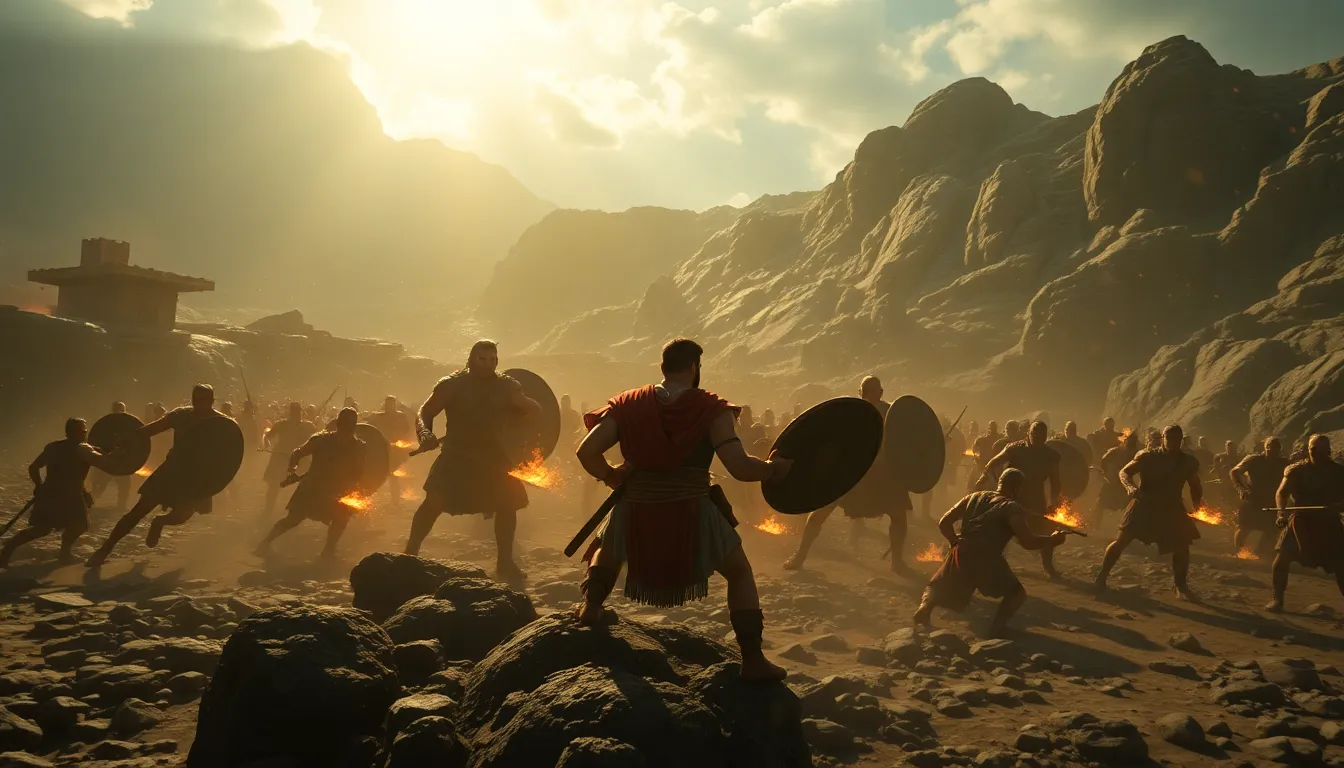
The Trials of Ares: The God of War’s Most Challenging Battles
I. Introduction to Ares: The God of War
Ares, the Greek god of war, represents one of the most complex and often misunderstood figures in Greek mythology. Unlike other deities who embody various aspects of life and nature, Ares personifies the brutal and chaotic nature of warfare. His presence in ancient Greek culture reflects the significance of conflict, valor, and the darker sides of humanity that come to the forefront in times of battle.
In ancient Greece, war was not merely a backdrop for political struggles but a defining aspect of life that influenced everything from social structures to personal honor. Ares, as the embodiment of war, played a pivotal role in the myths and stories that shaped Greek identity.
Ares is often depicted as a powerful and aggressive figure, characterized by his fierce temperament and martial prowess. However, his attributes also include a lack of strategic thought, which often leads to his downfall in various myths.
II. The Role of Ares in Greek Mythology
A. Ares’ Parentage and Divine Lineage
Ares is the son of Zeus, the king of the gods, and Hera, the queen of the gods. His lineage places him among the most influential deities of Olympus, yet his character diverges significantly from that of his siblings, particularly Athena, the goddess of wisdom.
B. The Depiction of Ares in Ancient Texts and Art
In ancient literature and art, Ares is often portrayed as a handsome warrior clad in armor, embodying both strength and aggression. His imagery frequently includes weapons such as a spear and shield, and he is sometimes accompanied by symbols of conflict, such as dogs or vultures. His character is less celebrated in poetry compared to other gods like Apollo or Athena, who are often associated with culture and intellect.
C. Contrast with Other Olympian Gods
- Athena: Representing wisdom, strategy, and skill in warfare, Athena often stands in stark contrast to Ares’ chaotic and brute force approach.
- Zeus: As the ruler of Olympus, Zeus embodies authority and order, while Ares represents the disorder and chaos that can arise from war.
- Hades: While Hades governs the underworld, Ares is more closely associated with the act of war itself, highlighting the physical aspect of mortality.
III. The Battle of the Gods: Ares vs. Athena
A. Overview of the Rivalry Between Ares and Athena
The rivalry between Ares and Athena can be traced back to their differing philosophies regarding warfare. Ares embodies the chaos and violence of battle, while Athena represents calculated strategies and the wisdom necessary for triumph in war. This dichotomy is vividly illustrated in various myths and stories.
B. The Significance of Wisdom vs. Chaos in Warfare
The conflict between Ares and Athena symbolizes the larger struggle between mindless aggression and strategic thought in warfare. Their encounters often highlight the consequences of their approaches, with Athena’s wisdom frequently leading to victory, while Ares’ reckless nature results in chaos and defeat.
C. Key Events from Their Encounters and Outcomes
One notable encounter occurred during the Trojan War, where Ares fought fiercely but ultimately faced setbacks due to Athena’s intervention. Their confrontations often demonstrate how wisdom can prevail over raw power and aggression.
IV. The Trojan War: Ares’ Involvement
A. Ares’ Alliances and Conflicts During the War
Ares played a significant role in the Trojan War, aligning himself with the Trojans due to his relationship with Aphrodite, who favored Paris and the Trojan cause. His presence on the battlefield was marked by fierce combat and bloodshed.
B. His Relationship with Aphrodite and Its Impact on the War
Aphrodite’s love for Ares is one of the more intriguing aspects of their relationship, as it highlights the intersection of love and war. Their union produced several offspring, including Fear and Terror, who personify the psychological aspects of battle. However, their relationship also brought complications, as Ares’ involvement in the war was often overshadowed by Aphrodite’s preferential treatment of mortal heroes like Paris.
C. Analysis of Ares’ Effectiveness and Failures in Battle
Although Ares fought valiantly, his tendency toward chaos and lack of strategic foresight often led to his downfall. He suffered notable defeats, such as when he was wounded by Diomedes during the war, showcasing that even the god of war could be bested by mortal heroes.
V. Ares and the Giants: The Gigantomachy
A. Overview of the Gigantomachy Myth
The Gigantomachy, or the battle between the Olympian gods and the giants, is a significant myth in Greek mythology. This epic conflict illustrates the struggle for supremacy between the divine and chaotic forces of nature.
B. Ares’ Role in the Battle Against the Giants
Ares played a crucial role in the Gigantomachy, fighting alongside his fellow Olympians to protect their reign. His martial skills and ferocity were instrumental in battling the giants, who threatened the order of the cosmos.
C. Challenges Faced and His Contributions to the Victory
Despite his aggressive nature, Ares faced numerous challenges during the Gigantomachy. The giants were formidable foes, and Ares’ contributions, while significant, were often overshadowed by the more strategic approaches of other gods like Athena and Zeus. Ultimately, the Olympians prevailed, but Ares’ role was marked by both valor and the chaotic elements he brought to the battlefield.
VI. The Trials of Mortals: Ares’ Influence on Heroes
A. Ares’ Interactions with Iconic Heroes like Heracles and Achilles
Ares’ influence extended to several legendary heroes, including Heracles and Achilles. His interactions with these figures often shaped their destinies, both positively and negatively.
B. Exploration of Battles Influenced by Ares’ Presence
- Heracles: Ares’ involvement in Heracles’ labors often manifested in challenges that tested the hero’s strength and resolve.
- Achilles: Ares’ chaotic nature influenced Achilles during the Trojan War, leading to both glory and tragedy for the famed warrior.
C. Consequences of Ares’ Guidance or Wrath on Mortal Warriors
The consequences of Ares’ influence on mortal heroes are profound. His guidance could lead to moments of great valor, but his wrath often resulted in catastrophic consequences, illustrating the unpredictable nature of war and its heroes. The duality of Ares as both a source of strength and a harbinger of chaos is evident in the lives of those he touched.
VII. Ares’ Downfall: The Challenges of Defeat
A. Notable Defeats and Humiliations Suffered by Ares
Despite being the god of war, Ares faced several humiliating defeats throughout mythology. One of the most notable instances was when he was wounded by the mortal hero Diomedes during the Trojan War. This incident not only showcased Ares’ vulnerabilities but also highlighted the power of human courage and strategy over divine might.
B. The Impact of These Defeats on His Reputation Among Gods and Mortals
Ares’ defeats contributed to a tarnished reputation among the Olympian gods and mortals alike. While he was revered for his strength, his failures often led to ridicule and disdain, particularly in contrast to the celebrated victories of Athena and other gods.
C. Lessons Learned from Ares’ Trials and Tribulations
The trials and tribulations of Ares serve as a reminder that even the mightiest can fall. His experiences highlight the importance of strategy, wisdom, and the consequences of unbridled aggression. Through Ares, Greek mythology teaches that strength alone is not sufficient for success; the mind must also guide the sword.
VIII. Conclusion: The Legacy of Ares and His Battles
A. Reflection on Ares’ Challenges and Their Significance in Mythology
Ares’ life and battles reflect the complexities of war and the human condition. His struggles illustrate the dual nature of conflict—both the glory of victory and the despair of defeat. Ares remains a powerful symbol of the chaotic and