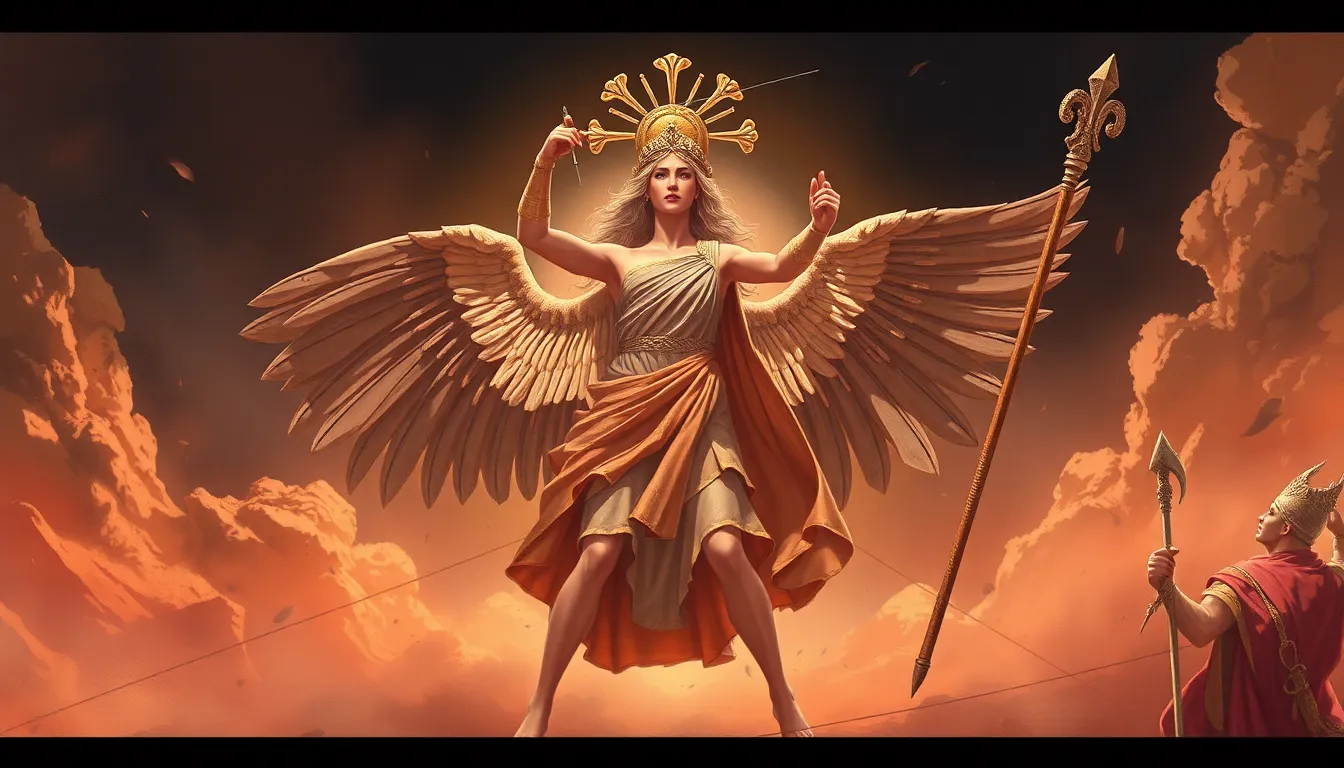
The Trials of Athena: Wisdom Tested in the Heat of Battle
I. Introduction
Athena, the revered goddess of wisdom and warfare in Greek mythology, embodies the duality of intellect and strength. Often depicted with armor and a helmet, she stands as a symbol of strategic thought and tactical prowess. Her role extends beyond the battlefield, influencing the moral and ethical decisions of leaders and warriors alike.
The importance of wisdom in strategic decision-making is paramount during battles. While brute strength may win a fight, it is often the clever and calculated decisions that lead to victory. In this article, we will explore the trials faced by Athena, examining the lessons learned through her experiences and how they resonate in contemporary contexts.
II. The Mythical Origins of Athena
Athena’s birth is one of the most fascinating tales in Greek mythology. According to legend, she sprang fully grown and armored from the forehead of her father, Zeus, after he swallowed her pregnant mother, Metis, the goddess of wisdom. This extraordinary birth symbolizes her inherent connection to intelligence and warfare.
Athena possesses many attributes that highlight her dual nature. She is often associated with the owl, a symbol of wisdom, and the olive tree, representing peace and prosperity. Her role as a warrior is emphasized in various myths, where she fights alongside heroes, offering guidance and support.
In ancient Greek society, Athena was not only a protector of cities but also a patroness of various arts and crafts. Her influence can be seen in the construction of the Parthenon, a temple dedicated to her, which stands as a testament to her significance in both the spiritual and cultural lives of the Greeks.
III. The Concept of Wisdom in Warfare
Wisdom in the context of battle can be defined as the ability to make sound judgments, foresee potential outcomes, and devise strategies that optimize resources and personnel effectively. It involves a deep understanding of the adversary, the environment, and the strengths and weaknesses of one’s own forces.
The interplay between intellect and strength is crucial in warfare. While physical might can dominate an opponent, it is often the cunning strategies and decisions of wise leaders that turn the tide of battle. Historical and mythological examples abound:
- Odysseus: Known for his cleverness and strategic mind, he used guile to win the Trojan War.
- Sun Tzu: The ancient Chinese general emphasized the importance of strategy and deception in his work, “The Art of War.”
- Julius Caesar: His ability to adapt and strategize in varying circumstances marked him as one of history’s great military leaders.
IV. Key Trials Faced by Athena
Athena faced numerous trials throughout her existence, each testing her wisdom and strategic abilities. Among the most notable are:
A. The Trojan War: Strategic Challenges and Decisions
The Trojan War, one of the most famous conflicts in Greek mythology, was a significant challenge for Athena. As a supporter of the Greeks, she provided guidance and assistance to key figures such as Odysseus and Achilles. Her strategic insights were crucial in various battles, particularly in the planning of the Trojan Horse, a cunning ruse that ultimately led to the fall of Troy.
B. The Contest with Poseidon over Athens
Another significant trial for Athena came when she competed with Poseidon for the patronage of the city of Athens. Poseidon offered the city a saltwater spring, while Athena presented the olive tree, symbolizing peace and prosperity. The citizens chose Athena’s gift, leading to her status as the protector of Athens. This contest highlights her ability to appeal to the needs and values of the people.
C. Other Notable Challenges in Myths and Legends
Athena’s wisdom was tested in various other myths, including:
- Her support of Perseus: She guided him in slaying Medusa, providing a reflective shield to avoid her petrifying gaze.
- The Judgment of Paris: Athena was one of the contenders for the title of the fairest goddess, showcasing her willingness to engage in conflict for the sake of pride and honor.
- Her role in the Odyssey: Throughout Odysseus’s journey, she intervened at critical moments, offering wisdom and support.
V. Athena’s Strategies: Balancing Wisdom and Warfare
Analyzing Athena’s approach to conflict resolution reveals a deep understanding of the balance between wisdom and warfare. Her strategies often involved:
A. Foresight and Planning
Athena’s foresight allowed her to anticipate outcomes and devise plans that would lead to victory. Her ability to think several steps ahead mirrored the strategies employed by successful leaders throughout history.
B. Case Studies of Successful Outcomes
Several key instances exemplify Athena’s successful strategies:
- The Trojan Horse: This ingenious strategy highlighted her ability to combine creativity with tactical foresight, leading to the Greeks’ victory.
- Supporting Odysseus: Her guidance throughout his journey demonstrated her commitment to wisdom over brute force, ensuring he returned home safely.
VI. Lessons from Athena’s Trials
The trials faced by Athena offer valuable lessons for modern leadership and decision-making:
A. The Importance of Wisdom
In today’s complex world, the ability to make wise decisions is more important than ever. Leaders across various fields can learn from Athena’s example, emphasizing the need for strategic thinking and foresight.
B. Application to Contemporary Conflicts
Athena’s trials can be applied to contemporary conflicts, reminding us that brute strength is not always the solution. Diplomacy, negotiation, and strategic alliances often yield better outcomes.
C. Relevance Beyond Warfare
The principles of strategic thinking and wisdom are applicable in fields such as business, politics, and personal development. Athena’s legacy encourages individuals to approach challenges with a thoughtful mindset.
VII. The Legacy of Athena’s Wisdom
Athena’s impact extends far beyond mythology. She has influenced literature, art, and culture throughout history:
A. Influence on Culture
Athena’s image and stories have inspired countless works of art, from ancient sculptures to modern literature, symbolizing wisdom and strength.
B. Enduring Symbol of Wisdom
In contemporary contexts, Athena remains an enduring symbol of wisdom. Her trials and teachings continue to inspire leaders and thinkers to prioritize intellect and strategy.
C. Inspiring Leaders Today
As we face our own challenges, Athena’s trials remind us of the importance of wisdom in leadership. Her legacy serves as a guiding light for those in positions of influence, encouraging them to seek knowledge and understanding.
VIII. Conclusion
Athena stands as a powerful symbol of wisdom in battle, embodying the ideals of strategic thought and moral integrity. Her trials highlight the significance of wisdom in overcoming challenges, both in ancient Greece and in today’s world.
As we reflect on her teachings, we are invited to consider our own “trials” of wisdom in our lives. In a world that often prioritizes strength and aggression, Athena reminds us that true power lies in the ability to think critically and act wisely.