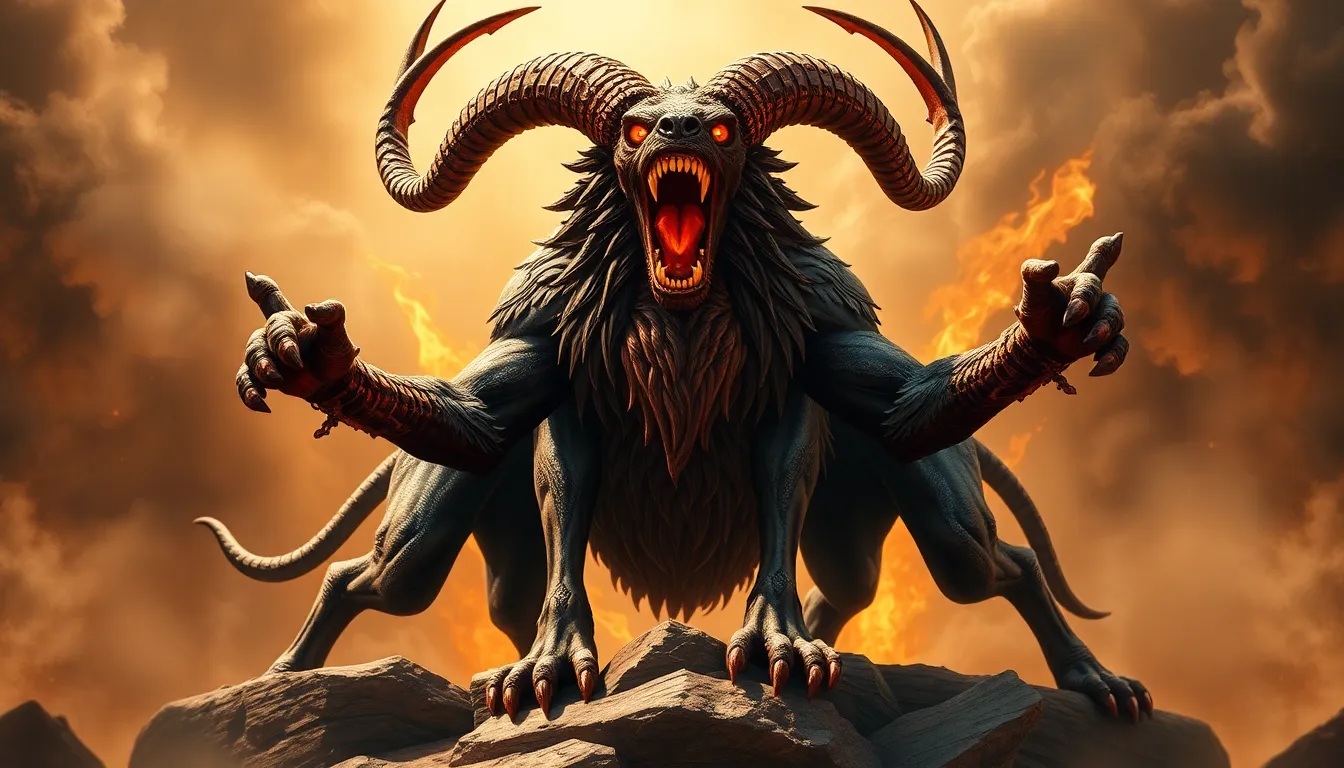
The Trials of Cerberus: How He Tested Heroes in Greek Myths
I. Introduction
Cerberus, the ferocious three-headed dog of Greek mythology, is one of the most recognizable figures associated with the Underworld. As the guardian of Hades, Cerberus played a crucial role in the mythology surrounding death and the afterlife. His imposing figure not only protects the realm of the dead but also serves as a formidable challenge for those heroes who dare to enter his territory.
This article aims to explore Cerberus’s trials of heroes, examining how encounters with this mythical beast served as pivotal moments in their journeys, testing their mettle and character.
II. The Origins of Cerberus
Cerberus was born to the monstrous Echidna and Typhon, two of the most feared creatures in Greek mythology. This lineage bestowed upon him unique qualities, making him not just a guardian but a symbol of the fearsome nature of death itself.
As Hades’ loyal servant, Cerberus ensured that no souls escaped the Underworld and that the living did not intrude without facing his wrath. His three heads are often interpreted as representing the past, present, and future, highlighting the inevitability of death and the passage of time.
In essence, Cerberus stands as a powerful symbol of the finality of death and the importance of facing one’s mortality.
III. Cerberus as a Test of Worthiness
In Greek mythology, trials are a common theme, representing challenges that heroes must overcome to prove their worthiness. Cerberus embodies this concept, serving as a rite of passage for those who seek to demonstrate their bravery and resilience.
The dual nature of Cerberus is significant; he is both a protector of the Underworld and a challenger to any who would seek to breach its gates. This complexity adds depth to his character, making encounters with him not just physical battles but profound tests of character.
IV. Notable Heroes Who Encountered Cerberus
A. Heracles and the Twelve Labors
One of the most famous encounters with Cerberus occurs during the Twelve Labors of Heracles. Tasked with capturing Cerberus, Heracles faced one of his most daunting challenges.
- The task of capturing Cerberus: To accomplish this labor, Heracles descended into the Underworld, where he confronted the beast. Utilizing his immense strength and cunning, he managed to subdue Cerberus without using weapons, instead relying on his bare hands.
- Significance of this labor in Heracles’ journey: This labor not only showcased Heracles’ physical prowess but also symbolized his acceptance of mortality and his understanding of the Underworld’s role in the cycle of life and death.
B. Orpheus and his descent to the Underworld
Another notable hero who encountered Cerberus was Orpheus, the legendary musician. In his quest to retrieve his beloved Eurydice, Orpheus ventured into the Underworld, where he faced Cerberus.
- Approaching Cerberus with music and charm: Instead of using force, Orpheus played his enchanting lyre, which captivated Cerberus. The beast, calmed by the music, allowed Orpheus to pass.
- The implications of Orpheus’s encounter: This encounter highlights the power of art and emotion in overcoming obstacles, suggesting that understanding and empathy can sometimes be more effective than brute strength.
V. The Symbolism of Cerberus’s Trials
Cerberus’s trials carry deep symbolism, primarily focusing on themes of fear and courage. The fear instilled by Cerberus represents the natural human fear of death, while the courage to confront him illustrates the hero’s journey toward self-acceptance and growth.
Moreover, Cerberus serves as a metaphor for personal demons that individuals must face throughout their lives. The trials posed by Cerberus can be seen as reflections of the challenges each person must confront in their pursuit of meaning and purpose.
VI. Lessons Learned from Cerberus’s Trials
From the trials of Cerberus, several key lessons can be gleaned:
- The importance of resilience and bravery: Heroes like Heracles and Orpheus exemplify the necessity of facing one’s fears head-on.
- Understanding the value of compassion and empathy: Orpheus’s approach teaches that kindness and understanding can often lead to more favorable outcomes than aggression.
- Insights into the nature of heroism and sacrifice: The trials of Cerberus remind us that true heroism often involves personal sacrifice and the willingness to confront the unknown.
VII. Cerberus in Modern Culture
Cerberus has transcended his roots in Greek mythology to become a prominent figure in modern culture. His image appears in various forms of literature, film, and video games, showcasing his enduring legacy.
- Depictions of Cerberus in literature and media: From Dante’s “Inferno” to contemporary fantasy novels, Cerberus continues to be portrayed as a guardian of the underworld, symbolizing the challenges that lie beyond death.
- The enduring legacy of Cerberus in contemporary storytelling: His character is often reimagined, reflecting modern fears and challenges, making him relatable to today’s audiences.
- How Cerberus’s trials resonate with modern audiences: The themes of facing fears, overcoming obstacles, and the nature of heroism connect deeply with contemporary struggles, making Cerberus a timeless figure.
VIII. Conclusion
Cerberus holds a significant place in Greek mythology, embodying the challenges that heroes must face and the trials that test their character. His role as a guardian of the Underworld serves as a powerful reminder of the inevitability of death and the importance of confronting our fears.
As we reflect on the trials of Cerberus, we are invited to explore the rich tapestry of Greek myths, which continue to offer valuable insights into human nature and the hero’s journey.