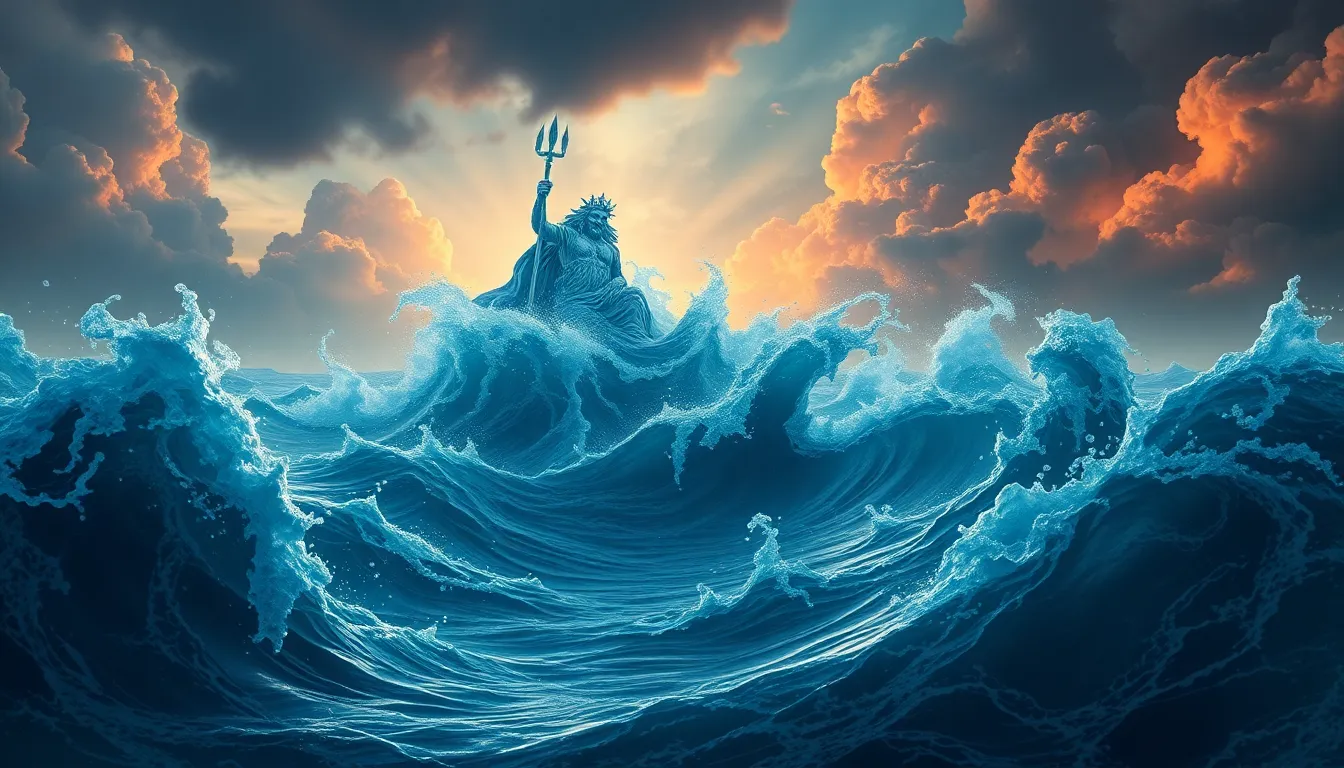
The Trials of Poseidon: Raging Seas and Divine Challenges
I. Introduction
In the vast tapestry of Greek mythology, Poseidon stands as one of the most powerful and intriguing deities. Known as the god of the sea, earthquakes, and horses, his domain is as tumultuous and mysterious as the ocean itself. The stories of Poseidon are filled with trials and challenges that not only shape his character but also reflect the ancient Greeks’ understanding of nature, divinity, and human existence. This article aims to delve into the trials faced by Poseidon, examining their significance and the lessons they impart to both gods and mortals.
II. The Nature of Poseidon’s Domain
The ocean, vast and unpredictable, serves as a fitting metaphor for the dual nature of Poseidon’s power. It is a realm of beauty and terror, capable of nurturing life while also unleashing destructive forces. The sea is filled with mysteries, from its deep trenches to its stormy surface, symbolizing the unknown and the uncontrollable aspects of life.
A. Description of the ocean and its mysteries
The ancient Greeks viewed the ocean as an entity that could provide sustenance and adventure, yet also pose great danger. The sea was home to numerous creatures, both benign and malevolent, and it was said to be inhabited by nymphs and gods who could either aid or hinder sailors.
B. Symbolism of the sea in ancient Greek culture
- Life and sustenance: The sea was essential for trade and fishing, providing food and economic stability.
- Chaos and unpredictability: Storms and shipwrecks reminded sailors of the sea’s capricious nature.
- Divine connection: The ocean was often seen as a bridge between the mortal world and the divine, where gods exerted their influence.
C. The duality of Poseidon’s power: creator and destroyer
Poseidon embodies this duality. As the creator, he is credited with the formation of islands and the establishment of coastal cities. However, he is also a fierce destroyer, unleashing storms and earthquakes when angered. This complexity makes Poseidon a compelling figure in mythology, representing both the beauty and the peril of the natural world.
III. The Trials of Poseidon: An Overview
In mythology, trials often serve as pivotal moments that test the strength, character, and resolve of gods and heroes alike. Poseidon, with his immense power, has faced numerous trials that have shaped his identity and the world around him.
A. Introduction to the concept of trials in mythology
Trials in mythology are not merely challenges; they are catalysts for growth and transformation. They often involve conflict, sacrifice, and the pursuit of wisdom. For Poseidon, these trials reveal his vulnerabilities and the complexities of his divine role.
B. Key trials faced by Poseidon in myths
Some of the most notable trials include:
- The contest with Athena for the patronage of Athens
- His struggles against other gods, such as Zeus and Hades
- His wrath against mortals who disrespected him or the sea
C. The consequences of these trials on gods and mortals alike
The outcomes of Poseidon’s trials often have far-reaching implications. They can lead to the establishment of cities, the downfall of heroes, or the wrath of the sea unleashed upon those who provoke him. The trials of Poseidon serve as reminders of the balance between respect for the divine and the acknowledgment of human limitations.
IV. The Battle for Athens
One of the most famous myths involving Poseidon is the contest for the city of Athens. This legendary battle between Poseidon and Athena not only highlights the competitive nature of the gods but also illustrates the values held by ancient Greeks.
A. Overview of the contest between Poseidon and Athena
According to myth, both deities sought to be the patron of Athens. Poseidon struck the ground with his trident, creating a saltwater spring, while Athena offered the olive tree, symbolizing peace and prosperity. The citizens of Athens ultimately chose Athena, recognizing the more practical gift.
B. The significance of the outcome for both deities
The outcome of this contest had profound implications. Poseidon’s defeat not only diminished his status but also highlighted the importance of wisdom and utility over brute strength. For Athena, it solidified her role as a goddess of wisdom and warfare, reinforcing her connection to the city that would bear her name.
C. Lessons learned from this mythological conflict
This myth teaches valuable lessons about humility, the nature of gifts, and the importance of wisdom in leadership. It serves as a reminder that true power often lies not in force, but in understanding and nurturing one’s community.
V. The Wrath of Poseidon: Stories of Shipwrecks and Storms
Poseidon’s temperament is legendary, and his capacity for wrath is vividly illustrated in numerous tales of shipwrecks and storms.
A. Tales of sailors and their encounters with Poseidon’s fury
Many myths recount the stories of sailors who, after disrespecting the sea or failing to honor Poseidon, faced dire consequences. Some notable tales include:
- The journey of Odysseus, who angered Poseidon and faced numerous trials at sea.
- The tale of the Argonauts, who encountered storms while seeking the Golden Fleece.
- The story of sailors who failed to perform sacrifices to Poseidon and were punished with shipwrecks.
B. Analysis of famous shipwreck stories in mythology
These stories often serve as cautionary tales, emphasizing the necessity of respecting the gods and the natural world. The recurring theme of hubris—excessive pride or self-confidence—often leads to the downfall of sailors who underestimate Poseidon’s power.
C. The role of human hubris in invoking Poseidon’s wrath
Hubris is a common motif in Greek mythology, and Poseidon’s tales exemplify this concept. When mortals display arrogance or disregard the divine, they often face catastrophic consequences. These narratives reinforce the idea that humility and respect towards the gods are paramount in Greek culture.
VI. Divine Challenges and Their Impact on Mortals
The relationship between gods and humans in Greek mythology is complex, often characterized by challenges that test the limits of mortal strength and resilience.
A. The relationship between gods and humans in Greek mythology
In ancient Greece, the gods were seen as powerful beings who directly influenced human fate. Mortals were often caught in the crossfire of divine conflicts, and their actions could invoke the favor or wrath of the gods.
B. Examples of mortal heroes facing Poseidon’s challenges
Many heroes encountered Poseidon’s trials on their quests. Notable examples include:
- Odysseus: His journey home was fraught with challenges due to Poseidon’s anger over the blinding of the Cyclops.
- Theseus: He faced storms and challenges while navigating the seas during his adventures.
C. The moral and philosophical lessons embedded in these narratives
These stories often encapsulate moral lessons about the importance of respect, humility, and the acknowledgment of one’s limitations. They serve as allegories for the human condition, illustrating that while mortals strive for greatness, they must also recognize their place in the larger cosmos.
VII. The Legacy of Poseidon’s Trials in Modern Culture
The myths surrounding Poseidon and his trials continue to resonate in contemporary culture, influencing literature, art, and popular media.
A. Influence of Poseidon’s stories on literature and art
From classical literature to modern novels, Poseidon’s character and stories have inspired countless works. Artists have depicted his tumultuous nature in paintings, sculptures, and dramatic performances, showcasing the sea’s beauty and danger.
B. Modern interpretations and adaptations of Poseidon’s trials
Today, adaptations of Poseidon’s trials can be seen in films, television series, and literature that reinterpret his stories for new audiences. The themes of struggle against elemental forces and the quest for respect resonate with contemporary issues, making these myths relevant.
C. The enduring relevance of these myths in contemporary society
Poseidon’s