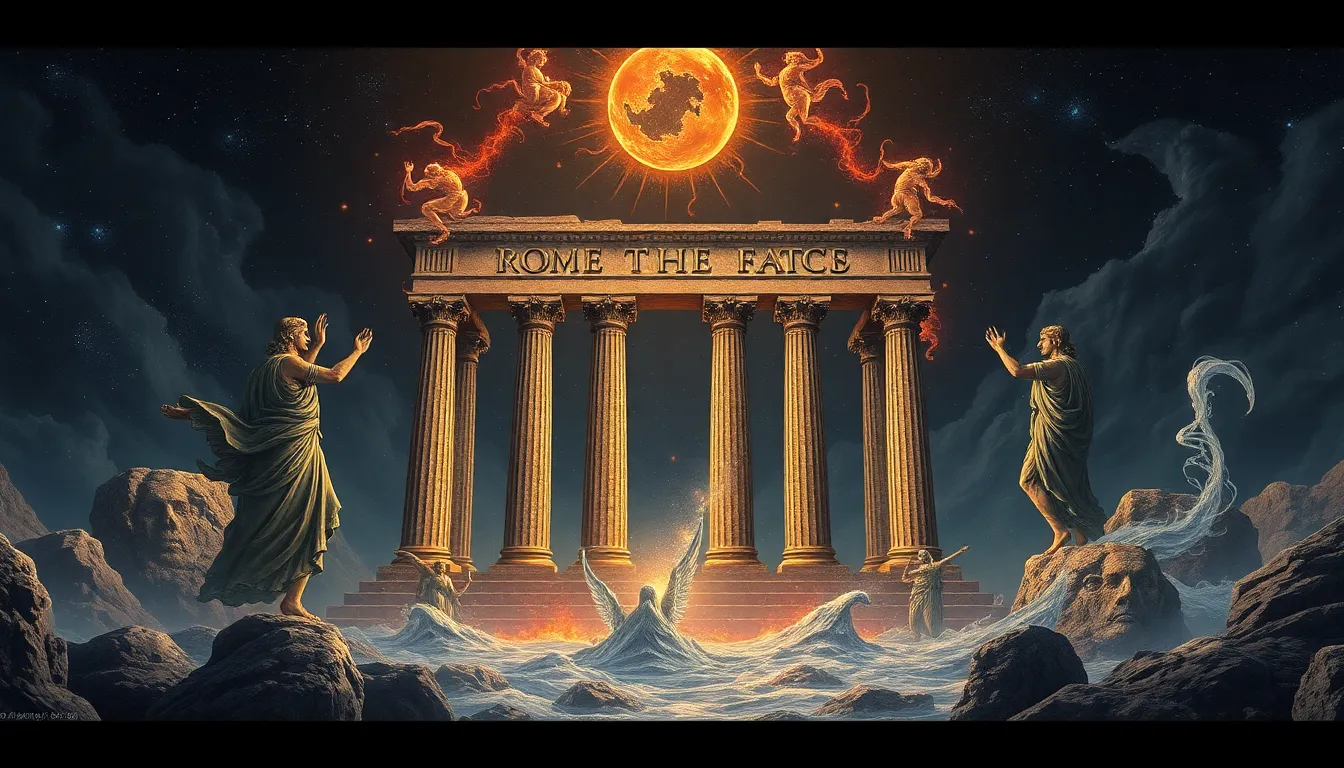
The Trials of the Fates: How Destiny Was Weaved Among the Gods
I. Introduction
The concept of fate is a central theme in many mythologies, particularly in Greek mythology where it intertwines the lives of gods and mortals. Fate, or Moira, is depicted as an inescapable force that dictates the course of events, leaving both deities and humans subject to its whims. Within this rich tapestry of destiny, the Fates hold a pivotal role.
The Fates, known as the Moirai, are three sisters who personify destiny itself. Their significance extends beyond mere abstract concepts; they are essential players in the grand narrative of mythology, influencing the lives of not just mortals but also the gods themselves. This article aims to explore the trials faced by the Fates and how these challenges impact the weave of destiny.
II. The Fates: Who Are They?
The Fates consist of three distinct entities: Clotho, Lachesis, and Atropos. Each sister has a unique role in the weaving of life threads, symbolizing different aspects of fate.
- Clotho – The Spinner: She is responsible for spinning the thread of life, representing the beginning of existence. Clotho determines when a life begins.
- Lachesis – The Allotter: She measures the thread of life, determining the lifespan and the experiences each individual will encounter throughout their existence.
- Atropos – The Unturnable: She is the cutter of the thread, symbolizing the end of life. Atropos decides when a life will come to its conclusion.
In art and literature, the Fates are often depicted as stern, elderly women, wielding tools such as spindles, measuring rods, and shears. Their representation serves as a reminder of the inevitability of death and the unchangeable nature of fate.
III. The Weaving of Destiny
The process of weaving life threads is a meticulous and symbolic act. Each sister plays a crucial role in this process, demonstrating the interconnectedness of beginnings, experiences, and endings.
Clotho initiates the weaving by spinning the thread, which represents the potential of every life. Lachesis then measures this thread, symbolizing the choices and circumstances that shape an individual’s path. Finally, Atropos, with her shears, signifies the finality of death, reminding all that every life, no matter how grand, must eventually conclude.
The Fates interact with both gods and mortals, often serving as arbiters of destiny. Even the most powerful gods, such as Zeus, must respect the decisions made by the Fates, illustrating the profound impact these three sisters have on the cosmos.
IV. The Trials Faced by the Fates
Despite their formidable power, the Fates face numerous challenges from gods and mythological figures who seek to alter or defy destiny.
A. Challenges from Powerful Gods
Zeus, the king of the gods, often finds himself in conflict with the Fates. Although he possesses immense power, he cannot escape the decrees of the Moirai. For instance, in various myths, Zeus is depicted as attempting to intervene in human affairs, only to be reminded of the Fates’ omnipotence. Similarly, Hades, the god of the underworld, grapples with the Fates when it comes to the souls of the deceased.
B. Conflicts with Other Mythological Figures
The Fates also encounter conflicts with other mythological figures, including heroes and titans. Notable stories include:
- The Titan Cronus, who attempted to defy the Fates by swallowing his children to prevent them from overthrowing him.
- The hero Heracles, whose fate was intertwined with the whims of both the Fates and the gods, highlighting the tension between human agency and divine will.
C. The Impact of These Trials on Their Responsibilities
These trials often test the resolve of the Fates, forcing them to reaffirm their roles as the weavers of destiny. Their encounters with powerful beings emphasize the limits of divine intervention and the importance of accepting one’s fate.
V. The Fates in Mythological Narratives
Throughout Greek mythology, the Fates appear in numerous narratives, each showcasing their critical role in determining the outcomes of various stories.
A. Key Stories Involving the Fates and Their Trials
One prominent tale involves the hero Oedipus, whose tragic fate was foretold by the Fates. Despite his attempts to escape his destiny, Oedipus ultimately fulfills the prophecy, demonstrating the inescapability of fate.
Another significant narrative features the tale of Achilles, whose mother, Thetis, tries to protect him from his destined early death. However, the Fates had already spun his thread, and he could not evade his fate.
B. Analysis of the Outcomes and Lessons Learned
These narratives reveal crucial lessons about the nature of fate and the limits of human agency. Characters who attempt to defy or outsmart the Fates often face dire consequences, illustrating the importance of acceptance in their journeys.
C. The Fates’ Influence on Notable Heroes and Their Destinies
The Fates’ influence extends to many notable heroes, shaping their paths and destinies. Their decisions resonate throughout the stories, reminding characters that their fates are not solely in their hands.
VI. The Fates and Human Free Will
The relationship between fate and free will is a pervasive theme in Greek mythology. The Fates embody the inevitability of destiny, yet they exist alongside the concept of personal choice.
A. The Tension Between Fate and Free Will in Mythology
This tension is evident in the actions of various characters who grapple with their destinies. Some characters accept their fates, while others strive to alter their paths, leading to compelling narratives filled with conflict and moral dilemmas.
B. How the Fates Represent the Inevitability of Destiny
The Fates symbolize the belief that certain events are predetermined and unavoidable. Their presence serves as a reminder that while individuals may have the freedom to make choices, the ultimate outcome is often beyond their control.
C. Examples of Characters Who Challenge or Accept Their Fate
Prominent examples include:
- Oedipus – Attempts to escape his fate but ultimately fulfills it.
- Achilles – Accepts his fate of early death, embracing his heroic path.
- Jason – Seeks to alter his destiny by pursuing the Golden Fleece, showcasing the struggle against predetermined paths.
VII. Legacy of the Fates in Modern Culture
The influence of the Fates extends beyond ancient mythology; they continue to resonate in contemporary literature and media.
A. Influence of the Fates on Contemporary Literature and Media
Modern interpretations of the Fates appear in various forms, from novels to films, often symbolizing the struggle between destiny and personal choice. Works that explore these themes frequently draw upon the rich symbolism associated with the Moirai.
B. Interpretation of the Fates in Modern Philosophical Discourse
In philosophical discussions, the Fates represent deeper inquiries into the nature of existence and the human condition. The balance between fate and free will continues to provoke thought and debate.
C. The Enduring Fascination with Fate and Destiny in Popular Culture
The enduring fascination with fate and destiny is evident in popular culture, where narratives often explore the complexities of human choices and their consequences. This intrigue highlights the timeless nature of the themes the Fates embody.
VIII. Conclusion
In conclusion, the trials faced by the Fates reveal their significant role in the tapestry of Greek mythology. Through their challenges and interactions with gods and mortals alike, the Fates illustrate the complex interplay between destiny and