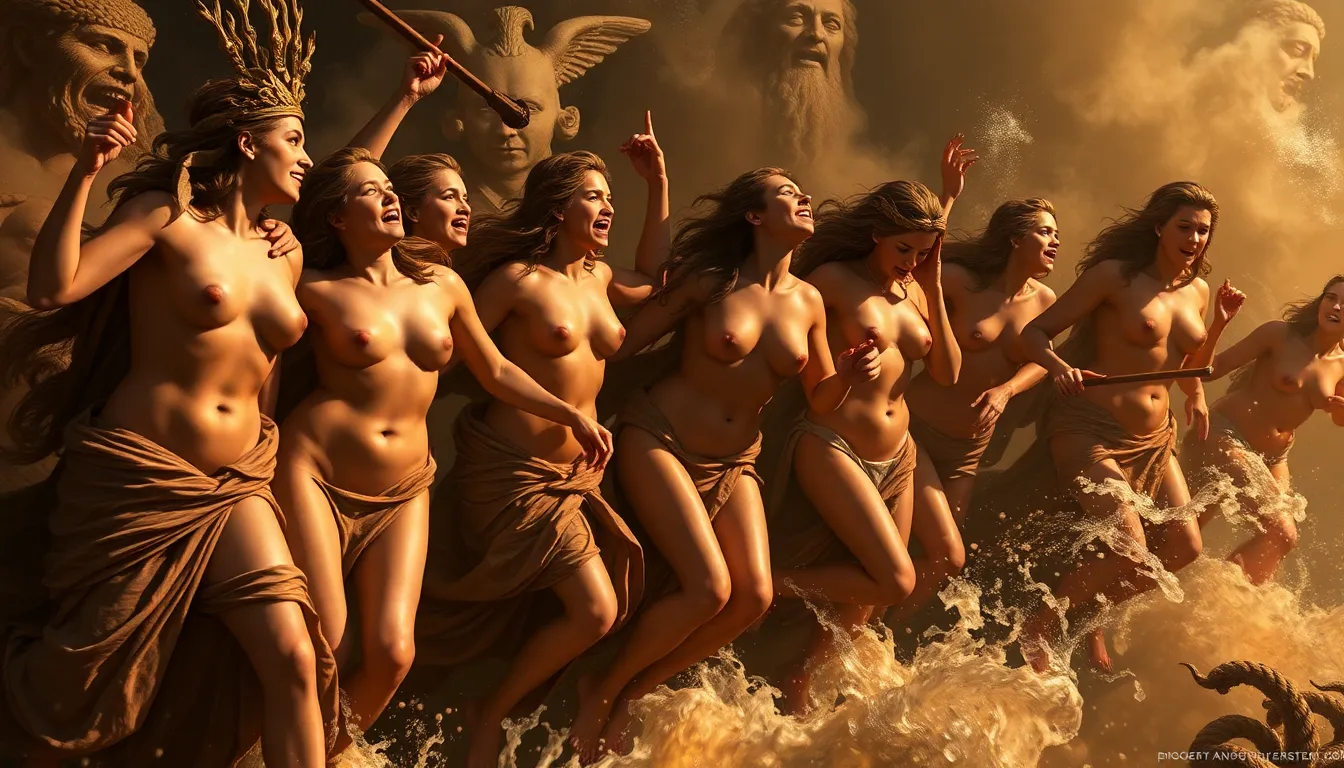
The Trials of the Maenads: Bacchus’ Followers in Ecstasy and Madness
I. Introduction
Bacchus, the Roman counterpart to the Greek god Dionysus, embodies the complexities of pleasure, intoxication, and the ecstatic experience. Not merely a god of wine, Bacchus represents the duality of joy and chaos, a theme that resonates throughout Roman and Greek mythology. One of the most intriguing aspects of his mythology is the presence of the Maenads, his female followers who were both revered and feared for their ecstatic worship.
This article delves into the lives of the Maenads, exploring the profound duality of ecstasy and madness that characterized their experiences. Through examining their origins, cultural significance, and the trials they faced, we can gain a deeper understanding of their role in the ancient world and the lasting impact of their stories on modern culture.
II. The Mythological Background of Bacchus
Bacchus, known as the god of wine, fertility, and ritual madness, has roots that trace back to the ancient agricultural societies of the Mediterranean. His attributes include not only the vine and wine but also revelry, music, and ecstatic dance, which served as a means to connect with the divine.
In Roman mythology, Bacchus was often depicted as a youthful figure adorned with grapevines and accompanied by a retinue of revelers. His significance extended beyond mere intoxication; he was a symbol of the liberating effects of nature and the chaos that could arise from unrestrained indulgence.
In ancient Greek and Roman culture, Bacchus played a pivotal role in festivals such as the Bacchanalia, where participants engaged in wild celebrations filled with music, dance, and uninhibited behavior. These festivals showcased the fine line between civilization and the primal instincts that Bacchus represented.
III. Who Were the Maenads?
The Maenads, also known as the “raving ones,” were the female devotees of Bacchus. They were characterized by their frenzied behavior, often depicted as dancing wildly in the woods, intoxicated by wine and the spirit of Bacchus. Their experiences were marked by a profound connection to the natural world and an embrace of their own femininity.
- Definition: The Maenads were women who participated in the Bacchic rites, embodying both ecstasy and madness.
- Characteristics: They were known for their unkempt hair, animal skins, and the thyrsus, a staff topped with a pinecone, symbolizing fertility and vitality.
In ancient societies, the Maenads held a unique position. They were often seen as both powerful and dangerous, capable of transcending societal norms. Their liberation from traditional roles allowed them to explore their desires and instincts, often leading to a complicated relationship with the world around them.
The symbolism of the Maenads extends beyond mere followers of Bacchus; they represent a complex understanding of femininity, power, and the societal constraints placed upon women. Their ecstatic experiences allowed them to break free from the expectations of their time, albeit often at a perilous cost.
IV. Ecstasy: The Divine Influence of Bacchus
Ecstasy in Bacchic worship was a significant aspect that defined the Maenads’ experiences. The ecstatic states induced during rituals were seen as a means of divine communion, allowing the participants to transcend their earthly existence and connect with the divine essence of Bacchus.
Rituals and practices that induced ecstasy among the Maenads included:
- **Wine Consumption:** The consumption of wine was central to Bacchic rituals, believed to be the blood of Bacchus, which connected worshippers to their god.
- **Music and Dance:** Rhythmic music and frenzied dance played a crucial role in creating a trance-like state, further enhancing the experience of ecstasy.
- **Nature Immersion:** Many rituals took place in secluded natural settings, emphasizing the connection to the earth and the liberation from societal constraints.
The transformative power of ecstasy in the lives of the Maenads was profound. In their ecstatic states, they experienced a sense of freedom and empowerment that was rare in their structured society. This transformation often allowed them to express their deepest desires and emotions, challenging the status quo and redefining their identities.
V. Madness: The Dark Side of Bacchic Worship
While ecstasy offered a gateway to divine experiences, the worship of Bacchus also held a darker side: madness. Ancient texts often portrayed madness as a divine punishment or a consequence of losing oneself in the ecstatic experience. The Maenads, in their fervor, sometimes crossed the line from ecstasy into chaos.
Instances of violence and chaos attributed to the Maenads include:
- **The Death of Pentheus:** In one of the most famous myths, the Maenads, led by Agave, killed King Pentheus after he disrespected Bacchus, showcasing the destructive potential of their ecstatic frenzy.
- **Ritual Sacrifices:** Historical accounts suggest that some Bacchic rites involved animal sacrifices, which could lead to chaotic scenes of blood and frenzy.
The fine line between ecstasy and madness illustrates the complexities of Bacchic worship. While ecstatic experiences could uplift and liberate, they also held the potential for chaos and violence, reflecting the dual nature of human experience itself.
VI. The Trials Faced by the Maenads
The devotion of the Maenads to Bacchus came with significant social and personal consequences. Their ecstatic behavior often placed them at odds with societal norms and expectations, leading to conflicts that highlighted their struggles.
Some of the trials faced by the Maenads included:
- **Social Stigma:** The wild behavior of the Maenads was often met with fear and disdain, leading to their marginalization within society.
- **Personal Loss:** Many Maenads faced personal trials, including estrangement from family and societal rejection, as their devotion to Bacchus consumed them.
The portrayal of Maenads in literature and art often reflects their dual role as both victims and agents of change. They are depicted as powerful figures who challenge societal norms, yet they also suffer the consequences of their devotion, embodying the complexities of their existence.
VII. Legacy of the Maenads in Modern Culture
The legacy of the Maenads extends far beyond ancient mythology, influencing contemporary art, literature, and psychological thought. Their imagery and themes continue to resonate in modern culture, reflecting ongoing discussions about femininity, power, and the human experience.
Some examples of their influence include:
- **Art and Literature:** Modern artists and writers draw on the imagery of the Maenads to explore themes of liberation, chaos, and the duality of human nature.
- **Psychological Interpretations:** The concepts of ecstasy and madness have been explored in psychological contexts, with discussions surrounding the therapeutic benefits of ecstatic experiences.
The trials of the Maenads also remain relevant in discussions of gender and power dynamics today. They challenge us to reflect on the limitations placed on individuals, particularly women, and the societal expectations that often stifle authentic self-expression.
VIII. Conclusion
The trials of the Maenads encapsulate the dual nature of human experience, wherein ecstasy and madness coexist in a delicate balance. Their stories serve as a reminder of the complexities of devotion, the struggles for liberation, and the societal consequences of challenging norms.
The enduring fascination with Bacchus and his followers invites us to reflect on our own lives, the ecstatic moments that lift us, and the chaotic forces that can ensue. As we contemplate the lessons learned from the trials of the Maenads, we are reminded of the importance of embracing both the ecstatic and the tumultuous aspects of our existence in pursuit of authenticity and connection.