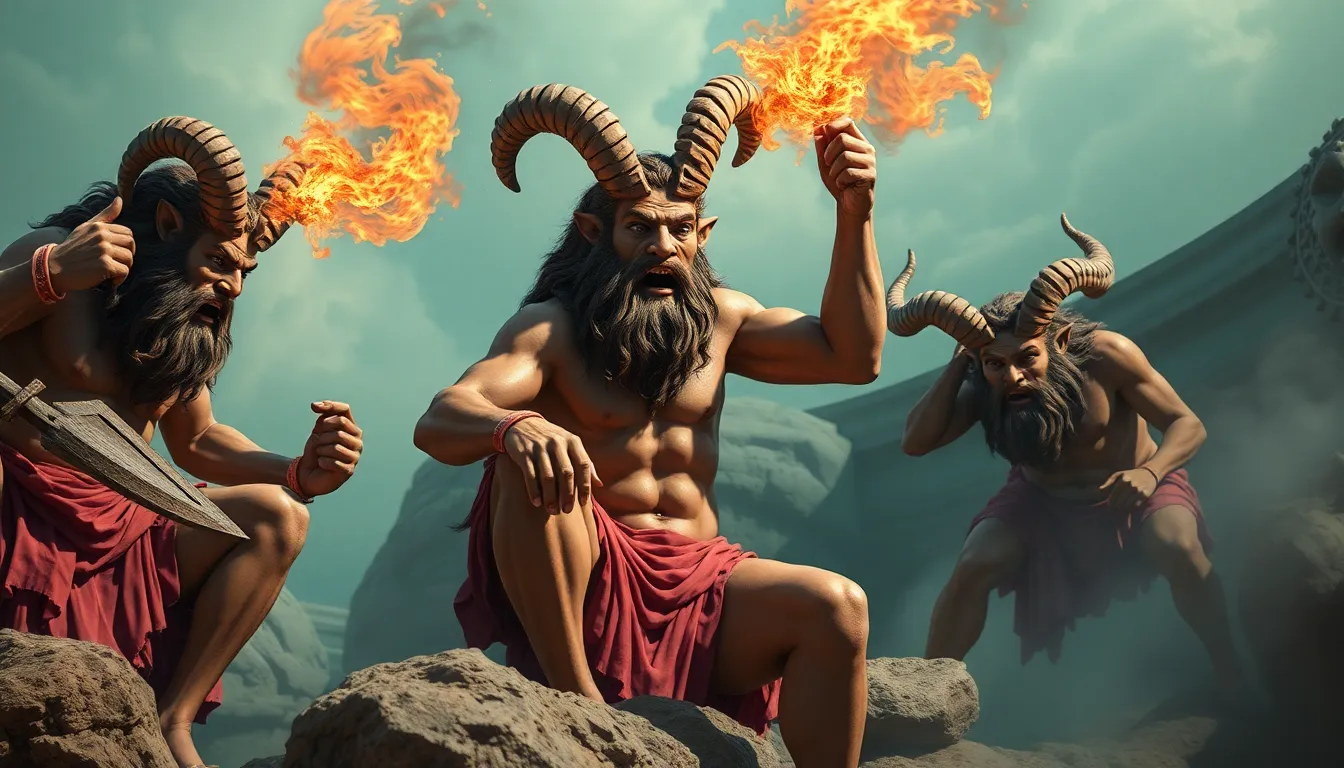
The Trials of the Satyrs: Mischief and Mayhem in Greek Mythology
I. Introduction
In the rich tapestry of Greek mythology, Satyrs hold a unique place as mischievous creatures who embody the spirit of revelry and chaos. Defined as half-human and half-goat beings, they are often depicted with the upper body of a man and the lower body of a goat, complete with horns and hooves. Satyrs are not merely whimsical figures; they symbolize the unpredictable and often tumultuous nature of human desires and instincts. This article aims to explore the trials and tribulations of Satyrs, delving into their origins, characteristics, notable myths, and their lasting impact on culture and art.
II. Origins of the Satyrs
The origins of Satyrs can be traced back to ancient Greek culture, where they were seen as nature spirits associated with fertility, wine, and the wilderness. Their role in mythology is deeply intertwined with the worship of Dionysus, the god of wine and festivity. In ancient texts, Satyrs are often described as companions of Dionysus, participating in his ecstatic rituals and celebrations.
Historical background and cultural significance
- Satyrs were often depicted in ancient Greek art and literature, showcasing their connection to both the divine and the earthly.
- They were believed to inhabit the wild places of the earth, embodying the untamed aspects of nature.
Connection to nature and the wilderness
Satyrs are emblematic of the primal forces of nature, representing the wildness that exists outside the bounds of civilization. They celebrate life’s pleasures, often engaging in revelry that reflects humanity’s deepest instincts.
Relationship with other mythological beings
- Pan: The god of the wild, shepherds, and flocks, often associated with Satyrs.
- Dionysus: The god of wine, fertility, and ecstasy, who is frequently accompanied by a retinue of Satyrs.
III. Characteristics and Traits of Satyrs
Satyrs are characterized by their distinctive physical and behavioral traits, which contribute to their reputation as symbols of mischief and mayhem.
Physical descriptions
- Horns protruding from their heads, resembling those of a goat.
- Human-like torso, often depicted with a youthful, playful demeanor.
- Lower bodies resembling that of goats, complete with hooves.
Behavioral traits
- Hedonism: Satyrs are known for their love of wine, music, and dance, reveling in the pleasures of life.
- Playfulness: Their antics often lead to humorous or chaotic situations.
- Mischief: Known as tricksters, they enjoy causing trouble for mortals and gods alike.
Role as tricksters
As tricksters, Satyrs challenge the boundaries of order, embodying the chaotic aspects of nature. Their actions often reflect the human tendency to grapple with temptation and excess, revealing the duality of pleasure and consequence.
IV. Notable Myths Involving Satyrs
Throughout Greek mythology, Satyrs are featured in various tales that highlight their playful yet troublesome nature.
The tale of Silenus and his adventures
Silenus, a prominent Satyr and companion of Dionysus, is known for his drunken escapades and wisdom. One famous story recounts how he was captured by King Midas, who sought his guidance. Silenus, in his inebriated state, offered profound insights about life, illustrating the complexity of wisdom intertwined with folly.
Satyrs in the retinue of Dionysus
Satyrs accompany Dionysus on his journeys, participating in festivities that often lead to chaotic outcomes. Their love for wine and dance often results in wild parties that challenge social norms and expectations.
The story of the Satyr and the Nymph: love and chaos
One notable myth involves a Satyr who falls in love with a Nymph. Their romance is filled with mischief, as the Satyr’s playful nature leads to unexpected complications, showcasing the tumultuous interplay between love and chaos in nature.
V. Satyrs as Symbols of Human Nature
The myths surrounding Satyrs provide rich commentary on the human experience, particularly regarding our desires and instincts.
Exploration of satirical elements in satyr myths
Satyr tales often carry satirical undertones, critiquing human behavior and societal norms. Their mischief serves as a mirror, reflecting humanity’s struggles with temptation, desire, and the consequences of indulgence.
Representation of desire, temptation, and primal instincts
- Satyrs embody the unrestrained desires that often lurk beneath the surface of civilized life.
- Their antics remind us of the chaotic nature of our instincts, which can lead to both joy and destruction.
The duality of Satyrs
Satyrs personify the dual aspects of chaos and harmony in nature. They remind us that while chaos can lead to disorder, it is also a fundamental part of the natural order, necessary for renewal and growth.
VI. The Trials of Satyrs: Key Conflicts and Challenges
Satyrs face numerous trials and conflicts that highlight their complex nature and the consequences of their mischief.
Encounters with gods and mortals
Their interactions with both gods and mortals often lead to humorous yet poignant situations, where their lightheartedness clashes with the seriousness of divine expectations.
The consequences of their mischief
- Satyrs often find themselves in trouble due to their playful antics, leading to punishment or exile.
- Through their mischief, they inadvertently teach lessons about moderation and the importance of balance in life.
Lessons learned from their trials
The trials of Satyrs reveal that while chaos and mischief can be entertaining, they also serve as cautionary tales about the excesses of human nature. Their stories remind us of the importance of temperance and the consequences of unrestrained desires.
VII. Legacy of the Satyrs in Literature and Art
The influence of Satyrs extends far beyond ancient Greece, leaving a lasting legacy in literature and art throughout history.
Influence on later literary works
Satyrs have inspired countless works, from classical literature to modern interpretations. Their mischievous nature has often been used to explore themes of desire, chaos, and the human condition.
Satyrs in Renaissance and modern interpretations
- During the Renaissance, Satyrs were often depicted in art and literature as symbols of nature’s wildness and sensuality.
- Modern adaptations continue to explore their themes, showcasing their relevance in contemporary discussions of human nature.
Comparison to other mythological trickster figures
Satyrs share similarities with other trickster figures in various mythologies, such as Loki from Norse mythology or Coyote from Native American folklore. Their role as disruptors of order speaks to a universal archetype present in cultures worldwide.
VIII. Conclusion
In conclusion, Satyrs are not mere figures of mischief in Greek mythology; they encapsulate the complex interplay between chaos and order, desire and restraint. Their stories highlight the significance of embracing one’s primal instincts while also acknowledging the consequences that may arise from indulgence. The enduring appeal of Satyrs lies in their ability to reflect the human experience, reminding us of the importance of balance in our lives. Through their trials and tribulations, we learn valuable lessons about the nature