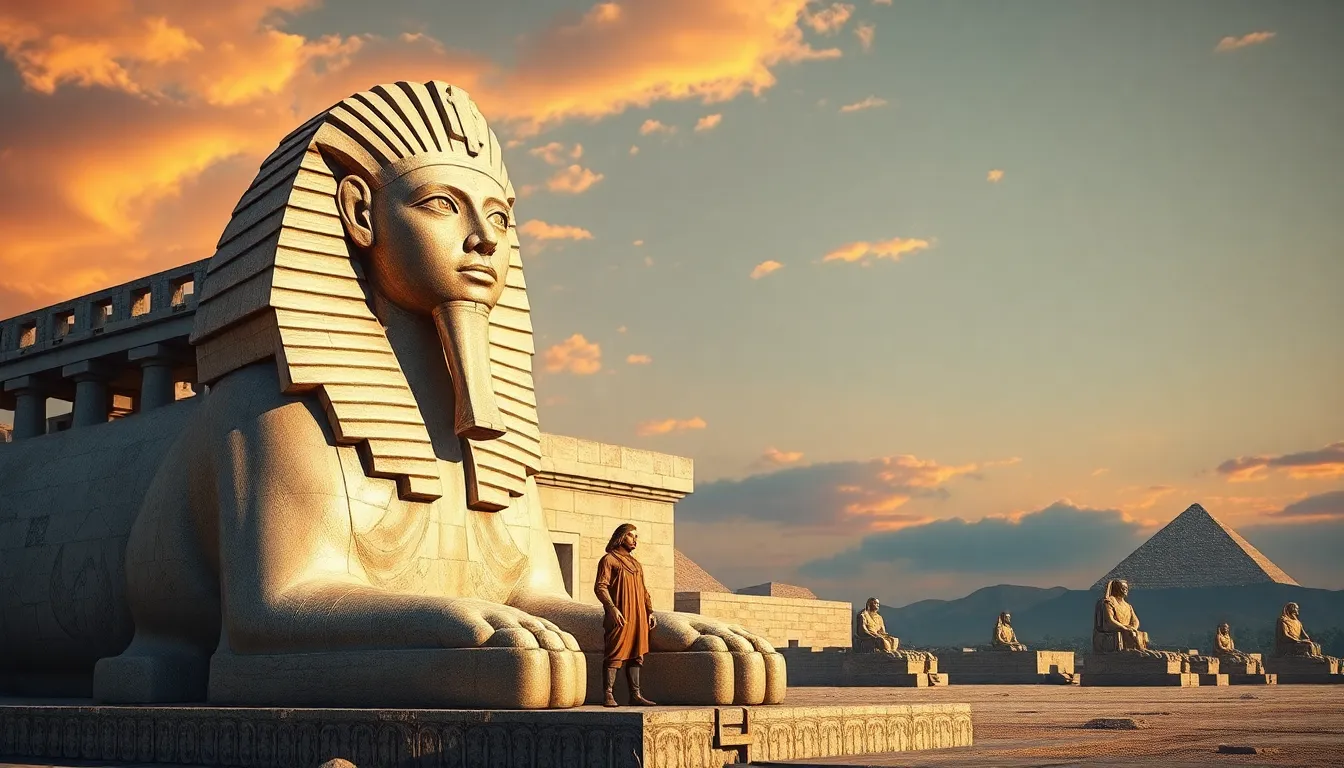
The Trials of the Sphinx: Riddles That Tested the Worthy
I. Introduction
The Sphinx, a mythical creature with the body of a lion and the head of a human, occupies a prominent place in Greek mythology. Known for its enigmatic riddles and its fearsome nature, the Sphinx represents both danger and enlightenment. Riddles, in ancient cultures, have always held significance beyond mere wordplay; they are tests of intelligence, wisdom, and worthiness. This article explores the riddles of the Sphinx, their implications for worthiness, and the lessons they impart to humanity.
II. The Legend of the Sphinx
The origins of the Sphinx in Greek mythology can be traced back to various ancient texts, notably the works of Sophocles. The Sphinx was said to have been sent by the gods as a punishment to the city of Thebes, where it terrorized the inhabitants with its riddles. The Sphinx perched on a rock outside the city, challenging all who dared to pass. It became a symbol of both knowledge and mystery, embodying the idea that wisdom is often found behind layers of enigma.
In Thebes, the Sphinx’s role was not just that of a mere monster; it represented the challenges one must face in life. The creature’s dual nature—beauty and terror—mirrored the complexities of human existence, where knowledge can lead to salvation or destruction.
III. The Riddles of the Sphinx
The most famous riddle posed by the Sphinx is: “What walks on four legs in the morning, two legs at noon, and three legs in the evening?” This riddle encapsulates the essence of human life and the stages of existence.
- Morning: Symbolizes childhood when a person crawls on all fours.
- Noon: Represents adulthood when a person walks on two legs.
- Evening: Reflects old age when a person uses a cane, thus walking on three legs.
The riddle is profound, highlighting the journey of life and the inevitability of aging. It serves as a test not just of intelligence but of deeper understanding and reflection about the human condition. Riddles, in this context, are not trivial puzzles; they are gateways to wisdom and self-awareness.

IV. The Fate of the Unworthy
Those who failed to solve the Sphinx’s riddle faced dire consequences. The creature would devour anyone who could not provide the correct answer, leading to a reign of terror in Thebes. This gruesome fate underscores the gravity of the challenge posed by the Sphinx—intellect and insight were the only means of survival.
The tragic fate of Oedipus is closely intertwined with the Sphinx’s riddles. Upon arriving in Thebes, Oedipus encountered the Sphinx and was faced with the challenge that would ultimately lead to his downfall. The themes of fate, knowledge, and hubris are intricately woven into this narrative, as Oedipus’ journey is marked by his pursuit of truth, which ultimately leads to his tragic realization of self-identity and fate.
V. The Heroic Response: Oedipus’ Triumph
Oedipus, a figure marked by both intelligence and tragic flaws, approached the riddle with determination. His journey to Thebes is one of seeking knowledge and understanding, embodying the archetype of the hero who confronts challenges head-on.
When Oedipus finally unraveled the riddle, the moment was not just a victory over the Sphinx but also a significant turning point in his fate. His answer, “Man,” was not only the solution to the riddle but a profound statement about human existence.
Oedipus’ triumph over the Sphinx represents human resilience and intellect, showcasing the power of knowledge. However, this victory is bittersweet as it foreshadows the tragic events that follow, reminding us that wisdom can come with a heavy price.
VI. The Symbolism of Riddles in Literature
The Sphinx’s riddles serve as a metaphor for life’s challenges. Just as Oedipus confronted the riddle, individuals today face their own trials that require critical thinking and problem-solving skills. Riddles in literature often serve to reflect the complexities of human nature and the journey toward enlightenment.
- Comparison to Other Literary Riddles:
- The riddles posed by Gollum in J.R.R. Tolkien’s The Hobbit challenge Bilbo Baggins in a similar way, testing his wit and cunning.
- In Shakespeare’s Hamlet, the character of the Ghost presents riddles of morality and existence, reflecting the philosophical struggles of the human condition.
The legacy of riddles continues in contemporary literature and culture, from puzzle-themed novels to riddles embedded in popular media, highlighting their enduring place in human storytelling.
VII. Lessons from the Trials of the Sphinx
The trials posed by the Sphinx offer valuable insights into the nature of wisdom and knowledge. They remind us that:
- Wisdom is often hidden beneath layers of complexity.
- Critical thinking and problem-solving are essential skills in navigating life’s challenges.
- Understanding oneself and one’s place in the world is a continuous journey.
These ancient trials resonate with modern life, encouraging individuals to reflect on their challenges and the importance of seeking knowledge and understanding in a complex world.
VIII. Conclusion
In conclusion, the Sphinx’s significance in Greek mythology transcends its role as a mere monster; it embodies the trials of intelligence and the quest for wisdom. The riddles posed by the Sphinx reflect the complexities of human existence and the importance of knowledge in overcoming life’s challenges.
As we reflect on the relevance of riddles in testing worthiness, we are reminded that the pursuit of knowledge is a fundamental aspect of the human experience. The balance between knowledge and humility, the quest for truth, and the inevitability of fate are themes that continue to resonate throughout history and into our modern lives.