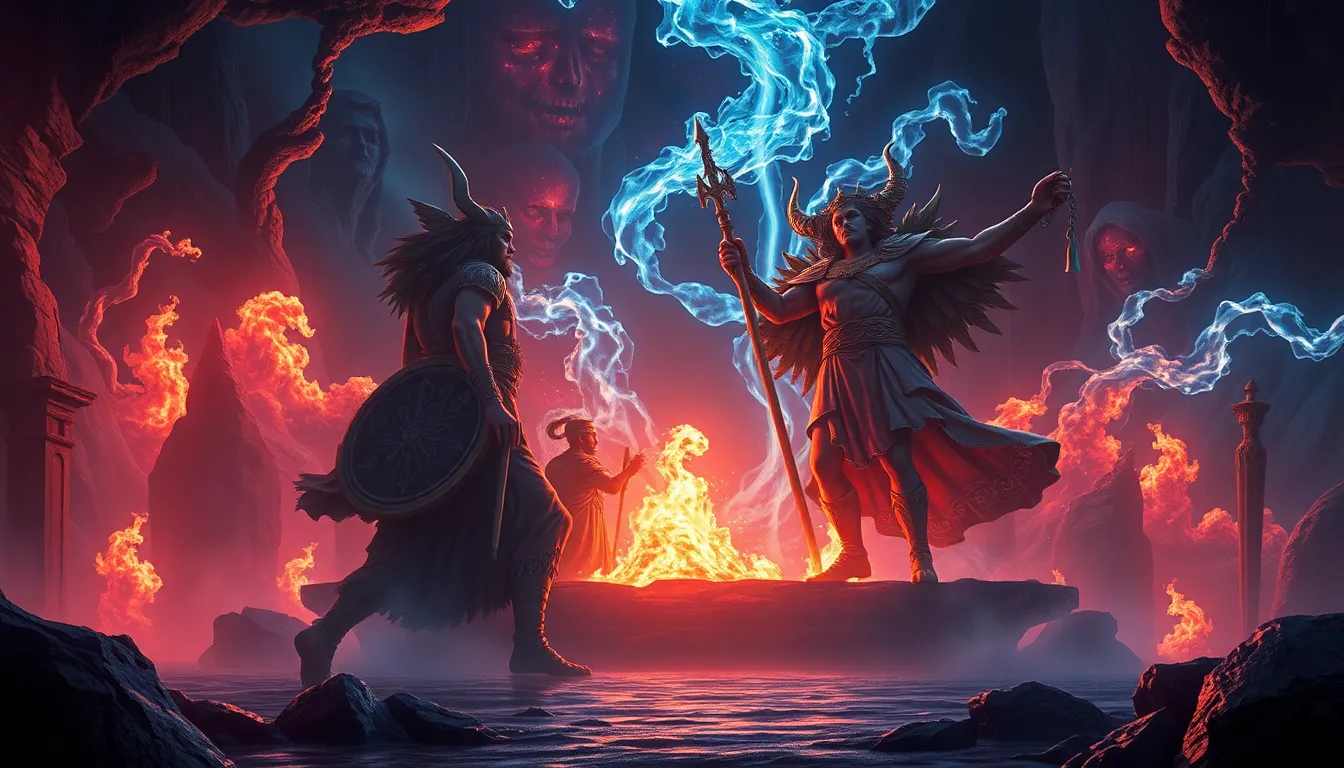
The Trials of the Underworld: Heroes Who Defied Hades
I. Introduction
In the rich tapestry of Greek mythology, few realms are as enigmatic and foreboding as the Underworld, the domain of Hades. This shadowy place, often depicted as a gloomy and desolate landscape, is where souls go after death, ruled by the stern and unyielding god, Hades. The Underworld is not merely a destination for the deceased; it serves as a symbolic representation of mortality, fate, and the trials that define the human experience.
Throughout mythological narratives, several heroes have dared to challenge the authority of Hades, embarking on perilous journeys into the depths of the Underworld. These tales are significant not only for their thrilling adventures but also for their profound exploration of themes such as love, sacrifice, and redemption. This article aims to delve into the stories of notable heroes who defied Hades, uncovering the trials they faced and the lessons they learned along the way.
II. Hades: The God and His Domain
Hades, one of the three principal gods of Greek mythology, is often overshadowed by his more celebrated brothers, Zeus and Poseidon. While Zeus rules the sky and Poseidon governs the sea, Hades presides over the Underworld, a realm that encompasses the souls of the departed. Contrary to popular belief, Hades is not synonymous with evil; rather, he is a necessary figure in the cycle of life and death, ensuring that the dead receive their due and that the living hold a healthy respect for mortality.
The Underworld itself is a complex structure, often divided into several regions, including:
- Elysium: A paradise for the virtuous and heroic souls.
- Tartarus: A deep abyss for the wicked, where they are punished for their misdeeds.
- Asphodel Meadows: A neutral zone for those who led ordinary lives.
The ancient Greeks held a deep understanding of mortality, and the Underworld represented both a final resting place and a cautionary tale about the consequences of one’s actions in life. The concept of the afterlife was integral to their culture, reflecting their beliefs about honor, legacy, and the importance of living a life of virtue.
III. Orpheus: The Power of Music and Love
One of the most poignant tales of heroism in the Underworld is that of Orpheus, a legendary musician whose love for his wife, Eurydice, transcended even death. After Eurydice tragically died from a snake bite, Orpheus was inconsolable. His grief drove him to the gates of the Underworld, where he sought to bring her back.
Orpheus’s descent into the Underworld was marked by his enchanting music, which moved both the denizens of Hades and the god himself. His journey highlights several key themes:
- The power of love: Orpheus’s motivation was rooted in his deep love for Eurydice.
- The transformative power of art: His music had the ability to soften the hearts of the dead.
- The fragility of hope: Orpheus was granted a chance to retrieve Eurydice on the condition that he did not look back until they reached the surface.
Tragically, Orpheus’s moment of doubt led him to glance back, causing Eurydice to fade away forever, symbolizing the complexity of human emotions and the often cruel nature of fate.

IV. Heracles: The Twelve Labors and the Underworld
Heracles, known for his immense strength and heroic feats, is another figure whose trials brought him to the Underworld. As part of his Twelve Labors, he was tasked with capturing Cerberus, the three-headed dog that guarded the gates of Hades. This labor was not only a test of strength but also a profound journey into the depths of the human spirit.
The capture of Cerberus involved several significant themes:
- Confrontation with death: Heracles faced the embodiment of death itself in Cerberus.
- Redemption: Completing this labor was part of Heracles’s quest for redemption from previous wrongdoings.
- The hero’s journey: Heracles’s descent into the Underworld can be seen as a metaphorical journey through trials and tribulations to achieve personal growth.
Ultimately, Heracles was able to bring Cerberus to the surface without harming him, showcasing not only his strength but also his respect for the boundaries between life and death.
V. Theseus and Pirithous: The Quest for Persephone
The friendship between Theseus and Pirithous led them to devise a daring plan to abduct Persephone, the queen of the Underworld. Their quest was fueled by youthful bravado and a desire to prove their worthiness. However, their actions would lead to dire consequences.
Their journey into Hades highlights several key points:
- The bond of friendship: Theseus and Pirithous exemplified the strength of camaraderie in the face of danger.
- Hubris: Their overconfidence in challenging Hades and the natural order of life and death ultimately led to their downfall.
- Punishment in the Underworld: Both heroes were trapped in Hades, symbolizing the consequences of defying the gods.
Theseus’s eventual escape, while Pirithous remained trapped, serves as a cautionary tale about the dangers of ambition and the importance of respecting the boundaries set by fate.
VI. Odysseus: The Journey to the Land of the Dead
Odysseus’s encounter with the Underworld in Homer’s “Odyssey” is a critical moment in his epic journey home from the Trojan War. Seeking guidance from the seer Tiresias, Odysseus ventured into the land of the dead, where he encountered numerous souls, including that of his mother, Anticlea.
This journey reveals several important themes:
- Knowledge and wisdom: Odysseus learned vital lessons about life, death, and the consequences of his choices.
- Fate and free will: His interactions with the dead highlighted the interplay between destiny and individual actions.
- The significance of remembrance: The importance of honoring the dead and the legacy of those who have passed on.
Odysseus’s journey through the Underworld not only shaped his identity as a hero but also provided profound insights into the nature of existence and the inevitability of death.
VII. Other Notable Heroes and Their Trials
In addition to the more famous heroes, several lesser-known figures also ventured into the Underworld, each facing their own trials and tribulations. Notable mentions include:
- Aeneas: In Virgil’s “Aeneid,” Aeneas travels to the Underworld to seek guidance from his deceased father, Anchises, learning about his destiny and the future of Rome.
- Alcestis: In the play by Euripides, Alcestis sacrifices herself for her husband, Admetus, and is later rescued by Heracles, showcasing themes of love and sacrifice.
Common themes among these stories include:
- The struggle against death and the desire to reclaim lost loved ones.
- The exploration of identity and purpose through encounters with the dead.
- The recurring motif of redemption and the chance to alter one’s fate.
These narratives have left an indelible mark on mythology and continue to resonate in various forms of storytelling.
VIII. Conclusion
The trials of heroes in the Underworld reveal the timeless human struggle against mortality and the desire to defy death. These stories reflect the complexities of love, friendship, and the consequences of ambition, serving as powerful allegories for the human condition. The legacy of these heroes—Orpheus, Heracles, Theseus, Odysseus, and many others—continues to inspire and captivate audiences, highlighting the enduring appeal of Underworld narratives in modern storytelling.
As we reflect on these myths, we recognize that the journey into the Underworld is not merely a descent into darkness but an exploration of the light that exists within the depths of our own humanity.