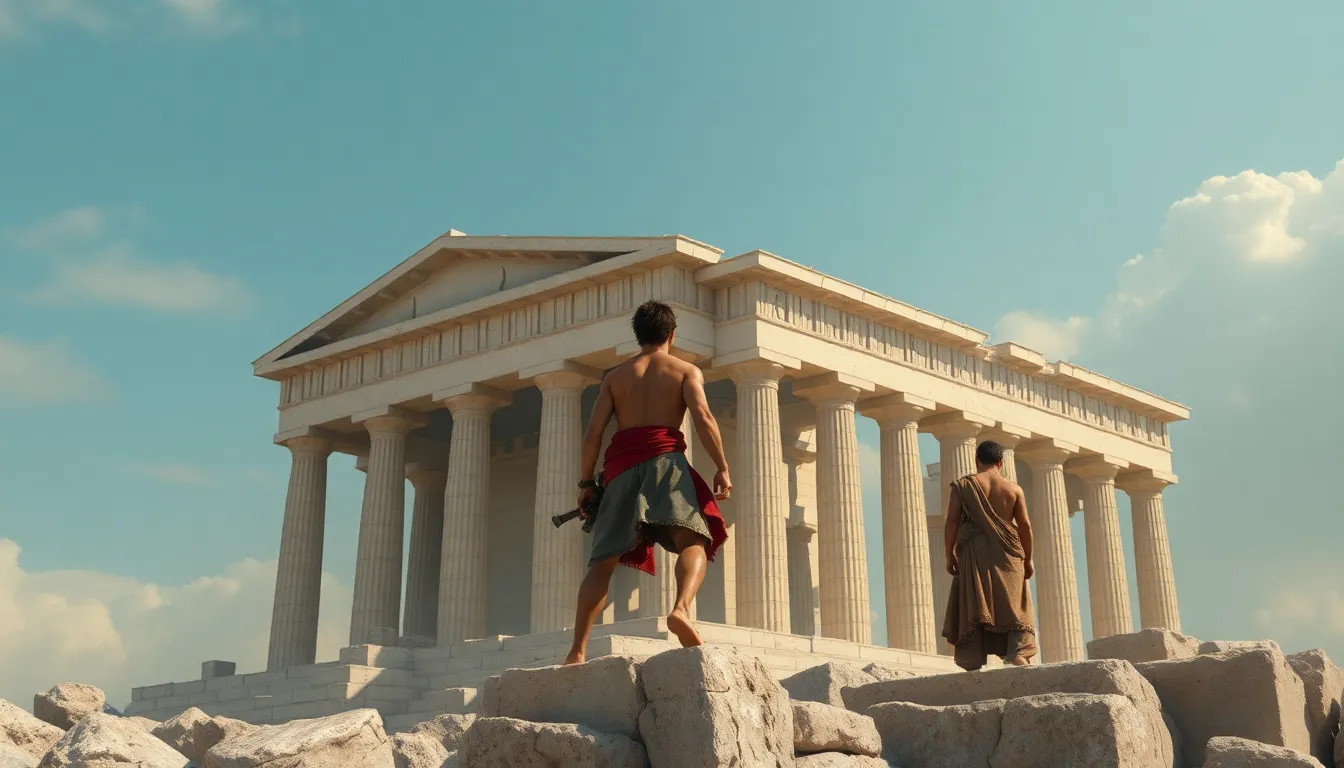
The Trials of Theseus: A Hero’s Quest Through Athens
I. Introduction
Theseus stands as one of the most celebrated figures in Greek mythology, embodying the ideals of heroism, courage, and leadership. His adventures are not only thrilling tales of bravery but also serve as allegories for the values that shaped ancient Athens. Theseus’s journey through various trials reflects the character of Athens itself—a city that valued strength, wisdom, and civic responsibility. This article will delve into the trials faced by Theseus, examining their significance and their lasting impact on Athenian culture.
II. The Birth and Early Life of Theseus
The origins of Theseus are steeped in myth. He was born to Aegeus, the King of Athens, and Aethra, a princess of Troezen. According to legend, Aegeus left a sword and sandals under a rock, instructing Aethra that when their son was strong enough to lift the stone, he should come to Athens. This moment foreshadowed the hero’s strength and destiny.
As a young man, Theseus exhibited remarkable strength and intelligence. His journey from Troezen to Athens marked the beginning of his heroic exploits. Along the way, he faced numerous challenges that showcased his bravery and cunning, setting the stage for his legendary status.
III. The Journey to Athens: Trials and Encounters
Theseus’s journey to Athens was fraught with danger, as he encountered various bandits and monsters. Each challenge he faced not only tested his physical abilities but also his moral character.

A. The challenges faced on the road to Athens
Some of the notable encounters included:
- Periphetes: Known as the Club-Bearer, he attacked travelers with a heavy club. Theseus defeated him, taking the club as a trophy.
- Sinis: The Pine-Bender, who would tie travelers to bent trees and let them go. Theseus outsmarted and killed him, freeing those who had suffered at his hands.
- The Crommyonian Sow: A monstrous pig terrorizing the region. Theseus hunted and killed the beast, earning further recognition.
- Sciron: A robber who kicked travelers off a cliff. Theseus dealt with him decisively, ensuring no one else would suffer his fate.
Through these encounters, Theseus established himself as a hero, garnering respect and admiration from those he saved. His journey was not just a path to Athens, but a quest to solidify his identity as a champion of the people.
IV. The Labyrinth and the Minotaur
One of the most renowned tales of Theseus is his confrontation with the Minotaur, a creature that was half-man and half-bull, residing in the Labyrinth on the island of Crete. This story is a cornerstone of Theseus’s legend and reflects the theme of overcoming monstrous challenges.
A. Context of the Minotaur myth
The Minotaur was born from a cursed union between Queen Pasiphae of Crete and a magnificent bull, resulting in the creature’s monstrous form. To contain the Minotaur, King Minos commissioned the Labyrinth, a complex maze designed by Daedalus.
B. The challenge of navigating the Labyrinth
Theseus volunteered to enter the Labyrinth as one of the tributes sent to appease the Minotaur. Armed with courage and the help of Ariadne, Minos’s daughter, he received a ball of thread to unravel as he ventured into the maze.
C. Theseus’s strategies and ultimate victory
Using the thread, Theseus was able to find his way back after slaying the Minotaur, demonstrating both his bravery and intelligence. This victory not only saved himself and the other tributes but also marked a turning point in his journey as a hero.
V. The Return to Athens: Triumph and Tragedy
Theseus’s victory over the Minotaur had profound implications for him and the city of Athens. It symbolized the triumph of civilization over chaos and brutality.
A. Impact of Theseus’s victory over the Minotaur
The slaying of the Minotaur was celebrated in Athens, and Theseus was hailed as a hero. His actions brought an end to the tributes demanded by King Minos, restoring hope to the people of Athens.
B. The journey back and the promise to Aegeus
As Theseus returned to Athens, he promised his father, Aegeus, that he would change the color of the ship’s sails to white upon his victorious return. This promise was significant, symbolizing hope and joy.
C. The tragic mistake: the color of the sails
However, upon his return, Theseus forgot to change the sails from black to white. Seeing the black sails, Aegeus, believing his son had perished, took his own life by jumping into the sea, which thereafter was named the Aegean Sea. This tragic turn illustrates the fragility of human life and the weight of expectations on heroes.
VI. The Reign of Theseus: Athenian Leadership and Reforms
After returning to Athens, Theseus became king and implemented significant reforms that shaped the political landscape of the city.
A. The establishment of democracy and civic order
Theseus is credited with the establishment of the first democratic principles in Athens. He encouraged participation from all citizens and aimed to create a more equitable society.
B. The role of Theseus in unifying the tribes of Athens
He played a crucial role in unifying the various tribes of Attica, promoting cooperation and solidarity among disparate groups. This unification laid the groundwork for the future strength and resilience of Athens.
C. Cultural contributions and legacies of his reign
Theseus’s reign was also marked by cultural advancements. He initiated festivals, such as the Panathenaea, which celebrated Athenian identity and fostered a sense of community among its citizens.
VII. The Later Trials of Theseus: Challenges and Downfalls
Despite his early successes, Theseus faced numerous challenges later in life, illustrating that even heroes are not immune to strife.
A. Encounters with other myths and figures
Theseus encountered various figures from mythology, including:
- Hippolyta: The Amazon queen whom he abducted, leading to his marriage.
- Pirithous: His closest companion, with whom he embarked on a quest to the Underworld, resulting in their entrapment.
B. His descent into conflict and personal loss
Theseus’s life was marked by personal tragedies, including the loss of his wife, Phaedra, who fell in love with his son, Hippolytus. This led to further familial discord and strife.
C. Reflection on the nature of heroism and vulnerability
Theseus’s later trials prompt reflections on the nature of heroism. His vulnerabilities and failures serve as a reminder that even the greatest heroes are human, facing their own struggles and limitations.
VIII. Conclusion
The trials of Theseus reveal a complex interplay between heroism, leadership, and the human condition. His adventures not only shaped his own destiny but also had a lasting impact on Athenian culture and identity.
As a symbol of courage and civic duty, Theseus remains a significant figure in mythology and history. His journey reflects the timeless themes of struggle, triumph, and the pursuit of justice, resonating with audiences even today.
Ultimately, the legacy of Theseus serves as an enduring reminder of the hero’s journey—a narrative that continues to inspire and challenge us in our own quests.