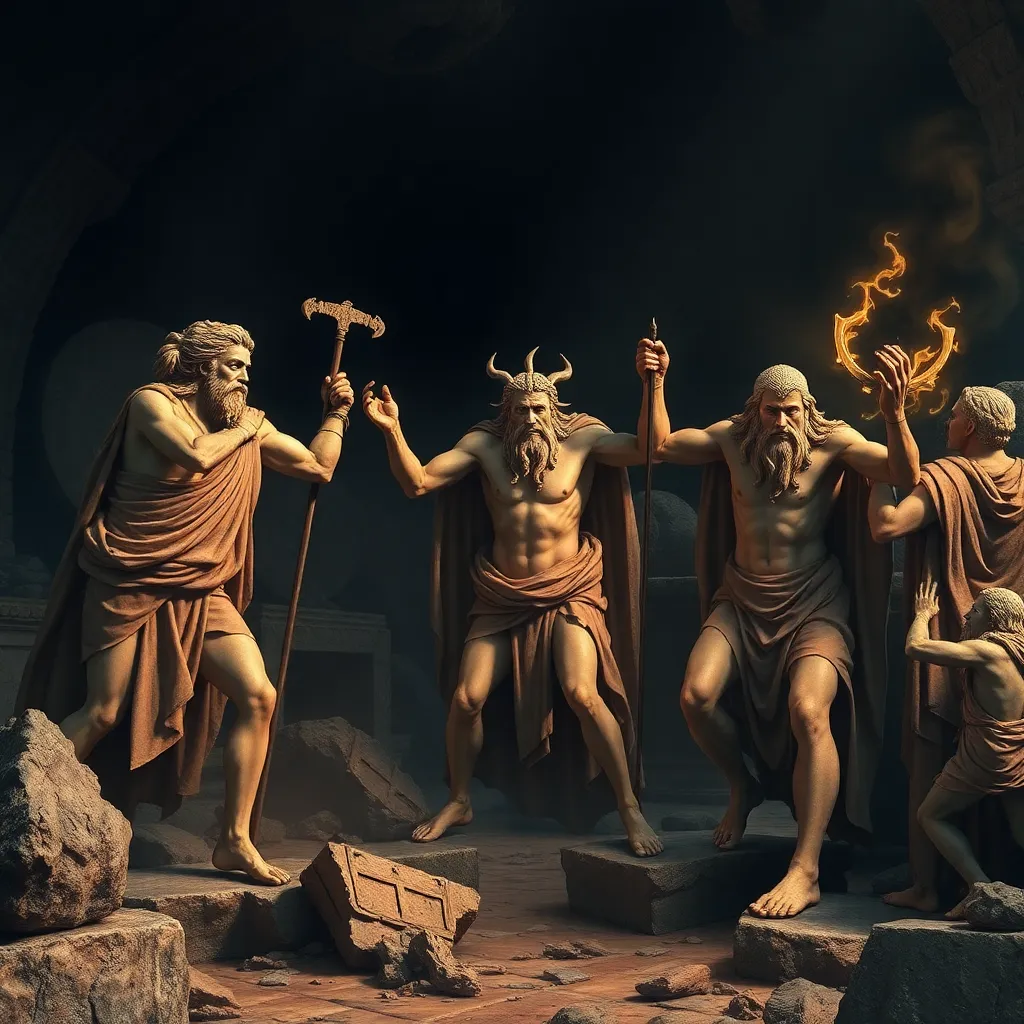
The Underworld and Its Heroes: Figures Who Defied Death in Greek Myths
I. Introduction
In Greek mythology, the Underworld, known as Hades, is a realm that serves as the final resting place for souls after death. It is a place shrouded in mystery and often feared, yet it plays a crucial role in the overarching narrative of life and death in ancient Greek culture. The Underworld is not just a destination but a significant part of the mythic landscape, where heroes embark on daring journeys to confront death itself.
Heroes in Greek mythology often challenge the inevitability of death, seeking to rescue loved ones, gain knowledge, or prove their strength. This article explores notable figures who defied death, examining their stories, motivations, and the lessons they imparted about mortality and the human spirit.
II. The Nature of the Underworld
The Underworld spans various realms, with Hades at its center, overseen by the god Hades and his queen, Persephone. This realm is divided into several regions, each serving a distinct purpose:
- Elysium: A paradise for the virtuous and heroic souls.
- Asphodel Meadows: Where ordinary souls wander aimlessly.
- Tartarus: A deep abyss for the wicked and the damned, often associated with punishment.
Souls journey to the Underworld after death, guided by Charon, the ferryman, across the river Styx. The journey is fraught with trials, emphasizing the importance of proper burial rites and respect for the dead in Greek culture. The Underworld reflects the belief in an afterlife and the moral implications of one’s actions during their lifetime.
III. Orpheus: The Musician Who Stole Back His Love
One of the most poignant tales of defiance against death is that of Orpheus and Eurydice. Orpheus was a gifted musician whose music could charm anything, even the inanimate. When his beloved wife Eurydice died from a snake bite, Orpheus was heartbroken and resolved to retrieve her from the Underworld.
Armed with his lyre, Orpheus ventured into the depths of Hades, captivating all he encountered with his enchanting music. He played for Hades and Persephone, who were moved by his sorrow and granted him permission to take Eurydice back to the living world. However, there was one condition: he must not look back at her until they had both reached the surface.
Tragically, Orpheus’s love and anxiety overcame him, and he looked back just before reaching the exit, causing Eurydice to vanish forever. This myth illustrates the power of love and art while also serving as a cautionary tale about the human tendency to succumb to doubt and fear.
IV. Heracles: The Hero Who Conquered Death
Heracles, known for his immense strength and heroic feats, also faced death in his quest for glory. Among his Twelve Labors, one of the most significant was his descent into Hades to capture Cerberus, the three-headed dog that guarded the Underworld.
Heracles’s journey was not just a demonstration of his physical prowess but also a testament to his bravery. He confronted various challenges and ultimately succeeded in bringing Cerberus to the surface without using weapons, showcasing his respect for the natural order of life and death.
Heracles’s legacy as a conqueror of death is celebrated in myths that emphasize his triumph over insurmountable odds, reinforcing the idea that even the most formidable adversary can be faced with courage and determination.
V. Theseus and Pirithous: The Quest for Persephone
The friendship between Theseus and Pirithous led them to a daring venture into the Underworld, driven by their desire to abduct Persephone, the queen of the Underworld. Their quest reflects themes of loyalty and ambition but ultimately serves as a cautionary tale about overreaching.
Upon arriving in Hades, the duo was quickly captured. While Theseus was eventually rescued by Heracles, Pirithous was left to suffer in the Underworld for eternity. This myth emphasizes the dangers of defying the natural order and the consequences of their hubris.
VI. Odysseus: The Cunning Voyager’s Encounter with the Dead
In Homer’s “Odyssey,” Odysseus’s journey to the Underworld is pivotal to his adventures. Seeking guidance to return home, he performs a ritual to summon the spirits of the dead. Among those he encounters are the prophet Tiresias, who provides crucial advice, and Agamemnon, who shares his tragic fate.
Through these encounters, Odysseus learns valuable lessons about leadership, loyalty, and the weight of one’s choices. His journey highlights the significance of the Underworld as a space for reflection and understanding, where the past informs the future.
VII. Persephone: The Duality of Life and Death
Persephone embodies the duality of life and death as the queen of the Underworld. Her abduction by Hades and subsequent annual return to the surface symbolizes the changing seasons and the cyclical nature of life.
Persephone’s story represents the balance between light and dark, joy and sorrow. As she spends part of the year with Hades and the other part with her mother, Demeter, the earth flourishes, only to wither during her absence. This myth encapsulates themes of rebirth and the interconnection of life and death, highlighting the importance of both realms in Greek mythology.
VIII. Conclusion
The heroes of Greek mythology who ventured into the Underworld challenge the finality of death, each leaving behind profound lessons about love, courage, and the human condition. Orpheus, Heracles, Theseus, Odysseus, and Persephone each faced the Underworld with unique motivations and consequences, illustrating the complexities of mortality.
These myths continue to resonate, offering insights into the human spirit’s resilience and the universal themes of loss and redemption. Through their stories, ancient Greeks reflected on their mortality, the nature of existence, and the hope of life beyond death, ensuring that these tales endure through the ages.