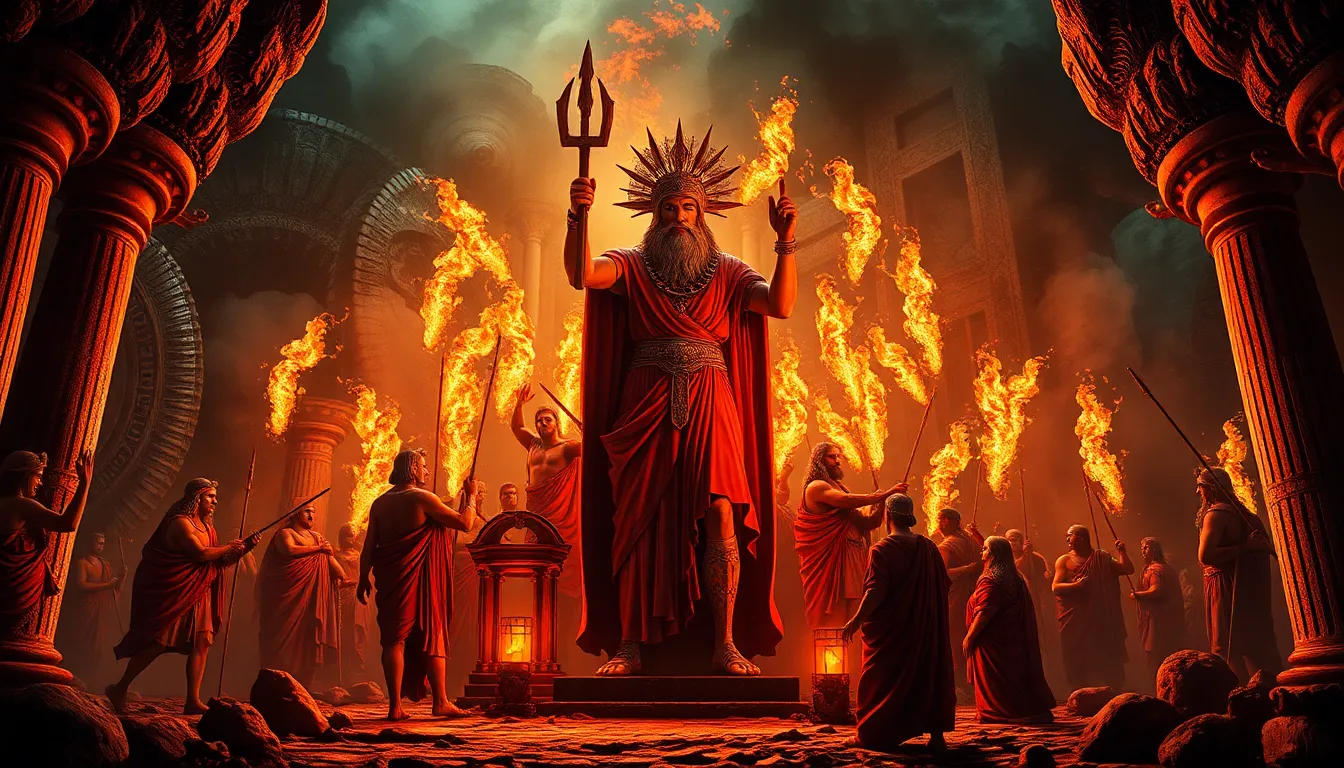
The Underworld’s Festivals: Celebrating Hades in Ancient Greece
I. Introduction
Hades, the god of the Underworld in Greek mythology, is often misunderstood as merely a figure of death and darkness. However, his role encompasses much more, serving as a crucial element in the cycle of life, death, and rebirth. Festivals dedicated to Hades were integral to ancient Greek culture, reflecting the society’s beliefs and practices surrounding the afterlife and the natural world. This article aims to explore the significance of Hades and the various festivals that honored him, revealing their cultural importance and legacy.
II. Hades: The God of the Underworld
A. Characteristics and symbolism of Hades
Hades, often depicted with a scepter and a key, symbolizes the finality of death and the mystery of the afterlife. He rules over the underworld, a realm where souls reside after death, and is associated with the earth’s fertility, as he oversees the cycles of decay and renewal.

B. His role in the Greek pantheon
As one of the three main gods alongside Zeus and Poseidon, Hades holds a significant position in Greek mythology. While Zeus governs the sky and Poseidon rules the sea, Hades’ domain reflects the inevitable fate that awaits all mortals. His importance is underscored by the power he wields over life and death.
C. The duality of death and rebirth associated with Hades
Hades is often misunderstood as solely a deity of death; however, he also embodies the concept of rebirth. The cycle of life includes death and decay, but these lead to renewal and new beginnings. This duality is reflected in various myths and festivals dedicated to him.
III. The Significance of Festivals in Ancient Greece
A. Cultural and religious importance of festivals
Festivals in ancient Greece served as vital expressions of cultural identity and religious devotion. They provided opportunities for communities to come together in celebration, worship, and reflection. The festivals dedicated to Hades were particularly focused on the themes of death, the afterlife, and the agricultural cycles that govern life on earth.
B. Festivals as communal gatherings and expressions of devotion
These events allowed communities to reinforce social bonds and share in their collective beliefs. They were not just religious observances but also vibrant communal gatherings that included feasting, music, and various forms of entertainment.
C. The connection between the living and the dead
Festivals dedicated to Hades often blurred the lines between the living and the dead, honoring ancestors and ensuring that the spirits of the deceased were remembered and revered. This connection was a crucial aspect of ancient Greek culture, emphasizing respect for the past and the continuity of life.
IV. Major Festivals Dedicated to Hades
A. The Anthesteria: Celebrating the dead and the wine
The Anthesteria was a significant festival held in honor of Dionysus but also involved elements dedicated to Hades. Celebrated in the spring, it marked the beginning of the wine production season and was a time for honoring the dead. Key elements of the festival included:
- Day 1: Pithoigia – Opening the jars of new wine.
- Day 2: Choes – A day of drinking and revelry.
- Day 3: Chytroi – A day for honoring the dead with offerings.
During this festival, it was believed that the spirits of the dead could return to visit the living, leading to a blend of joy and solemnity.
B. The Thesmophoria: Honoring Demeter and Persephone
The Thesmophoria was a festival celebrating Demeter and her daughter Persephone, focusing on themes of fertility, agriculture, and the cyclical nature of life and death. While primarily dedicated to the two goddesses, Hades played a crucial role in the myth of Persephone’s abduction. Key features included:
- Women-only participation, reflecting the sacred nature of the rituals.
- Offerings of grains and other agricultural products to ensure a bountiful harvest.
- Rituals that involved the reenactment of Persephone’s descent into the Underworld.
This festival highlighted the interconnectedness of life, death, and the changing seasons.
C. The Eleusinian Mysteries: A celebration of life, death, and rebirth
The Eleusinian Mysteries were perhaps the most famous of the ancient Greek festivals, dedicated to Demeter and Persephone but inherently connected to Hades. This initiation ceremony consisted of secret rites that promised participants a better afterlife. Key aspects included:
- Rituals that symbolized the death and rebirth of Persephone.
- Offerings made to Hades, acknowledging his role in the cycle of life.
- Spiritual teachings that emphasized the importance of life after death.
These mysteries had a profound impact on the participants, offering hope and comfort regarding the afterlife.
V. Rituals and Traditions Associated with Hades’ Festivals
A. Offerings and sacrifices to Hades
Offerings to Hades were an essential part of the festivals dedicated to him. These often included:
- Libations of wine.
- Food offerings, particularly bread and cakes.
- Animal sacrifices, particularly black animals, which were thought to appease the god of the Underworld.
These offerings were intended to honor Hades and ensure the safety of the souls in his realm.
B. The role of the priesthood in festival rituals
Priests and priestesses played a vital role in the rituals associated with festivals dedicated to Hades. They were responsible for:
- Conducting the ceremonies and ensuring that offerings were properly made.
- Interpreting omens and signs from the gods.
- Guiding the community in their expressions of devotion and mourning.
The priesthood served as mediators between the living and the dead, reinforcing the cultural significance of the festivals.
C. Mourning practices and their significance
Mourning practices were an integral part of the festivals, reflecting the ancient Greeks’ beliefs about death and the afterlife. These practices included:
- Wearings of dark clothing as a sign of respect.
- Public displays of grief, such as lamentations.
- Visiting graves and making offerings to deceased loved ones.
Such practices emphasized the ongoing connection between the living and the dead, reinforcing the importance of remembrance.
VI. Myths and Legends Surrounding Hades’ Festivals
A. Stories of Persephone and the changing seasons
The myth of Persephone’s abduction by Hades is central to the festivals dedicated to him. Her descent into the Underworld represents the onset of winter, while her return signifies spring and renewal. This cyclical narrative is reflected in:
- The rituals of the Thesmophoria, which celebrate agricultural fertility.
- The Eleusinian Mysteries, which promise rebirth after death.
B. The importance of Orphic traditions
Orphism, a religious movement in ancient Greece, emphasized the duality of life and death, highlighting the significance of Hades. Its teachings influenced the festivals by:
- Promoting the idea of the soul’s immortality.
- Encouraging rituals that honored the afterlife.
Orphic traditions enriched the understanding of Hades, providing a more nuanced view of death and rebirth.
C. Myths that shaped the understanding of the afterlife
Numerous myths surrounding Hades shaped ancient Greeks’ perceptions of the afterlife. These stories often depicted the Underworld not just as a place of punishment but also as a realm where souls could find peace. Key myths include:
- The judgment of souls by Minos, Rhadamanthus, and Aeacus.
- The trials faced by heroes in the Underworld, such as Heracles.
Such narratives influenced the rituals and festivals dedicated to Hades, reflecting a complex understanding of life after death.
VII. Modern Interpretations and Influences of Hades’ Festivals
A. The legacy of ancient celebrations in contemporary culture
The festivals dedicated to Hades have left a lasting legacy in modern