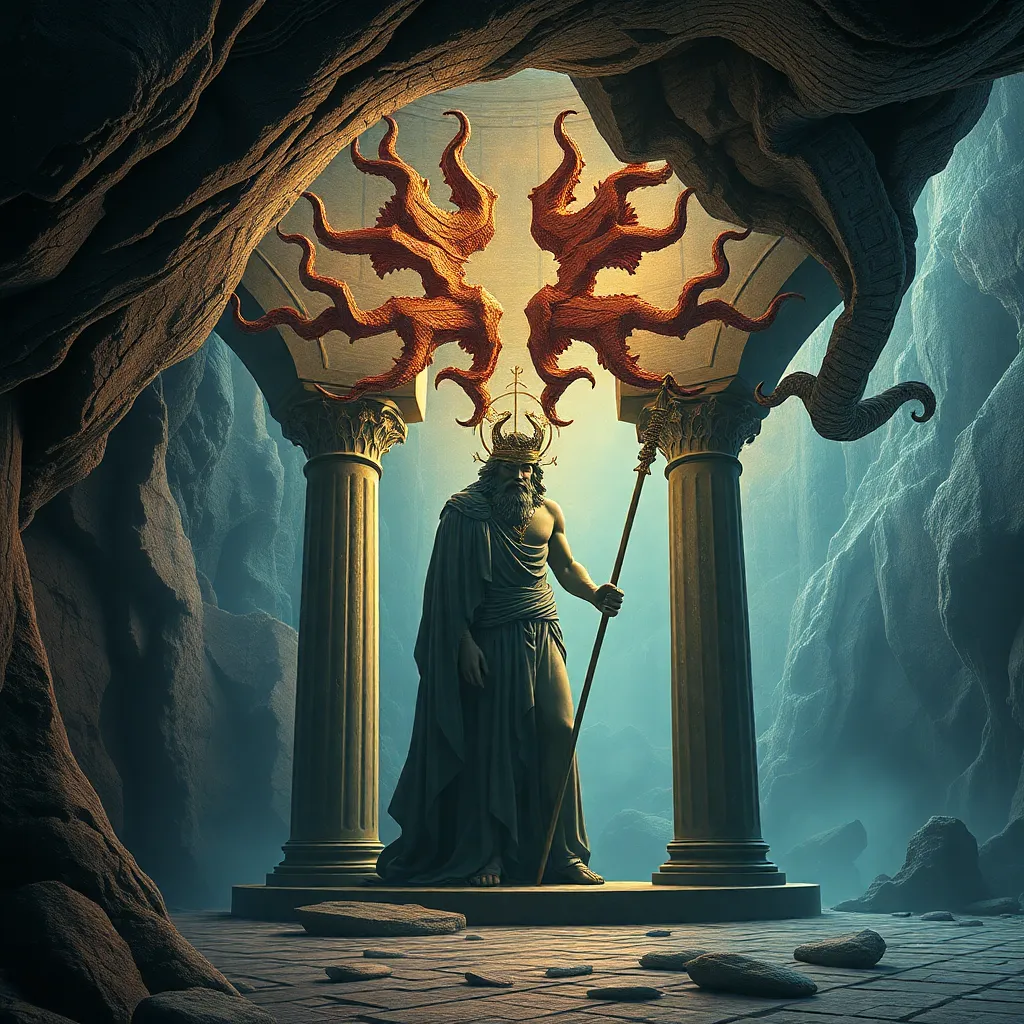
The Underworld’s Influence on Modern Psychology: Archetypes and Myths
I. Introduction
The concept of the Underworld appears prominently in various mythologies, serving as a realm where souls reside after death, and a place that embodies the duality of life and death, hope and despair. In Greek mythology, it is known as Hades; in Egyptian mythology, it is represented by Duat. Each culture has its interpretation, but the underlying themes often resonate with similar psychological concepts.
Modern psychology, rooted in both ancient philosophies and contemporary scientific practices, seeks to understand the complex workings of the human mind. It has evolved to incorporate various theories, including those that draw from mythology, literature, and art. This article aims to explore the connection between archetypes, myths, and psychological concepts, particularly focusing on the Underworld’s influence.
II. Historical Context of Archetypes and Myths
A. Definition and origin of archetypes
Archetypes are universal symbols or themes that are found across different cultures and times. They represent fundamental human experiences and emotions, often manifesting in myths, stories, and dreams. The term ‘archetype’ was popularized by Carl Jung, who believed that these symbols reside within the collective unconscious of humanity.
B. Role of myths in ancient cultures
Myths served as a means for ancient cultures to explain the unknown, impart moral lessons, and communicate shared values. They provided frameworks for understanding nature, society, and the divine, often addressing the human condition through storytelling. The Underworld myths, in particular, offered insights into mortality, the afterlife, and the transformative journeys of the soul.
C. Influence of Carl Jung’s theories on archetypes in psychology
Carl Jung’s theories significantly shaped modern psychology’s understanding of archetypes. He posited that these universal symbols manifest not only in myths but also in dreams and personal narratives. Jung’s work emphasized the importance of recognizing these archetypes to achieve self-awareness and personal growth, linking them to the human experience of the Underworld through themes of death and rebirth.
III. The Underworld as a Psychological Concept
A. Symbolism of the Underworld in myths
In various mythologies, the Underworld symbolizes the unconscious mind, representing aspects of ourselves that are hidden, repressed, or unacknowledged. Its portrayal varies:
- Greek Mythology: Hades is a place of judgment and eternal rest.
- Egyptian Mythology: Duat is a realm of trials that the soul must navigate to achieve eternal life.
- Mesopotamian Mythology: The Land of No Return, where the dead exist in shadowy silence.
B. Psychological interpretations of the Underworld experience
Psychologically, the Underworld can be interpreted as a journey into the depths of our psyche. This experience may involve confronting fears, traumas, and unresolved issues. Many therapeutic practices encourage individuals to explore their ‘Underworld’—the darker aspects of their psyche—to foster healing and transformation.
C. The Underworld as a representation of the unconscious mind
The Underworld serves as a metaphor for the unconscious mind, housing repressed memories, desires, and unresolved conflicts. Engaging with these elements can lead to greater self-awareness and understanding. Jungian therapy, for instance, often encourages exploration of these unconscious facets through dream analysis and active imagination.
IV. Archetypes of the Underworld in Modern Psychology
A. Common archetypes associated with the Underworld
Several archetypes are frequently associated with the Underworld, including:
- The Hero: Represents the journey of confronting challenges and achieving transformation.
- The Shadow: Embodies the darker, hidden aspects of oneself that must be acknowledged.
- The Guide: Often represents figures like Charon or Hermes, who assist souls on their journey.
B. Analysis of how these archetypes manifest in contemporary psychological practice
These archetypes manifest in various therapeutic practices, particularly in narrative therapy and Jungian analysis. Therapists may help clients identify their ‘Hero’s journey’ or confront their ‘Shadow’ to facilitate personal growth and healing.
C. Case studies demonstrating the application of these archetypes in therapy
Case studies have shown that individuals who engage with these archetypes often experience profound insights and personal transformations. For example, a client working through grief may embody the Hero’s journey by confronting their loss and emerging stronger. Another client may explore their Shadow by recognizing their fears and insecurities, leading to increased self-acceptance.
V. Myths of the Underworld and Their Psychological Implications
A. Overview of key myths related to the Underworld
Key myths related to the Underworld include:
- Orpheus and Eurydice: A tale of love and loss that explores themes of longing and the struggle against fate.
- Persephone: The story of her abduction by Hades symbolizes the cyclical nature of life, death, and rebirth.
- Hercules’ descent into the Underworld: A journey that signifies confronting one’s fears and the quest for redemption.
B. The psychological themes represented in these myths
These myths encapsulate significant psychological themes such as:
- Loss: The emotional journey of dealing with separation and grief.
- Transformation: The process of change and growth that arises from adversity.
- Redemption: The possibility of healing and finding new life after facing darkness.
C. The relevance of these myths in modern therapeutic contexts
Many therapists utilize these myths as therapeutic tools, helping clients relate their personal experiences to the universal themes present in these stories. This connection can offer comfort and insight, facilitating healing and understanding.
VI. The Role of the Unconscious in Understanding the Underworld
A. Exploration of the unconscious in psychological theory
The unconscious mind has been a focal point in psychological theory, particularly in Freudian and Jungian frameworks. It is seen as a reservoir of thoughts, memories, and desires that influence behavior and emotions.
B. Connections between the Underworld and the unconscious mind
The Underworld, as a symbol of the unconscious, invites exploration of hidden fears, desires, and unresolved conflicts, essential for personal growth. Engaging with this aspect of the psyche can lead to deeper self-awareness and healing.
C. Techniques for accessing the unconscious in psychological practice
Therapists employ various techniques to access the unconscious, including:
- Dream analysis: Interpreting dreams to uncover hidden meanings and desires.
- Active imagination: Engaging with images and symbols from the unconscious through creative expression.
- Free association: Allowing thoughts to flow freely to uncover suppressed emotions and beliefs.
VII. Implications for Therapy and Personal Growth
A. Utilizing Underworld archetypes in therapeutic settings
Therapists can incorporate Underworld archetypes in their practice to help clients navigate their inner struggles. Recognizing the Hero’s journey or confronting the Shadow can empower individuals to embrace their narratives and foster transformation.
B. The potential for personal transformation through understanding these myths
Understanding the myths of the Underworld can inspire clients to view their challenges as part of a larger story, promoting resilience and personal growth. By relating their experiences to these archetypal narratives, individuals may find new perspectives on their struggles.
C. Integrating mythological insights into modern psychological practices
Integrating mythological insights into therapy can create a rich tapestry of meaning for clients. By using stories and archetypes, therapists can help individuals connect with their inner worlds, facilitating healing and self-discovery.
VIII. Conclusion
The Underworld’s influence on modern psychology is profound, revealing how archetypes and myths shape our understanding of the human psyche. By exploring these connections, we can appreciate the ongoing relevance of these narratives in therapeutic practices. Embracing mythological insights allows us to navigate our inner worlds with greater clarity, fostering personal growth and