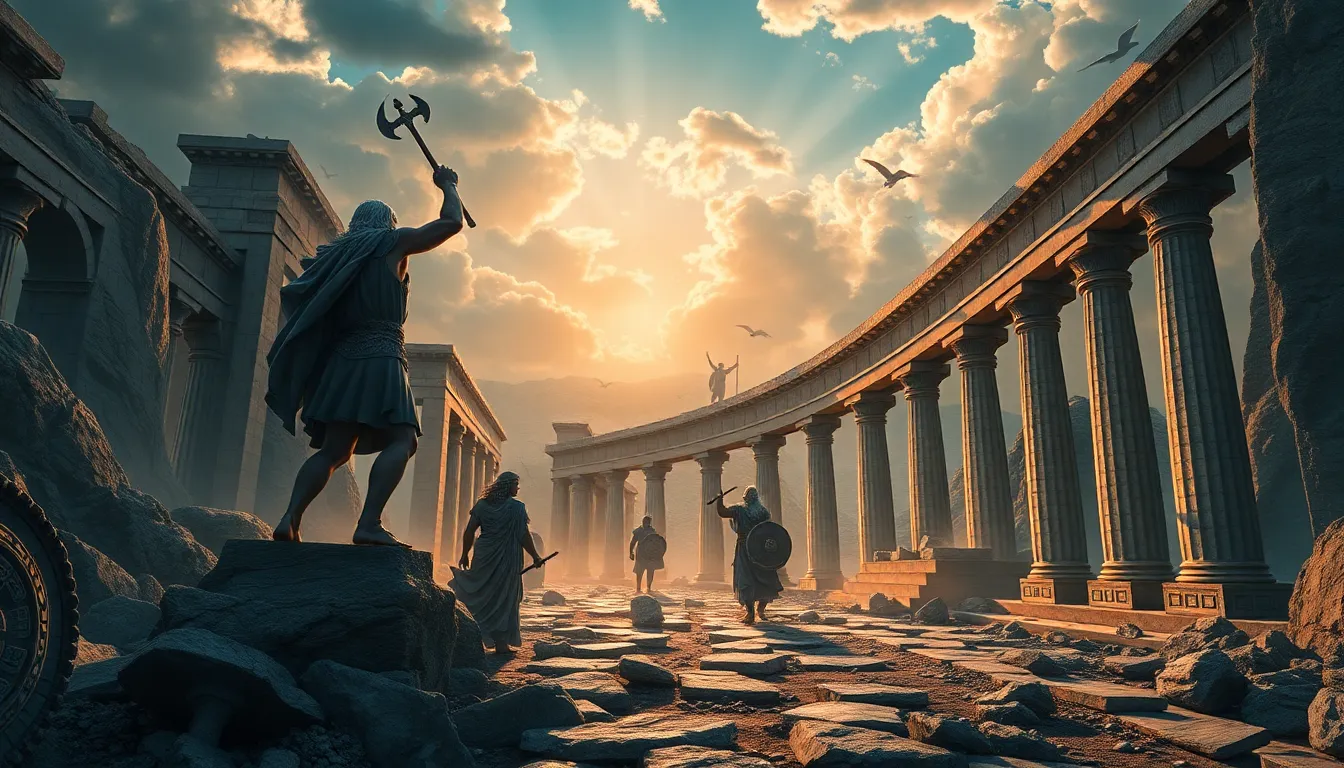
Understanding the Role of Chaos in Greek Mythical Heroes’ Journeys
I. Introduction
In the context of Greek mythology, chaos represents the primordial void, the state of disorder that precedes creation. It is not merely a backdrop for the heroes’ adventures but a fundamental element that shapes their journeys and character development.
The importance of chaos in the hero’s journey cannot be overstated. It serves as a catalyst for transformation, forcing heroes to confront not only external challenges but also their inner struggles. This article will explore the multifaceted nature of chaos in Greek mythology, examining its origins, its impact on archetypal heroes, and its legacy in both ancient and modern narratives.
II. The Concept of Chaos in Greek Mythology
The origins of chaos in ancient Greek cosmology can be traced back to Hesiod’s “Theogony,” where chaos is depicted as the first entity to emerge at the dawn of creation. It is from chaos that all things, including the earth (Gaia), the underworld (Tartarus), and the sky (Uranus), arise.
Symbolically, chaos represents the unknown, a space where potential exists but is unformed. In Greek mythology, this chaos often manifests as disorder and instability, challenging the established order of the cosmos.
To differentiate chaos from order in mythic narratives, one must consider how heroes navigate the tension between these two forces. Order is often represented by established norms, societal expectations, and divine will, while chaos embodies disruption, unpredictability, and the potential for new beginnings.
III. Archetypal Heroes and Their Encounters with Chaos
Key Greek heroes such as Heracles, Odysseus, and Perseus each encounter chaos in unique ways that reflect their individual journeys.
- Heracles: His Twelve Labors are emblematic of his struggle against chaos, both external monsters and his internal demons.
- Odysseus: His journey home is fraught with chaotic challenges that test his cunning and resilience, from Cyclopes to Sirens.
- Perseus: He battles the Gorgon Medusa and confronts chaos in the form of monstrous beings that threaten humanity.
Common themes in their chaotic experiences include the confrontation of fear, the quest for identity, and the struggle against fate. Each hero’s journey is a reflection of personal and societal chaos, emphasizing the universal nature of their trials.
IV. The Catalyst of Chaos: Challenges and Trials
The challenges faced by Greek heroes often fall into several categories, including:
- Monsters: Creatures like the Minotaur and Medusa embody the chaos that heroes must confront.
- Gods: The whims of deities introduce chaos into heroes’ lives, often leading to unexpected trials.
- Fate: The inescapable fate that heroes grapple with can also be seen as a chaotic force.
Chaos acts as a transformative force in these narratives. It challenges heroes to grow, adapt, and ultimately emerge stronger. For example, the Labors of Heracles not only serve as punishment but also as a means for him to attain redemption and self-discovery.
V. Chaos as a Pathway to Growth and Self-Discovery
The relationship between chaos and personal development is crucial in understanding the hero’s journey. Heroes often experience moments of revelation and clarity amidst the turmoil of chaos.
For instance, Odysseus’s encounters with various chaotic elements during his journey lead him to profound insights about leadership, loyalty, and the human condition. His transformation through chaos highlights the potential for growth that lies within disorder.
VI. The Role of Divine Intervention in Managing Chaos
The interplay of divine intervention in heroic journeys is significant, as gods and goddesses often influence the chaotic elements that heroes face.
- Athena: Aids Odysseus, providing guidance and wisdom during his chaotic trials.
- Hera: Challenges Heracles, complicating his journey with layers of chaos.
- Fate: The Moirai (Fates) weave the destinies of heroes, illustrating the tension between divine will and free will.
This tension reflects the broader theme of chaos in mythology, where heroes must navigate both divine machinations and their own agency in the face of overwhelming disorder.
VII. The Legacy of Chaos in Heroic Narratives
The impact of chaos on Greek literature and culture is profound. It not only shapes the narratives of ancient heroes but also resonates in modern interpretations of heroism. Chaos continues to be a universal theme in storytelling, reflecting the struggles and triumphs of the human experience.
In contemporary narratives, chaos is often depicted as a necessary element for character development, echoing the journeys of ancient heroes. Whether in literature, film, or other forms of storytelling, the theme of chaos remains relevant, illustrating the timeless nature of these mythic struggles.
VIII. Conclusion
In summary, chaos plays a significant role in the hero’s journey within Greek mythology. It serves as a catalyst for transformation, challenging heroes to confront both external and internal chaos. The interplay between chaos and heroism reveals profound insights into human nature and the universal quest for meaning.
As we explore the connections between chaos and heroism in mythology and contemporary life, we are reminded of the enduring legacy of these ancient tales. Chaos is not merely a force to be feared; it is an integral part of the journey that leads to growth, self-discovery, and ultimately, heroism.