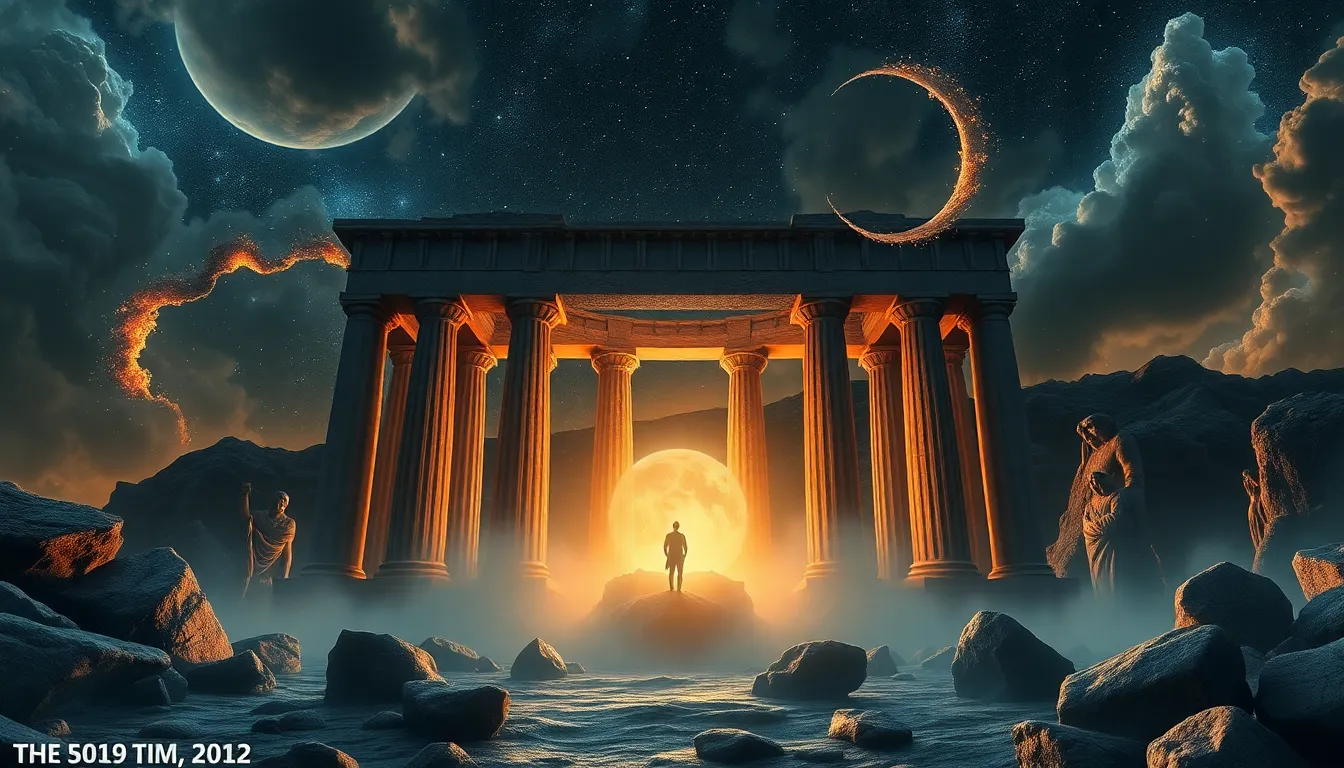
Unraveling the Myths of Uranus: A Journey Through Time
I. Introduction: The Fascination with Uranus
Uranus, the seventh planet from the Sun, holds a unique position in our solar system. Known for its striking blue color and its peculiar tilt, Uranus has captured the imagination of astronomers and mythologists alike. The planet’s name originates from the ancient Greek deity of the sky, Uranus, who personified the heavens. Understanding the myths surrounding Uranus not only enriches our appreciation of this distant world but also highlights the cultural significance of celestial bodies throughout history.
II. Historical Perspectives on Uranus
A. Ancient civilizations and their interpretations of the sky
Throughout history, various civilizations have looked to the sky for inspiration, guidance, and understanding. The Greeks, Romans, Babylonians, and others attributed divine qualities to celestial bodies, weaving them into their mythologies. The ancient Greeks, for example, viewed the heavens as a realm of gods and titans, where celestial phenomena were often explained through the lens of mythology.
B. The discovery of Uranus and its impact on astronomy
Uranus was discovered on March 13, 1781, by Sir William Herschel, marking a significant milestone in the field of astronomy. This discovery expanded the known boundaries of our solar system and challenged the previously held belief that there were only six planets. Herschel initially thought he had discovered a comet, but further observations confirmed it as a new planet, which was subsequently named Uranus in honor of the Greek god.
III. The Mythological Roots of Uranus
A. Uranus in Greek mythology: The primordial deity
In Greek mythology, Uranus is one of the primordial deities, representing the sky. He is often depicted as a personification of the heavens, and his union with Gaia, the Earth, resulted in the birth of the Titans, Cyclopes, and other formidable beings. This mythological connection illustrates the ancient Greeks’ attempt to explain the natural world through divine narratives.
B. Connections to other mythological figures and stories
- Gaia: As the mother of Uranus, Gaia symbolizes fertility and the Earth. Their relationship is foundational in Greek mythology, leading to the creation of many significant mythological figures.
- Chronos: The Titan Chronos, often associated with time, is said to have castrated Uranus, leading to his separation from Gaia and the birth of the Titans.
- Rhea and Cronus: The conflict between Uranus and his offspring, particularly Cronus, highlights themes of power and rebellion within mythological narratives.
IV. Scientific Discoveries and Uranus
A. The role of telescopes in revealing Uranus
The discovery of Uranus was made possible by advancements in telescope technology. Herschel’s telescope, which he designed himself, allowed for detailed observations of celestial bodies. This advancement paved the way for future astronomical discoveries and emphasized the importance of technology in unraveling the mysteries of the universe.
B. Key missions and findings related to Uranus, including Voyager 2
The most significant mission to Uranus was conducted by NASA’s Voyager 2 spacecraft, which flew by the planet in January 1986. This mission provided invaluable data, revealing:
- The planet’s unique tilt of 98 degrees, causing extreme seasonal variations.
- Thirteen known moons, including the five largest: Miranda, Ariel, Umbriel, Titania, and Oberon.
- The discovery of a faint ring system around Uranus, adding to the complexity of its structure.
V. Common Myths and Misconceptions About Uranus
A. Debunking myths related to Uranus’s atmosphere and geology
Despite its fascinating nature, Uranus is often shrouded in misconceptions. Some common myths include:
- Uranus is a gas giant with no solid surface, leading to confusion about its atmospheric composition.
- The planet experiences extreme weather conditions, with winds reaching up to 560 miles per hour.
B. Misinterpretations of its rings and moons
The rings of Uranus are often misunderstood. While they are faint compared to those of Saturn, they are composed of ice and rock particles, and their existence was only confirmed during the Voyager 2 flyby. Additionally, the moons of Uranus exhibit diverse geological features, challenging the simplistic view of them as mere satellites.
VI. Uranus in Popular Culture
A. Representation in literature, film, and art
Uranus has made its mark in popular culture, appearing in various forms of literature, film, and art. Some notable examples include:
- Literature: Uranus has been referenced in works of science fiction, such as Arthur C. Clarke’s “Rendezvous with Rama,” where the planet serves as a backdrop for interstellar exploration.
- Film: Films like “The Martian” and “Interstellar” have included discussions of the outer planets, including Uranus, in their plots.
- Art: Artists have portrayed Uranus in various forms, capturing its ethereal blue color and unique characteristics.
B. How popular culture has shaped perceptions of Uranus
Popular culture has both informed and distorted public perceptions of Uranus. While it has sparked interest in outer space exploration, some depictions often focus more on humor or sensationalism rather than scientific accuracy. This duality highlights the need for a balanced understanding of Uranus as both a scientific entity and a cultural symbol.
VII. The Future of Uranus Exploration
A. Upcoming missions and research initiatives
The exploration of Uranus is poised for a renaissance, with several upcoming missions being proposed by space agencies. These missions aim to gather more data on the planet’s atmosphere, magnetic field, and moons. Potential future missions include:
- NASA’s Uranus Orbiter and Probe: This mission aims to send a spacecraft to orbit Uranus and deploy a probe into its atmosphere.
- ESA’s Uranus Mission: The European Space Agency is also considering missions that could provide further insights into Uranus and its system.
B. The significance of further exploration for understanding the outer planets
Further exploration of Uranus is crucial for enhancing our understanding of the outer planets and their formation. Studying Uranus can provide insights into the history and evolution of our solar system, offering clues about the processes that shaped not only Uranus but also other ice giants like Neptune.
VIII. Conclusion: Reimagining Our Understanding of Uranus
A. Summary of key points discussed
Uranus, with its rich mythological and scientific history, remains a captivating subject of study. From its ancient roots as a primordial deity to its modern scientific explorations, Uranus exemplifies the intersection of mythology and science. Understanding the planet’s significance helps bridge the gap between ancient narratives and contemporary discoveries.
B. The ongoing journey of discovery and the importance of myth in science
The journey of discovery surrounding Uranus is ongoing, with each new mission promising to unveil more secrets of this distant world. The myths surrounding Uranus remind us of the human desire to understand our universe, blending the realms of science and mythology into a cohesive narrative that inspires future generations to look towards the stars.