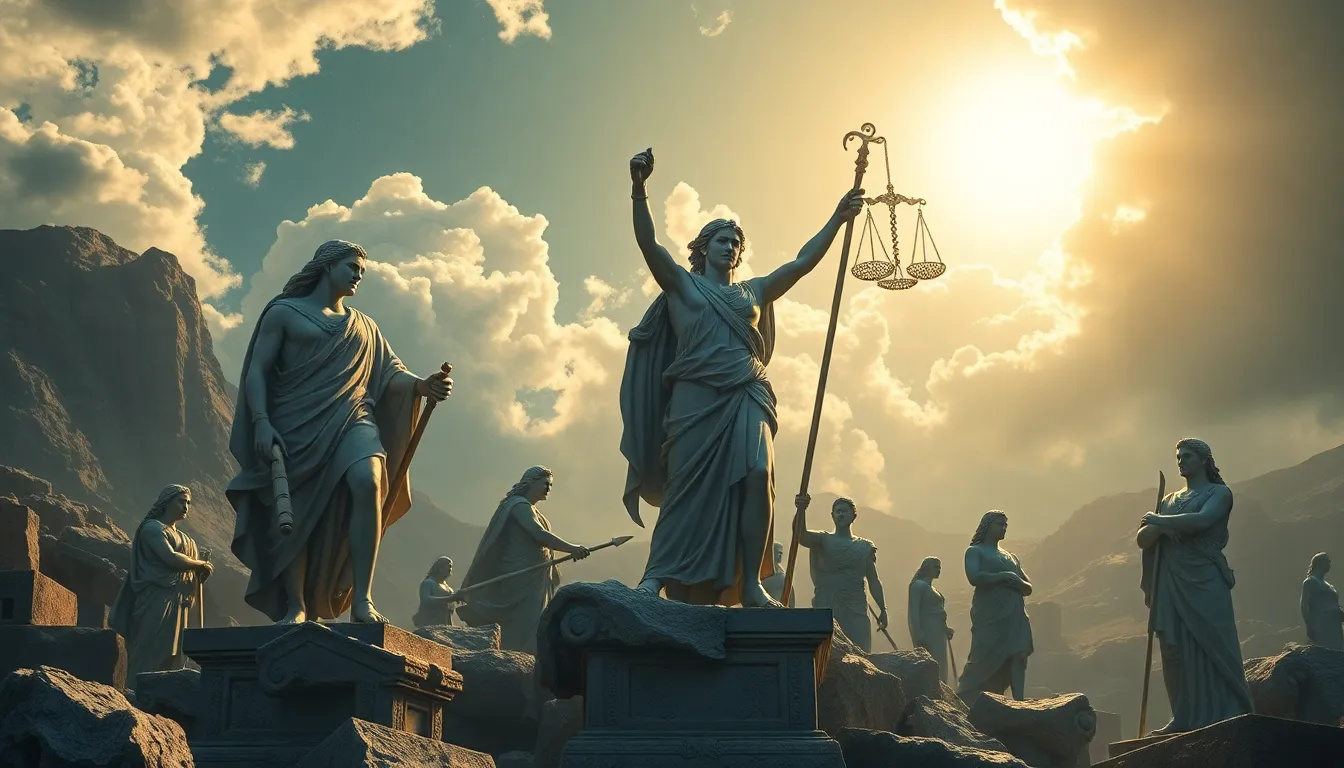
The Influence of Greek Myths on Modern Day Social Justice
I. Introduction
Social justice is the concept of fair and just relations between individuals and society, encompassing a range of issues including equality, human rights, and access to resources. It aims to address social inequalities and ensure that everyone has the opportunity to thrive. Greek mythology, with its rich tapestry of gods, heroes, and moral lessons, has profoundly influenced Western culture, shaping not only art and literature but also societal values and ethical frameworks.
This article explores the connections between Greek myths and contemporary social justice movements, demonstrating how these ancient narratives continue to resonate in our modern quest for equality and justice.
II. The Role of Myths in Shaping Social Values
Myths serve as powerful tools for conveying moral lessons and shaping societal values. In ancient Greece, myths were not merely stories; they were integral to the education of citizens and the formation of communal identity.
A. Understanding Moral Lessons in Greek Myths
Greek myths often encapsulate complex moral dilemmas and ethical quandaries. Characters like Prometheus, who defied the gods to bring fire to humanity, embody the struggle for equality and justice. Through their narratives, these myths impart lessons about responsibility, sacrifice, and the pursuit of knowledge.
B. The Function of Myths in Ancient Greek Society
In ancient Greek society, myths were used to explain natural phenomena, justify social norms, and provide frameworks for understanding human behavior. They fostered a sense of community by connecting people through shared stories and values. The myths often reflected the society’s hierarchy and moral expectations, reinforcing the norms of the time.
C. Parallels between Ancient Values and Modern Social Justice Ideals
- Equality: The fight against oppression and the pursuit of equal rights, as seen in the myth of Prometheus.
- Civil Disobedience: The actions of Antigone serve as a precedent for modern movements advocating for justice against unjust laws.
- Human Suffering: The tale of Pandora highlights the complexities of human experience, relevant to discussions of mental health and societal issues today.
III. Key Greek Myths and Their Social Justice Themes
A. The Story of Prometheus and the Fight for Equality
Prometheus, a Titan, defied Zeus by stealing fire and giving it to humanity. This act symbolizes the pursuit of knowledge and equality, as it enabled humans to advance and improve their lives. Today, his story is often invoked in discussions about the right to knowledge, access to resources, and the fight against tyranny.
B. The Tale of Antigone and Civil Disobedience
Antigone, the daughter of Oedipus, defied King Creon’s edict by burying her brother Polyneices, who had been declared a traitor. Her actions highlight the moral imperative of civil disobedience in the face of unjust laws. Antigone’s struggle resonates with contemporary activists who challenge oppressive systems and advocate for human rights.
C. The Myth of Pandora and the Complexity of Human Suffering
The myth of Pandora, who opened a jar releasing all the evils into the world, serves as a metaphor for human suffering. However, the myth also emphasizes hope as the last thing left in the jar. This duality speaks to our understanding of social justice, where recognizing suffering is essential, but so is the pursuit of hope and resilience.
IV. Archetypes and Symbols in Greek Mythology
A. The Hero’s Journey and Modern Social Justice Leaders
The archetype of the hero’s journey, prevalent in Greek mythology, is mirrored in the lives of modern social justice leaders. Figures like Martin Luther King Jr. and Malala Yousafzai embody the struggle against oppression, drawing on the same themes of sacrifice, courage, and the quest for justice found in mythological heroes.
B. Feminist Interpretations of Goddesses and Their Impact on Gender Equality
Greek goddesses such as Athena and Artemis represent strength, wisdom, and independence, challenging traditional gender roles. Feminist interpretations of these figures have inspired movements advocating for gender equality, portraying women as powerful agents of change.
C. The Use of Mythological Symbols in Contemporary Activism
Contemporary activists often utilize symbols from Greek mythology to convey messages and inspire action. For example, the image of the scales of justice, associated with Themis, the goddess of justice, is frequently employed in discussions about legal equality and fairness.
V. Greek Myths in Literature and Art as Tools for Social Commentary
A. Analysis of Modern Adaptations of Greek Myths in Literature
Numerous modern authors have adapted Greek myths to comment on contemporary social issues. Works like Margaret Atwood’s “The Penelopiad” provide feminist reinterpretations of the Odyssey, giving voice to characters traditionally sidelined in the narrative.
B. The Influence of Greek Mythology on Visual Arts and Performance
Visual artists and performers have long drawn upon Greek mythology to critique societal norms and injustices. From classical sculptures to modern installations, the themes of power, suffering, and transformation resonate through various artistic expressions.
C. Case Studies of Artists and Writers Who Draw Upon Greek Themes for Social Justice
- Louise Glück, in her poetry, often references mythological figures to explore themes of identity and resilience.
- Chimamanda Ngozi Adichie’s “Hibiscus” reflects on gender and cultural identity through a mythological lens.
- Visual artist Yinka Shonibare uses the story of Icarus to critique colonialism and its impact on identity.
VI. The Intersection of Greek Philosophy and Modern Ethical Frameworks
A. Influence of Greek Philosophers on Contemporary Moral Thought
Greek philosophers like Socrates, Plato, and Aristotle laid the groundwork for contemporary ethical thought. Their discussions of virtue, justice, and the good life continue to inform modern philosophical debates on morality and ethics.
B. The Relevance of Concepts Like Justice and Virtue in Current Social Movements
Modern social movements draw on these ancient concepts, advocating for justice and virtue in the face of inequality and injustice. The philosophical discussions of what constitutes a just society remain central to current debates about social policy and reform.
C. Comparison of Ancient Philosophical Principles with Modern Justice Theories
- Utilitarianism vs. Aristotelian ethics: The balance between the greatest good for the greatest number and the importance of individual virtue.
- Social contract theories reflecting Plato’s ideas about governance and morality.
- Discussions of distributive justice echoing Aristotle’s notions of fairness and equity.
VII. Critiques and Reinterpretations of Greek Myths
A. Addressing Problematic Aspects of Greek Myths in the Context of Social Justice
While Greek myths offer valuable lessons, they also contain problematic elements, such as misogyny, violence, and hierarchical structures. Addressing these issues is crucial for contemporary interpretations of myths in the context of social justice.
B. Reimagining Myths to Align with Modern Values
Reinterpreting Greek myths through modern lenses allows for a more inclusive and equitable understanding of their narratives. By highlighting themes of resistance and empowerment, we can align these ancient stories with today’s values of justice and equality.
C. The Importance of Inclusive Narratives in Myth Interpretation
Inclusive narratives that consider diverse perspectives enrich our understanding of myths. Engaging with different cultural interpretations can provide deeper insights into the moral lessons embedded in these stories and their relevance to modern society.
VIII. Conclusion
The enduring legacy of Greek myths continues to shape our understanding of social justice, offering timeless lessons on equality, resistance, and the human condition. By exploring these ancient narratives, we foster dialogue about the importance of justice and equality in our contemporary world.
As we reflect on the influence of Greek mythology on modern social justice movements, we are reminded of the power of stories to inspire change. Let us draw inspiration from these myths to advocate for a more equitable society, encouraging each other to engage in the ongoing struggle for justice and equality.