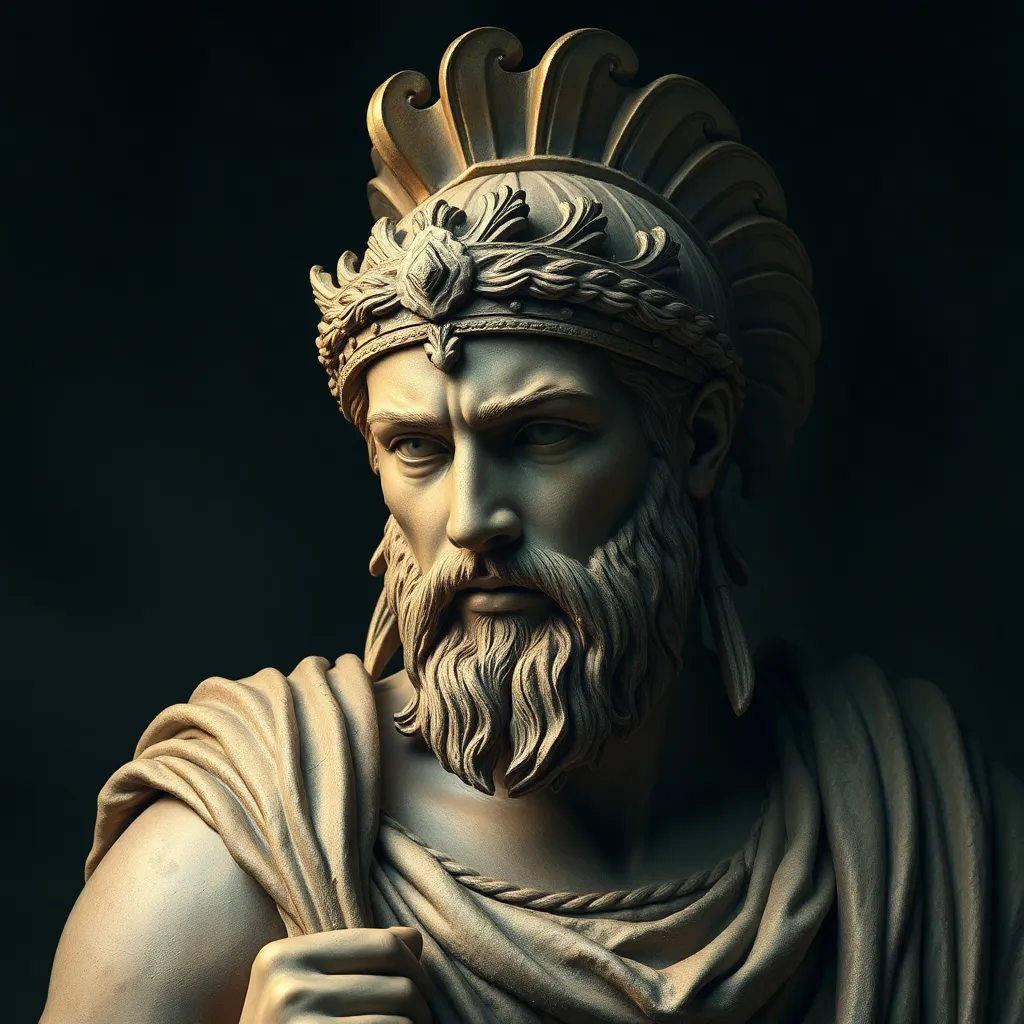
Achilles and the Nature of Immortality in Greek Myths
I. Introduction
Achilles stands as one of the most iconic figures in Greek mythology, a paragon of heroism whose story is intricately woven into the fabric of ancient narratives. His prowess in battle and tragic fate have captured the imaginations of scholars, artists, and audiences for centuries. Central to Achilles’ tale is the compelling concept of immortality, a theme that resonates throughout Greek myths.
This article aims to explore Achilles’ relationship with immortality, examining how his choices reflect broader themes of life, death, and legacy within the context of Greek mythology.
II. The Legend of Achilles
The origins of Achilles are primarily chronicled in Homer’s epic poem, “The Iliad.” Born to the mortal king Peleus and the sea nymph Thetis, Achilles was destined for greatness from the start. His mother, seeking to protect him from the perils of war, dipped him in the River Styx, rendering him nearly invulnerable—except for the part of his heel where she held him.
Key events in Achilles’ life highlight his heroic status, including:
- His unmatched skills in battle, earning him the title of the greatest Greek warrior.
- The slaying of Hector, the Trojan prince, in revenge for the death of his close friend Patroclus.
- His fierce pride and wrath, which ultimately influenced the course of the Trojan War.
Crucially, Achilles is faced with a prophecy: he must choose between a long, unremarkable life or a short, glorious one that would be remembered through the ages. His decision to embrace fame over longevity serves as a poignant reflection on the value of immortality.
III. The Concept of Immortality in Greek Mythology
In the context of Greek myths, immortality can be understood in various ways. It is often depicted as:
- Literal Immortality: Characters like the gods and certain nymphs who exist beyond the constraints of human mortality.
- Eternal Fame: The lasting recognition and remembrance of heroic deeds, as seen with Achilles, whose name echoes through history.
Other notable figures associated with immortality include:
- Heracles: Achieved immortality through divine ascension after completing his twelve labors.
- Odysseus: Gained respect and a legacy through his cunning and adventures, even if not immortal in the literal sense.
IV. Achilles’ Vulnerability and the Role of Thetis
Achilles’ story is not merely about his strength; it also encompasses his vulnerabilities. The tale of Achilles’ heel is particularly significant, symbolizing the idea that even the greatest heroes have their weaknesses. This vulnerability serves as a reminder of the fragility of life, even amidst great power.
Thetis, Achilles’ mother, plays a crucial role in shaping his fate and choices. Her desire to protect him from the horrors of war ultimately leads to his tragic destiny. The duality of strength and vulnerability in Achilles’ character highlights the complexity of heroism in Greek mythology.
V. The Philosophical Implications of Immortality
The exploration of immortality raises profound philosophical questions. What is the true value of immortality versus mortality? In Greek thought, the heroic ideal often emphasized the pursuit of everlasting glory over a long, uneventful life. This quest for recognition and remembrance is embodied in Achilles, who exemplifies the tension between human life and divine existence.
Achilles’ choices reflect a broader human condition—the desire to leave a mark on the world, to be remembered, and to achieve a form of immortality through legacy.
VI. The Aftermath of Achilles’ Death
The impact of Achilles’ death is profound within Greek mythology and literature. His demise symbolizes the tragic cost of war and the fleeting nature of life, yet it also solidifies his status as a hero. Through death, Achilles achieves a form of immortality as his deeds and character continue to inspire and resonate with audiences.
Achilles’ legacy is defined by the concept of fame, as he achieved immortality through the stories and songs sung about him. His choices, especially the decision to embrace glory over a long life, invite reflections on the nature of heroism and the consequences of one’s actions.
VII. Comparisons with Other Mythological Figures
When comparing Achilles with other heroes seeking immortality, several contrasts emerge:
- Heracles: His path to immortality was paved with trials and tribulations, leading to divine recognition.
- Odysseus: His journey emphasizes cunning and intellect over brute strength, achieving fame through a different narrative.
These differing paths to immortality provide insights into the values and ideals of ancient Greek culture, illustrating that the pursuit of greatness can take many forms.
VIII. Conclusion
In summary, Achilles’ relationship with immortality is a central theme in Greek mythology that invites deep reflection on the nature of life, death, and legacy. His choices—between a long life and eternal glory—highlight the complexities of heroism and the human experience. The enduring legacy of Achilles continues to resonate in modern culture, reminding us of the timeless quest for meaning and remembrance in a fleeting world.
Ultimately, the significance of immortality in human experience and mythology lies in its ability to inspire, provoke thought, and challenge our understanding of what it means to live a meaningful life.