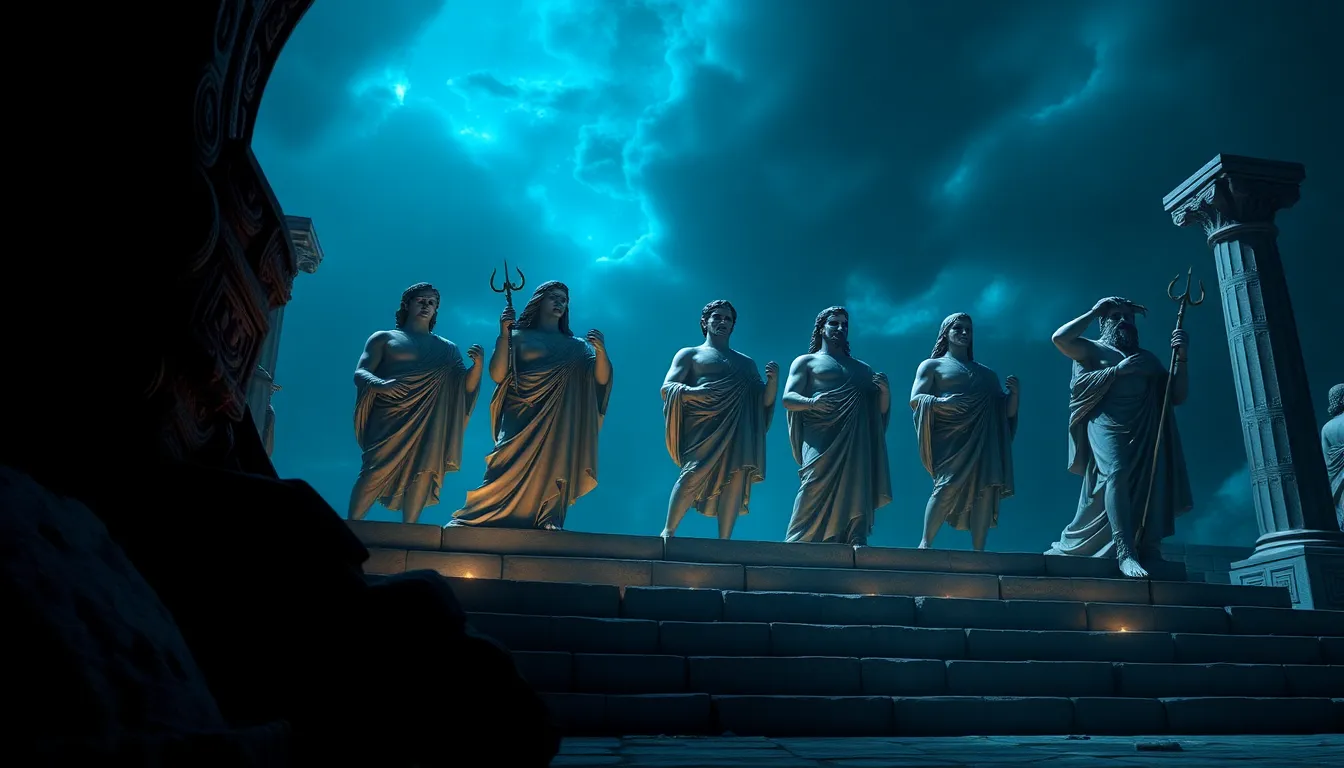
Elysium’s Gatekeepers: The Mythical Figures Who Guard the Afterlife
I. Introduction to Elysium and Its Significance in Mythology
Elysium, often referred to as the Elysian Fields, represents a paradise in ancient Greek mythology where the souls of the virtuous and heroic dwell after death. This idyllic place is characterized by eternal bliss and beauty, contrasting sharply with the grim fate that awaits those judged unworthy. As a significant aspect of Greek beliefs regarding the afterlife, Elysium underscores the importance of virtue and moral conduct in life.
The afterlife in Greek mythology is a complex realm, consisting of various destinations for souls based on their earthly deeds. The concept of Elysium is intertwined with the ideas of reward and punishment, reflecting the values of ancient Greek society. Within this intricate afterlife, gatekeepers play a crucial role in regulating the passage of souls, ensuring that only the deserving gain entry into Elysium.
II. The Concept of Gatekeepers in Various Cultures
Gatekeepers exist in many cultures, serving as guardians of transitions between different realms. In Egyptian mythology, for example, Anubis oversees the dead, guiding souls through the afterlife and weighing their hearts against the feather of Ma’at. This comparison highlights the universal belief in the need for a mediator between life and death.
- Comparison with other mythologies:
- Anubis in Egyptian mythology
- Yama in Hindu belief
- Hermes as a guide in Greek tradition
- Role of gatekeepers:
- Facilitators of transition
- Judges of worthiness
- Protectors of sacred spaces
- Symbolism:
- Transition from life to death
- Protection of the afterlife’s sanctity
- Representation of moral choices
III. The Origin and Description of Elysium’s Gatekeepers
The historical texts that reference Elysium’s guardians reveal much about their origins and significance. Ancient poets, such as Homer and Hesiod, described the Elysian Fields and the figures who guarded them, providing insights into their roles and responsibilities.
Elysium’s gatekeepers are often portrayed with distinct physical and symbolic attributes. They are typically depicted as stern yet fair figures, embodying the principles of justice and morality. As guardians of the afterlife, their appearance may vary, but they consistently symbolize the transition between life and death.
Over time, the portrayal of these gatekeepers evolved in literature and art, reflecting changing societal values and beliefs. The emphasis on justice, virtue, and the consequences of one’s actions remained central to their depiction.

IV. Major Figures Associated with Elysium’s Gatekeeping
A. Charon: The Ferryman of the Underworld
Charon, the enigmatic ferryman of the Underworld, plays a vital role in transporting souls across the river Styx, which separates the world of the living from the dead. Without his service, souls would wander the shores of the Styx for eternity, unable to reach their final destination.
- Role in transporting souls:
Charon requires payment for his services, traditionally a coin placed in the mouth of the deceased, symbolizing the necessity of preparation for the afterlife.
- Symbolism of the river Styx:
The Styx represents a boundary between life and death, emphasizing the importance of crossing over with the guidance of Charon.
B. Rhadamanthus: The Just Judge of the Dead
Rhadamanthus, one of the three judges of the dead, is known for his unwavering sense of justice. In Elysium, he oversees the evaluation of souls, determining their worthiness for paradise.
- His duties in Elysium:
Rhadamanthus evaluates the lives of the deceased, assessing their morals and actions to decide their fate in the afterlife.
- Themes of justice and morality:
His character embodies the themes of justice, emphasizing the importance of living a virtuous life.
C. Minos: The King of the Underworld
Minos, another of the three judges, is often depicted as a former king of Crete who now presides over the judgment of souls in the afterlife.
- His role in the judgment of souls:
Minos holds the final decision in the fate of souls, wielding a scepter as a symbol of his authority.
- Connection to Elysium’s entrance:
Minos’s judgment determines whether a soul is worthy of entry into Elysium or condemned to Tartarus.
V. The Journey to Elysium: Trials and Tribulations
The journey to Elysium begins at the moment of death, a process fraught with challenges and trials. Souls must navigate the complexities of the afterlife, facing various obstacles before reaching their final resting place.
- The process of dying and reaching the afterlife:
Upon death, souls must travel to the Underworld, often requiring assistance from Charon.
- Challenges faced by souls on their journey:
Some souls may encounter judgment from Rhadamanthus and Minos, facing the consequences of their earthly actions.
- The role of gatekeepers:
Gatekeepers like Charon, Rhadamanthus, and Minos play crucial roles in determining eligibility for Elysium based on one’s life choices.
VI. Symbolism and Interpretation of Elysium’s Gatekeepers
The philosophical implications of gatekeeping in the afterlife raise questions about morality, justice, and the nature of existence. Elysium’s gatekeepers represent the transition from life to death, embodying the moral choices made during one’s lifetime.
- Representation of life, death, and moral choices:
These figures symbolize the consequences that follow one’s actions, emphasizing the importance of virtue and integrity.
- Modern interpretations and relevance:
In contemporary society, the concept of gatekeeping can be seen in various contexts, reflecting ongoing discussions about morality and justice.
VII. Elysium’s Gatekeepers in Popular Culture
The influence of Elysium’s gatekeepers extends beyond ancient texts, permeating modern literature, film, and art. These mythical figures have been reimagined and depicted in various ways, shaping contemporary views of the afterlife.
- Depictions in literature, film, and art:
From classical literature to modern adaptations, the themes surrounding Elysium’s gatekeepers resonate with audiences, exploring the nature of justice and morality.
- Influence on contemporary views of the afterlife:
These figures challenge us to consider our own moral choices and their consequences in a modern context.
- The resurgence of interest in mythological figures:
As interest in mythology grows, so does the fascination with figures like Charon, Rhadamanthus, and Minos, highlighting their enduring legacy.
VIII. Conclusion: The Enduring Legacy of Elysium’s Gatekeepers
The mythological figures who guard Elysium represent essential themes of justice, morality, and the consequences of one’s actions. Through the narratives surrounding Charon, Rhadamanthus, and Minos, we gain insight into the ancient Greek understanding of the afterlife and the significance of virtue.
As we reflect on the role of these gatekeepers, it becomes evident that their symbolism transcends time, inviting