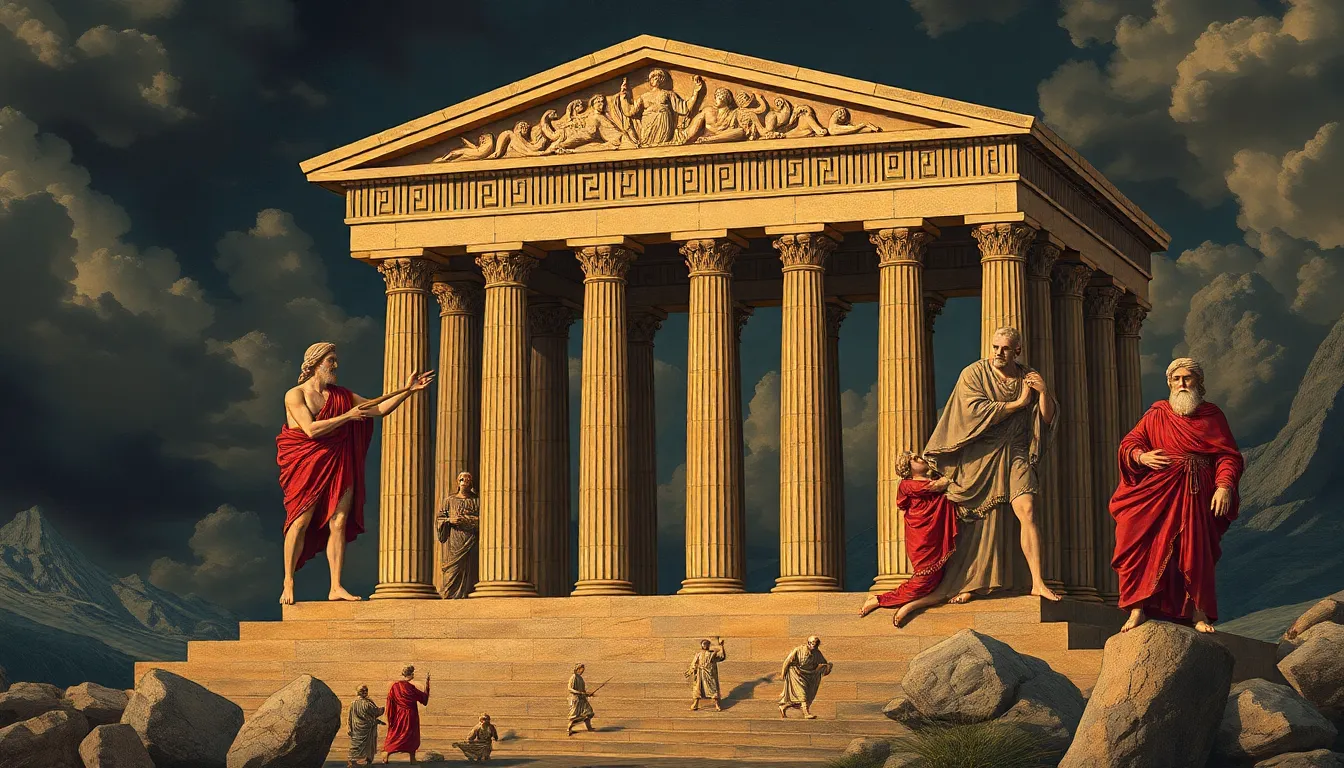
Exploring the Influence of Greek Myths on Modern Art Movements
I. Introduction
Greek mythology, a rich tapestry of gods, heroes, and epic tales, has significantly influenced various aspects of culture and art throughout history. From the ancient sculptures of the Parthenon to the literary works of Homer and Hesiod, these myths provide a profound insight into the human condition, morality, and the natural world. Their enduring narratives explore themes of love, power, fate, and the divine, making them timeless and relevant across generations.
Modern art movements, on the other hand, represent a departure from traditional artistic conventions, often seeking to express complex emotions and abstract ideas. Movements such as Surrealism, Expressionism, and Neoclassicism have redefined the boundaries of creativity, encouraging artists to draw inspiration from a multitude of sources, including mythology.
The purpose of this article is to explore the connections between Greek myths and modern art, examining how these ancient stories continue to resonate within contemporary artistic expressions.
II. The Enduring Legacy of Greek Mythology
A. Historical context of Greek myths
Greek mythology originated in the oral traditions of ancient Greece, where stories of gods and heroes were passed down through generations. These narratives were not just entertainment; they served to explain natural phenomena, human behavior, and the complexities of life. They were deeply intertwined with religion, culture, and societal norms, influencing the art and architecture of the time.
B. Themes and archetypes prevalent in Greek myths
- Heroism: The journeys of heroes like Odysseus and Heracles illustrate the struggle against adversity.
- Fate vs. Free Will: Myths often explore the tension between predestined paths and individual choices, as seen in the stories of Oedipus and Persephone.
- Love and Desire: The relationships between gods and mortals, exemplified by the tales of Zeus and various lovers, highlight the complexities of love.
- Transformation: Many myths involve characters undergoing significant changes, symbolizing growth and evolution.
C. Relevance of these themes in contemporary society
These themes remain pertinent today, as modern society grapples with similar issues of identity, morality, and existential questions. Artists frequently draw upon these myths to explore contemporary struggles, ensuring that the wisdom encapsulated in these ancient tales continues to inform and inspire.
III. Symbolism and Motifs in Modern Art
A. Common symbols derived from Greek mythology
Greek mythology is rich with symbols that convey deeper meanings. Some of these include:
- Labyrinth: Represents complex journeys and the search for truth, often used in artworks depicting struggle and discovery.
- Owl: A symbol of wisdom associated with Athena, frequently used to convey knowledge and insight.
- Laurel Wreath: A sign of victory and honor, it is often incorporated into works celebrating achievement.
B. Analysis of how these symbols are interpreted in modern art
Modern artists reinterpret these symbols, infusing them with new meanings. For instance, the labyrinth may symbolize not only a physical journey but also the psychological complexities of modern life. The owl, while still a symbol of wisdom, can also represent the clash between knowledge and ignorance in today’s information age.
C. Examples of artists who integrate mythological motifs into their work
Several artists have successfully woven Greek mythology into their modern works:
- Pablo Picasso: His piece “Minotauromaquia” draws on the myth of the Minotaur, exploring themes of violence and duality.
- Frida Kahlo: Frequently referenced mythological imagery to express her personal struggles and identity.
- Andy Warhol: Incorporated mythological references into pop culture contexts, blending the sacred with the mundane.
IV. The Influence of Surrealism on Greek Mythology
A. Overview of the Surrealism movement
Emerging in the early 20th century, Surrealism sought to unleash the unconscious mind and explore dream-like realities. Artists aimed to challenge perceptions of reality through bizarre juxtapositions and illogical scenes, often drawing from mythological themes.
B. Connection between surrealist concepts and mythological narratives
Surrealists found inspiration in the fluidity and ambiguity of mythological stories. The irrationality of dreams parallels the fantastical elements of myths, making them fertile ground for surrealist exploration.
C. Artists who have drawn inspiration from Greek myths
Notable surrealist artists include:
- Salvador Dalí: His works, such as “The Persistence of Memory,” often incorporate mythological references, blending dream and reality.
- Max Ernst: Utilized mythological themes to create fantastical landscapes and narratives that challenge reality.
V. Expressionism and the Emotional Resonance of Myths
A. Overview of the Expressionism movement
Expressionism emerged in the early 20th century as a response to the industrialization and dehumanization of society. Artists sought to convey emotional experiences rather than physical reality, making Greek myths an ideal source of inspiration due to their intense emotional narratives.
B. Exploration of Greek myths as a source of emotional and psychological expression
The emotional depth of Greek myths allows artists to explore complex feelings such as despair, joy, and existential dread. The struggles of characters like Prometheus or the tragic fate of Eurydice resonate deeply within the human psyche.
C. Case studies of expressionist artists and their mythological references
Artists like Edvard Munch and Egon Schiele have drawn upon Greek mythology to explore themes of suffering and emotional turmoil:
- Edvard Munch: Known for “The Scream,” Munch’s work reflects the inner turmoil often found in mythological narratives.
- Egon Schiele: His expressive figures often evoke the raw emotional power present in mythological stories.
VI. Neoclassical Revival: Reinterpreting the Ancients
A. Discussion of Neoclassicism and its roots in Greek mythology
Neoclassicism, which emerged in the late 18th century, sought to revive the classical ideals of ancient Greece and Rome. This movement emphasized clarity, order, and harmony, often using mythological themes to convey moral messages.
B. Examination of how modern artists reinterpret classical themes
Modern artists reinterpret these ancient narratives, infusing them with contemporary relevance. They often challenge classical ideals or present alternative perspectives on mythological figures.
C. Prominent modern artists influenced by Neoclassical ideals
Artists such as Jean-Auguste-Dominique Ingres and Antonio Canova have drawn heavily from Greek mythology:
- Jean-Auguste-Dominique Ingres: Known for his idealized forms and mythological subjects, such as “La Grande Odalisque.”
- Antonio Canova: His sculptures, like “Psyche Revived by Cupid’s Kiss,” exemplify the Neoclassical style while drawing from mythological themes.
VII. Contemporary Art and Myth: A New Perspective
A. Overview of contemporary art movements and their relationship with mythology
Contemporary art movements, including Postmodernism and Feminism, often engage with mythology to critique or reinterpret traditional narratives. Artists challenge the patriarchal structures embedded in these myths, offering new interpretations that reflect modern values.
B. How modern artists challenge traditional interpretations of Greek myths
Artists today frequently deconstruct the roles of gods and heroes, providing fresh insights into the power dynamics and societal norms represented in ancient stories.
C. Examples of contemporary artworks that engage with mythological themes
Several contemporary artists have created works that reflect this engagement:
- Yayoi Kusama: Her installations often reference mythology through patterns and repetition, reflecting themes of infinity and transcendence.
- Kara Walker: Her silhouettes address race and gender through the lens