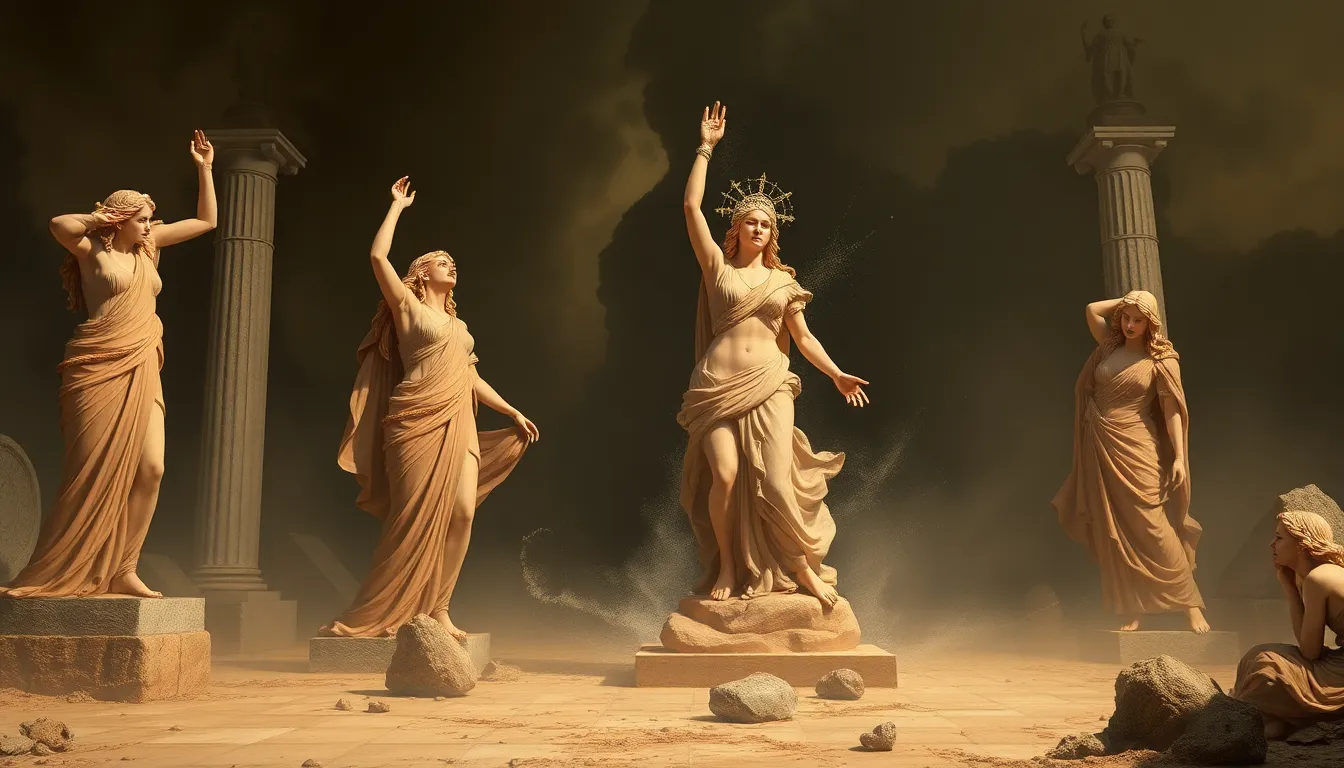
Goddesses in Peril: The Most Dramatic Trials of Female Deities
I. Introduction
Throughout history, female deities have played significant roles in the myths and stories of various cultures. These powerful figures often embody essential forces of nature, love, war, and wisdom, reflecting the complexities of human experience. However, many of these goddesses also face dramatic trials and tribulations that highlight their vulnerabilities and resilience. This article will explore key narratives of goddess trials across different mythologies, showcasing their struggles and the moral lessons ingrained in their stories.
II. The Archetype of the Perilous Goddess
The concept of the “perilous goddess” refers to female deities who encounter significant challenges that test their strength, resolve, and identity. These goddesses often navigate through perilous situations that reveal their character and the cultural values of the societies that worship them.
- Definition and Characteristics: The perilous goddess archetype typically features qualities such as bravery, wisdom, compassion, and an inherent connection to the cycles of nature.
- Common Themes: The trials faced by these deities often involve themes of sacrifice, loss, love, and the struggle between good and evil.
- Cultural Importance: These narratives serve not only as stories of divine beings but also as reflections of human experiences, moral lessons, and cultural ideals.
III. Inanna: The Descent to the Underworld
Inanna, the Sumerian goddess of love and war, is perhaps one of the most well-known figures to face dramatic trials. Her journey to the Underworld is a powerful narrative that highlights themes of death and rebirth.
Inanna descends to the Underworld in search of her sister, Ereshkigal, and to assert her power. However, her journey is fraught with peril:
- As she approaches the gates of the Underworld, she must pass through seven gates, each requiring her to relinquish a piece of her divine adornment.
- Upon her arrival, Ereshkigal, who is the ruler of the Underworld, captures Inanna and condemns her to death.
The symbolism of Inanna’s resurrection is profound. After three days, her loyal servant, Ninshubur, seeks help from the gods, leading to Inanna’s revival and return to the world above. This story encapsulates the cyclical nature of life and death, emphasizing the inevitability of loss and the power of renewal.

IV. Demeter: The Grief of a Mother
Demeter, the Greek goddess of the harvest and agriculture, faces one of the most heart-wrenching trials in mythology: the loss of her daughter, Persephone. When Hades, the god of the Underworld, abducts Persephone, Demeter’s grief has devastating effects on the earth.
Demeter’s search for Persephone is a profound exploration of maternal love and loss:
- In her despair, Demeter neglects the earth, causing crops to fail and famine to ensue.
- Her relentless quest leads her to the depths of the earth, seeking her daughter across the realms.
The themes of loss and resilience are central to Demeter’s story. Eventually, a compromise is reached whereby Persephone spends part of the year with Hades and part with Demeter, symbolizing the changing seasons and the cycle of life and death.
V. Kali: The Battle Against Evil
Kali, a fierce goddess in Hindu mythology, embodies both destruction and protection. Her origins are steeped in the battle against evil forces, showcasing her trials as both a warrior and a protector of the cosmos.
Kali emerges in response to the threat posed by the demon Raktabija, whose blood creates more demons with each drop spilled. The dramatic trials she faces include:
- Engaging in a fierce battle where she must consume Raktabija’s blood before it touches the ground, demonstrating her relentless nature.
- Transforming into a fearsome figure, adorned with skulls and wielding weapons, she represents the duality of destruction leading to creation.
Kali’s story illustrates the complexities of her nature as both a destroyer of evil and a nurturing mother figure, emphasizing the balance between chaos and order in the universe.
VI. Freyja: The Trials of Love and War
Freyja, the Norse goddess of love, beauty, and war, faces her own set of dramatic trials. Her narrative intertwines themes of love, sacrifice, and the complexities of relationships.
One of Freyja’s most poignant stories involves her quest for her lost husband, Óðr:
- In her search for Óðr, Freyja ventures into dangerous territories, demonstrating her determination and love.
- Her involvement in battles, as she chooses fallen warriors to join her in Valhalla, shows her dual role as a goddess of both love and war.
The themes of sacrifice and strength resonate throughout Freyja’s trials, embodying the complexities of love and the harsh realities of life and death.
VII. Amaterasu: The Sun Goddess’s Retreat
In Japanese mythology, Amaterasu is the sun goddess whose retreat into a cave plunges the world into darkness. Her story is a powerful narrative about the interplay of light and darkness.
Amaterasu’s withdrawal occurs after a conflict with her brother, Susanoo, leading her to hide away in a cave:
- The absence of Amaterasu results in chaos and despair among the other deities, who struggle to bring her back.
- Through clever tactics, including the use of a mirror and a dance, the gods manage to coax Amaterasu out of her hiding place, restoring light to the world.
This myth emphasizes the significance of balance in nature and the importance of cooperation among deities to restore harmony.
VIII. Conclusion
The trials faced by female deities across cultures reveal the resilience, complexity, and multifaceted nature of these powerful figures. Each narrative not only entertains but also imparts valuable lessons about love, loss, sacrifice, and the human experience.
The enduring legacy of these stories continues to influence modern storytelling, reminding us to appreciate the rich tapestry of myths that shape our understanding of the world. By exploring the narratives of goddesses in peril, we gain insight into the struggles and triumphs that resonate with our own lives, encouraging us to embrace the complexities of our journeys.