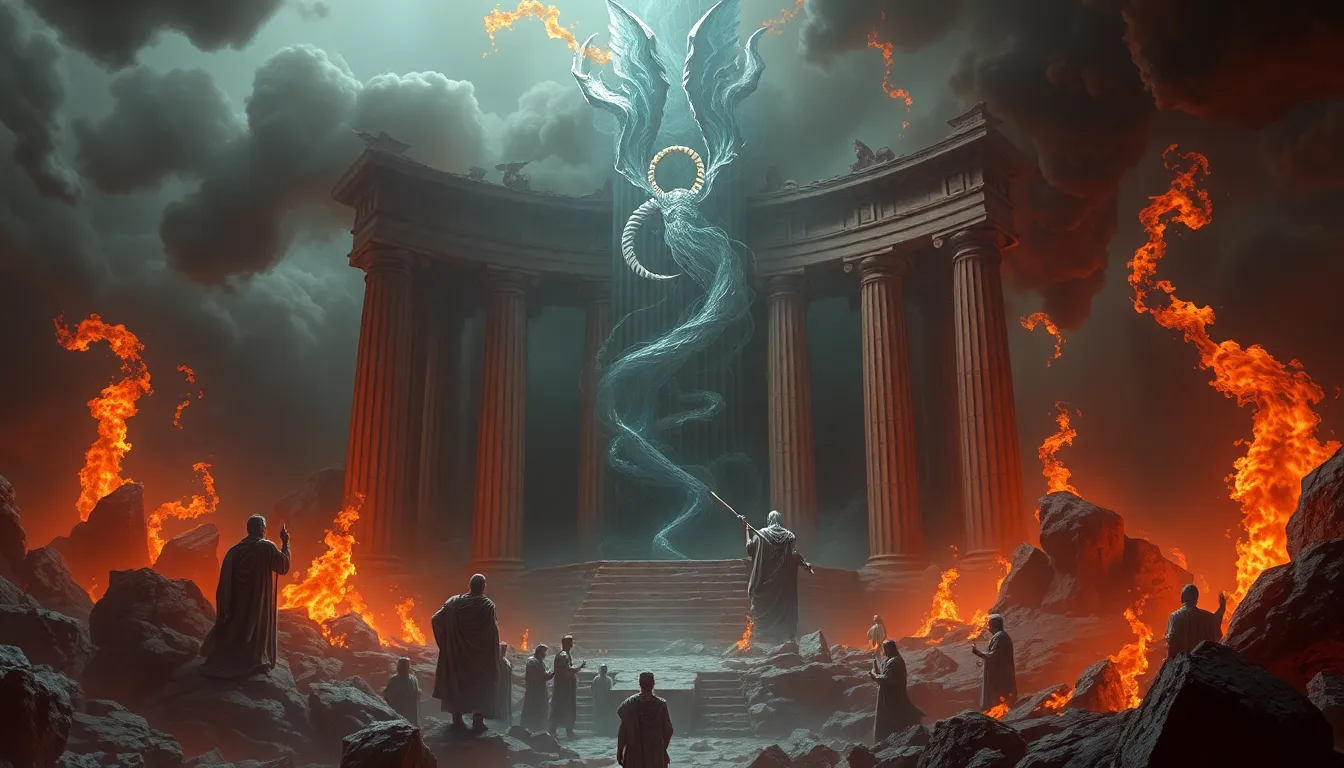
Hades and the Concept of Redemption: Is There Hope for Souls?
I. Introduction
In Greek mythology, Hades is often envisioned as a dark and foreboding place, a realm reserved for the souls of the deceased. It serves as the eternal dwelling for all souls, regardless of their moral standing during life. Hades has been depicted in literature and art as a place of despair, where the living dare not tread, yet the concept of redemption finds its way into these narratives, raising profound questions about hope and transformation.
Redemption is a powerful theme that resonates across various cultures, embodying the belief that even the most lost souls can find a path to salvation. In this exploration, we will delve into the dichotomy of despair and hope within Hades and consider whether there exists a potential for the redemption of souls.
II. Understanding Hades: Mythological Context
A. Definition and role of Hades in Greek mythology
Hades, in Greek mythology, refers both to the god of the underworld and the underworld itself. As the son of Cronus and Rhea, Hades ruled over the dead, presiding over a realm that was both feared and misunderstood. Unlike the modern conception of Hell as a place of eternal torment, Hades was more complex, encompassing various realms and experiences based on the deeds of the deceased.
B. Depictions of Hades in ancient texts and art
Ancient texts describe Hades in various ways, often emphasizing its somber and gloomy nature. The most notable literary sources include:
- The Iliad> by Homer, which presents a bleak view of the afterlife.</li>
- The Odyssey> by Homer, particularly in Odysseus's visit to the Underworld, which provides insight into the souls' experiences.</li>
- The Works and Days> by Hesiod, which discusses the fates of souls based on their earthly lives.</li>
- The Odyssey> by Homer, particularly in Odysseus's visit to the Underworld, which provides insight into the souls' experiences.</li>
Artistic representations, such as those found in vase paintings and sculptures, often depict Hades as a shadowy figure, accompanied by Persephone, and show the souls of the dead in various states of existence.
C. Comparison with other underworlds in different cultures
The concept of an underworld or afterlife is not unique to Greek mythology. Cultures around the world have their interpretations:
- Egyptian Mythology: The Duat is a realm where souls undergo judgment by Osiris, offering a more dynamic view of the afterlife.
- Christianity: The concepts of Hell and Purgatory suggest a form of punishment and potential redemption.
- Mesopotamian Mythology: The Land of the Dead is a shadowy underworld where all souls reside, emphasizing a more neutral view of existence after death.
III. The Concept of Redemption Across Cultures
A. Redemption in religious and philosophical contexts
Redemption is a concept that transcends cultures and religions, often tied to the moral and ethical choices made during one’s life. Philosophically, it raises questions about the nature of sin, punishment, and the possibility of forgiveness. Various religious traditions interpret redemption in ways that often reflect their underlying beliefs about morality and the afterlife.
B. Notable examples of redemption stories in mythology
Many myths involve themes of redemption, where characters undergo significant transformations, such as:
- Orpheus: His journey to Hades to reclaim Eurydice is a poignant tale of love and the desire for redemption.
- Persephone: Her dual existence in Hades and the world above symbolizes cyclical renewal and the possibility of return.
- Heracles: His twelve labors can be seen as a path to redemption for his past sins.
C. The role of moral actions and choices in achieving redemption
In many cultures, the opportunity for redemption is closely tied to moral actions and choices made during one’s lifetime. This idea suggests that individuals have agency over their destiny, even after death. The notion that good deeds can lead to a better fate in the afterlife is a recurring theme in mythology and religion.
IV. Hades as a Place of Punishment and Rest
A. The various realms within Hades: Tartarus, Asphodel, and Elysium
Hades is not a monolithic space; it comprises different realms that reflect the souls’ moral standings:
- Tartarus: A deep abyss used for the punishment of the wicked, where souls endure eternal suffering.
- Asphodel Meadows: A neutral zone for souls who lived ordinary lives, neither particularly virtuous nor evil.
- Elysium: A paradise for the heroic and virtuous, where souls experience eternal bliss.
B. The criteria for a soul’s placement in Hades
The placement of souls in Hades is determined by their actions in life, evaluated by the three judges of the underworld: Minos, Rhadamanthus, and Aeacus. The judgment reflects a complex interplay of virtues and vices, highlighting the moral dimensions of existence.
C. The psychological implications of eternal punishment versus temporary suffering
The psychological impact of eternal punishment in Tartarus compared to the temporary suffering in Asphodel raises significant questions about justice and morality. While Tartarus serves as a deterrent for wrongdoing, it also poses the question of whether eternal punishment is justifiable. In contrast, the Asphodel Meadows offer a more ambiguous existence, suggesting the potential for change and reflection.
V. The Role of Mythological Figures in Redemption
A. Key figures such as Orpheus, Persephone, and Charon
Several mythological figures embody themes of redemption and hope, serving as conduits between the realms of life and death:
- Orpheus: His descent into Hades to retrieve his beloved Eurydice symbolizes the power of love and the longing for redemption.
- Persephone: Her journey between the underworld and the earth signifies renewal and the cyclical nature of life and death.
- Charon: The ferryman of Hades, who transports souls across the Styx, represents the transition between living and dead, emphasizing that every soul has a journey.
B. Their narratives and lessons regarding redemption and hope
The stories of these figures convey important lessons about hope and redemption. Orpheus’s tragic tale encourages the belief in love’s transformative power, while Persephone’s duality suggests that every end can be a new beginning. Charon’s role reminds us that every soul’s journey is significant.
C. How these figures inspire human actions and beliefs about redemption
These mythological figures inspire individuals to reflect on their actions and the potential for redemption. Their narratives encourage the belief that, despite past mistakes, there is always a chance for transformation and hope.
VI. Contemporary Interpretations of Hades and Redemption
A. Modern literature and films that explore Hades and redemption
Modern interpretations of Hades often explore themes of redemption in new and compelling ways. Works such as:
- “The Song of Achilles” by Madeline Miller.
- “Percy Jackson & The Olympians” series by Rick Riordan.
- “Hadestown” (a musical by Anaïs Mitchell).
These narratives reinterpret Hades, presenting it not only as a realm of despair but as a place where hope and redemption can coexist.
B. Psychological perspectives on the afterlife and the quest for redemption
From a psychological standpoint, the exploration of Hades and redemption can reflect humanity’s intrinsic desires for justice and understanding. The afterlife serves as a projection of our fears and hopes, offering a space where the quest for redemption is not only possible but necessary for psychological healing.
C. The impact of these interpretations on contemporary beliefs
These modern interpretations influence contemporary beliefs about morality, justice, and the afterlife, encouraging a more nuanced understanding of redemption that transcends traditional boundaries.
VII. Theological Perspectives on