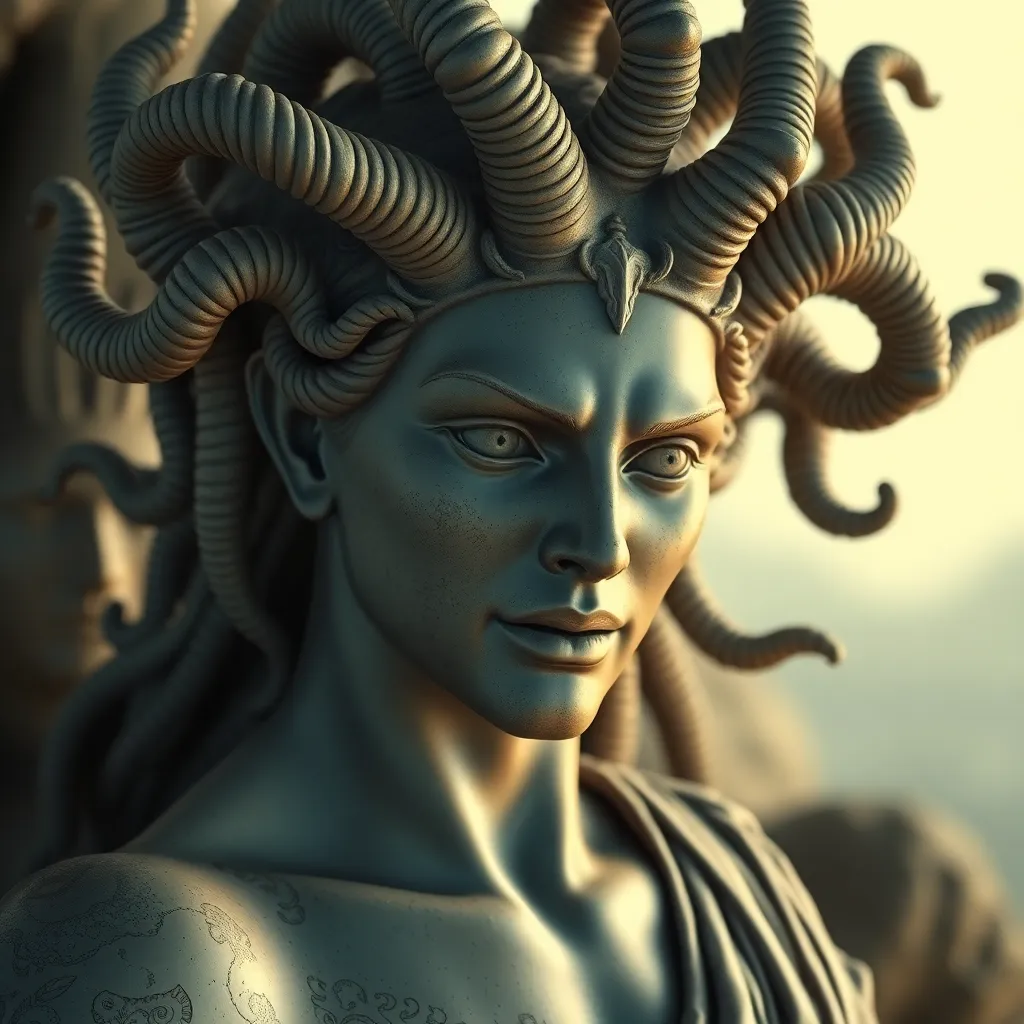
Medusa in Roman Mythology: How the Romans Adapted the Gorgon
I. Introduction
Medusa, one of the most enigmatic figures in mythology, has her roots in ancient Greek lore. Originally depicted as a monster with snakes for hair, her story has evolved through centuries, culminating in her adaptation within Roman mythology. The significance of Medusa transcends her frightening appearance; she embodies complex themes of power, transformation, and protection that resonated with Roman culture. This article aims to explore the adaptation of Medusa in Roman mythology, examining how her character and symbolism transformed in this new context.
II. The Origins of Medusa: Greek Roots
In Greek mythology, Medusa was one of the three Gorgon sisters, and she was the only mortal among them. According to myth, she was once a beautiful maiden, cursed by the goddess Athena for being violated in her temple. This transformation into a monster symbolized the themes of punishment and the consequences of beauty. Medusa’s gaze could turn anyone to stone, making her both feared and reviled.
The symbolism of Gorgons in Greek culture was multifaceted. They represented chaos, danger, and the irrational fears of society. However, they also served as protective figures, warding off evil through their terrifying presence. The duality of Medusa’s character reflects the complexities of Greek mythological thought.
When comparing Greek and Roman mythological frameworks, it is evident that Romans adopted many Greek deities and myths, yet they often reinterpreted them to reflect their own values and societal norms. Medusa’s transition from Greek to Roman mythology is a prime example of this adaptation.
III. The Roman Adaptation of Medusa
The Romans adapted Medusa’s character significantly, altering her narrative to align with their cultural values. In Roman mythology, Medusa emerged as a figure who embodied both monstrosity and protection. The emphasis shifted from her role as a fearsome creature to a symbol of divine safeguarding.
Several changes occurred in Medusa’s portrayal:
- Shift in Narrative: In Roman adaptations, Medusa was often depicted as a victim of circumstance rather than merely a monster. This change humanized her character.
- Influence of Roman Values: The Romans valued strength and virtus, and Medusa’s story began to reflect these ideals, emphasizing her power to protect rather than to destroy.
- Protective Figure: Medusa’s image became associated with protection, especially in the context of amulets and architectural decorations, symbolizing warding off evil.
IV. Medusa’s Iconography in Roman Art
Medusa’s image featured prominently in Roman art, often depicted in sculpture, frescoes, and mosaics. She was represented in various forms, reflecting the changes in her narrative and significance.
Some notable aspects of Medusa’s iconography in Roman art include:
- Sculpture: Statues of Medusa were common in public spaces, serving both decorative and protective purposes.
- Frescoes and Mosaics: Artists utilized her image to convey themes of protection and the supernatural, integrating her into the aesthetic of Roman interiors.
- Architectural Elements: Medusa’s head was often used in design motifs, symbolizing the guardian aspect of her character.
Medusa also took on an apotropaic symbolism, representing the warding off of evil. Her image was believed to possess protective qualities, making her a popular motif in various forms of Roman art.
V. Medusa in Literature and Poetry
Roman poets such as Ovid played a crucial role in shaping the narrative of Medusa. In Ovid’s “Metamorphoses,” Medusa’s transformation is explored in detail, emphasizing themes of beauty, victimization, and identity. This literary portrayal contributed to the evolving understanding of Medusa in Roman culture.
The evolution of her story in Roman literature includes:
- Themes of Transformation: Medusa’s metamorphosis from maiden to monster serves as a powerful metaphor for the loss of agency and identity.
- Identity and Power: Roman literature often reflects on the duality of Medusa, highlighting her power as both a monster and a protector.
- Broader Literary Context: Medusa’s narrative intertwines with themes of vengeance, beauty, and the supernatural, resonating through various works of Roman poetry.
VI. The Cultural Impact of Medusa in Rome
Medusa evolved into a symbol of power and protection in Roman society. Her image was not only a reminder of danger but also a representation of strength and resilience. This duality contributed to her lasting influence on Roman art and culture.
Some key points regarding Medusa’s cultural impact include:
- Symbol of Power: Medusa became a symbol of authority, often associated with the triumph over adversity.
- Influence on Art and Literature: Her portrayal inspired countless artists and writers, shaping the aesthetic and thematic elements of Roman creative expression.
- Legacy Beyond Mythology: Medusa’s image persisted in subsequent cultures, influencing Renaissance art and modern interpretations.
VII. Medusa’s Role in Roman Religion and Ritual
Medusa’s presence in Roman religious practices highlights her importance beyond mere mythology. She was often invoked in rituals seeking protection and divine favor, symbolizing the intertwining of mythology and religion in ancient Rome.
Key aspects of Medusa’s role in Roman religion include:
- Divine Protection: Medusa was associated with safeguarding against malevolent forces, reinforcing her protective symbolism.
- Supernatural Associations: Her character was linked to various deities, enhancing her status within the Roman pantheon.
- Contrast with Mainstream Religion: Medusa’s mythological roots provided a distinct perspective within the broader context of Roman religious beliefs.
VIII. Conclusion
Medusa’s transformation in Roman mythology reflects the complexities of cultural adaptation and reinterpretation. From a feared monster in Greek tradition to a protective symbol in Roman society, Medusa’s legacy endures through art, literature, and cultural practices. Her story resonates with contemporary themes of identity, power, and protection, showcasing the rich tapestry of mythological adaptations throughout history.
In summary, Medusa remains a significant figure in both ancient and modern contexts, illustrating the lasting impact of mythology on cultural identity and values.