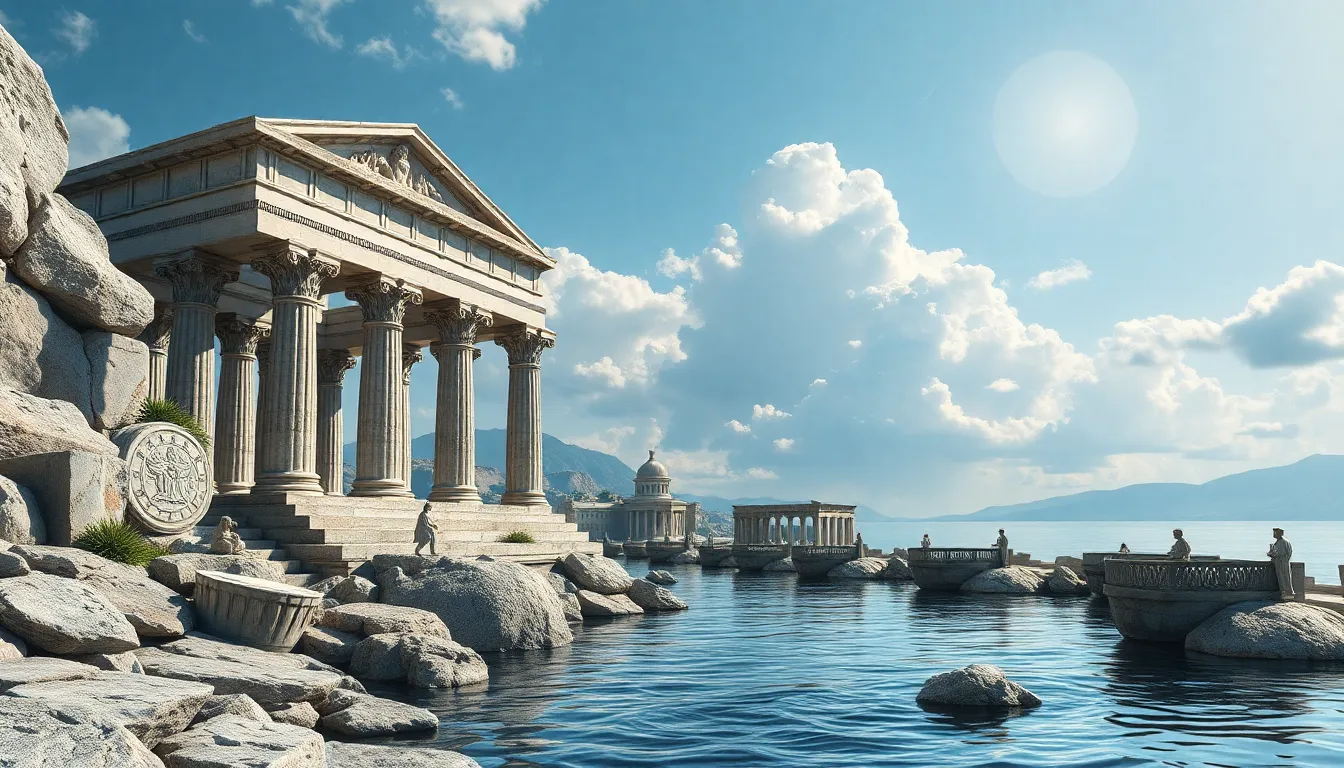
Styx: The Symbolism and Significance in Greek Lore
I. Introduction
The river Styx holds a prominent place in Greek mythology, serving as both a physical and symbolic boundary between the world of the living and the realm of the dead. It is one of the most significant rivers in ancient Greek culture, representing profound themes of life, death, and justice. This article delves into the multifaceted symbolism and significance of Styx, exploring its origins, roles, and lasting impact on both ancient and modern contexts.
II. The Mythological Origins of Styx
Styx is primarily known as a river that flows through the underworld, but it is also personified as a goddess. In Greek mythology, she is the daughter of Oceanus and Tethys, the Titans who embody the vastness of the sea. Styx plays a crucial role in several mythological narratives, including the creation myth and the Titanomachy, where she sided with Zeus and the Olympians against the Titans.
A. Description of Styx as a river and its personification
The river Styx is depicted as a dark, murky stream that separates the living from the dead. As a personification, Styx embodies various attributes, including loyalty, justice, and the harsh realities of death. Her essence is intertwined with the solemnity and fear surrounding the afterlife in Greek thought.

B. The role of Styx in the creation myth and the Titanomachy
In the creation myth, Styx is one of the primordial elements, representing the boundary between life and death. During the Titanomachy, the ten-year war between the Titans and the Olympians, Styx was one of the first to align herself with Zeus, showcasing her importance in the pantheon of Greek deities.
C. Styx as a daughter of the Titan Oceanus
As the daughter of Oceanus, Styx is part of the great lineage of Titans, which includes many other significant figures in Greek mythology. Her connection to Oceanus signifies her inherent link to the waters and the natural world, emphasizing the importance of rivers in Greek cosmology.
III. Styx as a Boundary Between Worlds
Styx is not merely a river; it is a metaphysical boundary that separates the worlds of the living and the dead. This boundary reflects the ancient Greeks’ beliefs about life, death, and what lies beyond.
A. Styx as the boundary between the living and the dead
The river Styx serves as the final passage for souls transitioning to the afterlife. It is here that the dead are ferried across by Charon, the enigmatic ferryman, who plays a crucial role in this solemn journey.
B. The significance of crossing the river in ancient Greek beliefs
Crossing the Styx was a significant event in the life of a soul. It represented the irreversible transition from the world of the living to the realm of the dead. Ancient Greeks believed that proper burial rites were essential to ensure safe passage across the river.
C. Charon and the role of the ferryman
- Charon is depicted as a grim figure, often portrayed as a skeletal man.
- He demands payment for his services, typically in the form of an obol, a small coin placed in the mouth of the deceased.
- Without this payment, souls were said to wander the shores of Styx for eternity.
IV. Symbolism of Styx in Greek Lore
The river Styx is rich in symbolism, encompassing themes of oaths, justice, fear, and the unknown. Its significance extends beyond mere geography, resonating deeply with the moral and ethical frameworks of ancient Greek society.
A. Styx as a symbol of oath and justice
Styx is often invoked in the context of oaths among the gods. An oath sworn by Styx was considered inviolable, representing the utmost seriousness and commitment. The gods, bound by these oaths, could not break their promises without facing dire consequences.
B. The concept of inviolable oaths sworn by the gods
Oaths sworn on the Styx were believed to carry immense weight, reflecting the belief that breaking such an oath would lead to severe punishment, including exile or death. This illustrates the importance of truth and honor in Greek culture.
C. Styx as a representation of fear and the unknown
The river Styx also symbolizes the fears associated with death and the afterlife. Its dark waters evoke a sense of dread, representing the uncertainties that lie beyond life. This fear of the unknown has resonated through centuries, influencing various cultures and philosophies.
V. Styx in Literary Works
Styx is a recurring motif in classical literature, appearing in works by notable ancient poets such as Homer and Hesiod. These references highlight the river’s importance in mythological narratives.
A. References to Styx in Homer’s “The Iliad” and “The Odyssey”
In both “The Iliad” and “The Odyssey,” Homer mentions Styx in the context of divine oaths, emphasizing its role as a symbol of commitment among the gods. The river serves as a backdrop for discussions about mortality and honor.
B. Styx in Hesiod’s “Theogony”
Hesiod’s “Theogony” provides insights into the origins of Styx and her significance among the Titans, illustrating her role in the cosmic order and the relationships between deities.
C. Analysis of Styx’s portrayal in later literature and art
Throughout history, Styx has been depicted in various forms of art and literature, symbolizing the eternal themes of life and death. Her portrayal in Renaissance art and modern literature reflects the enduring fascination with the river and its implications.
VI. Styx and Its Influence on Modern Culture
Styx’s legacy extends beyond ancient mythology, influencing contemporary media, philosophy, and psychology. The river continues to serve as a powerful symbol in various contexts.
A. Styx in contemporary media and literature
Modern literature, films, and games often reference Styx to evoke themes of death, fate, and the afterlife. Its symbolic weight adds depth to narratives exploring these universal themes.
B. The river as a symbol in modern philosophy and psychology
In philosophy and psychology, Styx represents the struggle between life and death, the known and the unknown. It prompts discussions about mortality, ethics, and the human condition, encouraging reflection on our own beliefs about death.
C. Styx’s legacy in popular culture and its interpretations
- Styx has inspired band names, movie titles, and literary works, signifying its cultural impact.
- The river is often associated with existential themes, reinforcing its relevance in contemporary discourse.
- Various interpretations of Styx, from horror to philosophical, showcase the river’s versatility as a symbol.
VII. Comparative Analysis with Other Mythological Rivers
Styx is one of several significant rivers in mythology. A comparative analysis reveals both unique and shared attributes among these mythological waterways.
A. Styx in comparison to other mythological rivers (e.g., Acheron, Lethe)
While Styx is known for its role as a boundary, other rivers like Acheron and Lethe serve different purposes:
- Acheron: Often referred to as the river of pain, it is associated with the suffering of souls.
- Lethe: Known as the river of forgetfulness, it represents the oblivion that comes with death.
B. The role of water as a symbol across different cultures
Water, in various cultures, often symbolizes life, death, and transformation. Rivers serve as metaphors for the passage of time, the flow of existence, and the journey to the afterlife.
C. Common themes and differences in river symbolism
While rivers like Styx, Acheron, and Lethe share themes of death and transition, they also highlight different aspects of the human experience, such as suffering, memory, and the finality of death.
VIII. Conclusion
In summary, Styx holds a significant place in Greek mythology, representing the profound themes of life, death, justice, and the unknown. Its role as a boundary between the living and the dead, along with