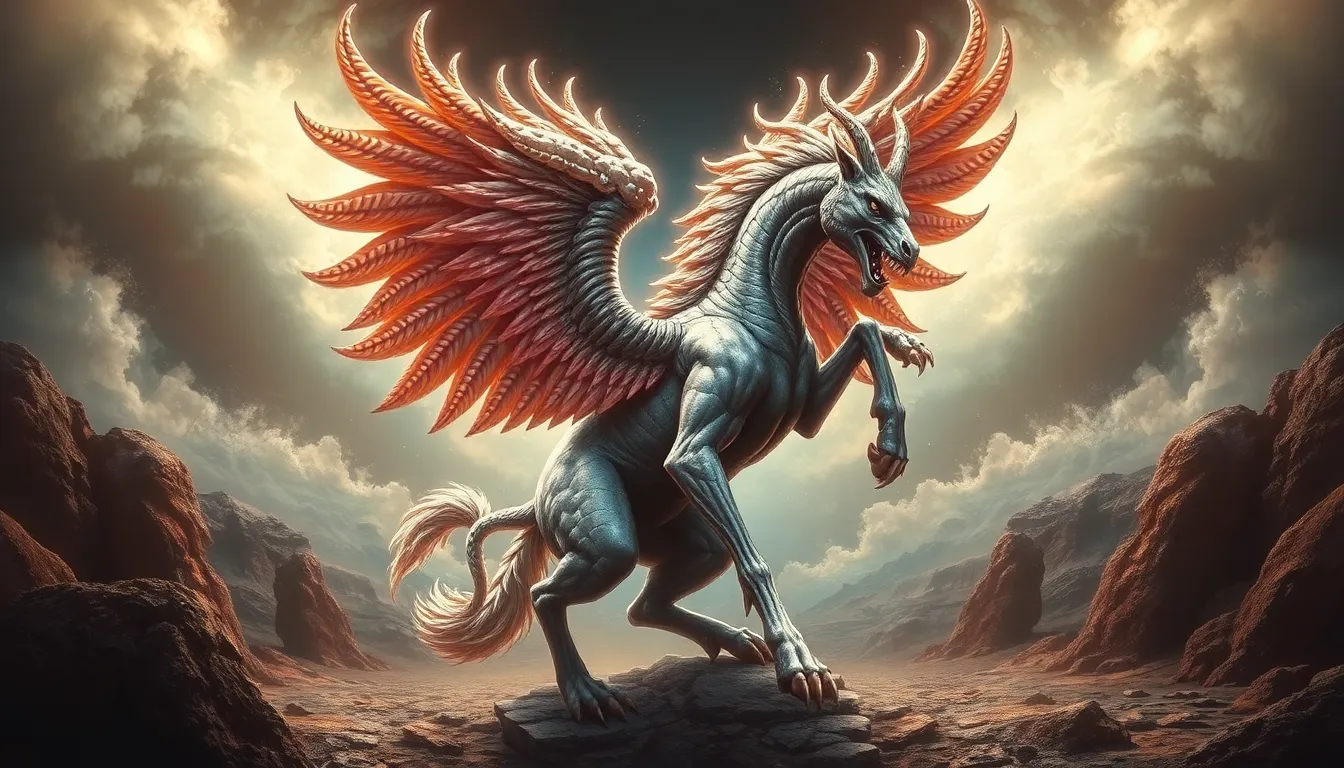
The Chimera and Its Psychological Symbolism: Fear and the Unconscious
I. Introduction
The Chimera, a legendary creature from Greek mythology, embodies a mix of terror and fascination. Often depicted as a monstrous hybrid of a lion, goat, and serpent, the Chimera has captured the imagination for centuries. This article aims to explore the psychological symbolism of the Chimera, particularly focusing on its representation of fear and the unconscious mind.
Understanding the Chimera’s symbolism is essential for delving into human psychology, especially concerning the nature of fear and how it manifests within our unconscious. By examining these themes, we can uncover deeper insights into our own fears and the ways they shape our lives.
II. The Mythological Origins of the Chimera
The Chimera is described in ancient texts as a fearsome creature, often associated with chaos and destruction. Its most well-known depiction comes from Homer’s “Iliad,” where it is described as a creature that breathes fire and terrorizes the land. The Chimera is typically portrayed as a combination of various animals, primarily a lion’s head, a goat’s body, and a serpent’s tail.
Historically, interpretations of the Chimera have varied widely. Some scholars believe it symbolizes the clash of different cultures or the unpredictability of nature. The Chimera’s hybrid nature reflects the complexities and contradictions inherent in both the natural world and human experience.
The implications of the Chimera’s form are significant. As a hybrid creature, it challenges the notion of clear boundaries between categories—animal and human, civilization and chaos. This representation can be seen as a metaphor for the fears and contradictions within ourselves.
III. The Chimera as a Symbol of Fear
The Chimera epitomizes the fear of the unknown and the monstrous. Throughout history, humans have been confronted with the inexplicable and the terrifying, leading to the creation of myths to explain these fears. The Chimera serves as a powerful symbol of what lurks beyond the familiar, representing both internal and external fears.
- Fear of the unknown: The Chimera embodies the anxieties associated with unpredictability and chaos.
- Monstrous forms: The creature’s hybrid nature reflects our fear of what we cannot categorize or understand.
- Internal fears: The Chimera can symbolize our internal struggles and the darker aspects of our psyche.
In human psychology, fear plays a crucial role in survival and decision-making. However, when fear becomes overwhelming, it can lead to anxiety and paralysis. The Chimera, as a representation of these fears, encourages introspection and confrontation with our own psychological monsters.
IV. The Unconscious Mind and Its Manifestations
To understand the Chimera’s symbolism, we can draw on both Freudian and Jungian theories of the unconscious. Freud posited that the unconscious mind houses repressed desires and fears, while Jung emphasized the importance of archetypes—universal symbols that emerge from the collective unconscious.
Dreams often serve as a window into the unconscious, using symbols to convey messages about our hidden fears and desires. The Chimera, in this context, can represent repressed aspects of ourselves that we may fear confronting. By acknowledging these symbols in our dreams and thoughts, we can begin to unravel the complexities of our psyche.
V. The Chimera in Contemporary Psychology
In modern psychological practices, the Chimera remains relevant as a metaphor for confronting fear and anxiety. Therapists often encourage patients to identify their ‘Chimeras’—the fears that hold them back from living fully.
Several case studies illustrate the impact of fear on mental health:
- Anxiety disorders: Patients with anxiety often describe feelings of being overwhelmed by unknown threats, akin to facing a Chimera.
- Phobias: Specific phobias can be seen as manifestations of the Chimera, where an exaggerated fear of an object or situation takes hold.
- Post-traumatic stress: Individuals may experience flashbacks or intrusive thoughts that resemble encounters with their own Chimeras.
Therapeutic approaches, such as cognitive-behavioral therapy, focus on confronting these fears and transforming them into manageable challenges. By facing the Chimera within, individuals can reclaim their power and agency.
VI. Cultural Interpretations of the Chimera
The Chimera’s influence extends beyond Greek mythology into various forms of art and literature. It has inspired countless works, from classical paintings to modern films, often symbolizing the struggle between chaos and order.
Different cultures have their interpretations of similar hybrid creatures:
- Eastern mythology: Dragons often embody fear and power, representing the duality of destruction and protection.
- Native American folklore: Shape-shifters represent the fluidity of identity and the fear of losing oneself.
- African mythology: Creatures like the Chimaera may symbolize the blending of human and animal traits, reflecting societal fears.
These cross-cultural representations highlight the universal nature of fear and its manifestation in mythology.
VII. Harnessing the Chimera for Personal Growth
Understanding and embracing our fears can be a pathway to personal growth. The Chimera, while a symbol of fear, can also represent the potential for transformation and empowerment.
Here are some techniques for confronting the Chimera in daily life:
- Mindfulness and meditation: Practicing mindfulness can help individuals observe their fears without judgment, allowing for greater self-awareness.
- Journaling: Writing about fears can provide clarity and serve as a means of confrontation.
- Therapy: Engaging with a therapist can facilitate the exploration of personal Chimeras and promote healing.
By facing these fears, individuals can transform them into sources of strength and creativity, using their experiences to foster resilience and personal insight.
VIII. Conclusion
In summary, the Chimera serves as a potent symbol of fear and the unconscious mind, illustrating the complexities of human psychology. Its multifaceted nature allows us to explore our own fears and the ways they shape our experiences. The ongoing relevance of myths like the Chimera in understanding human psychology underscores the importance of confronting our own ‘Chimeras’ in the journey of self-discovery and personal growth.
We encourage readers to explore their own fears and consider how the Chimera’s symbolism can guide them toward understanding themselves more profoundly.