The Chimera and Its Relationship with Other Greek Heroes
I. Introduction
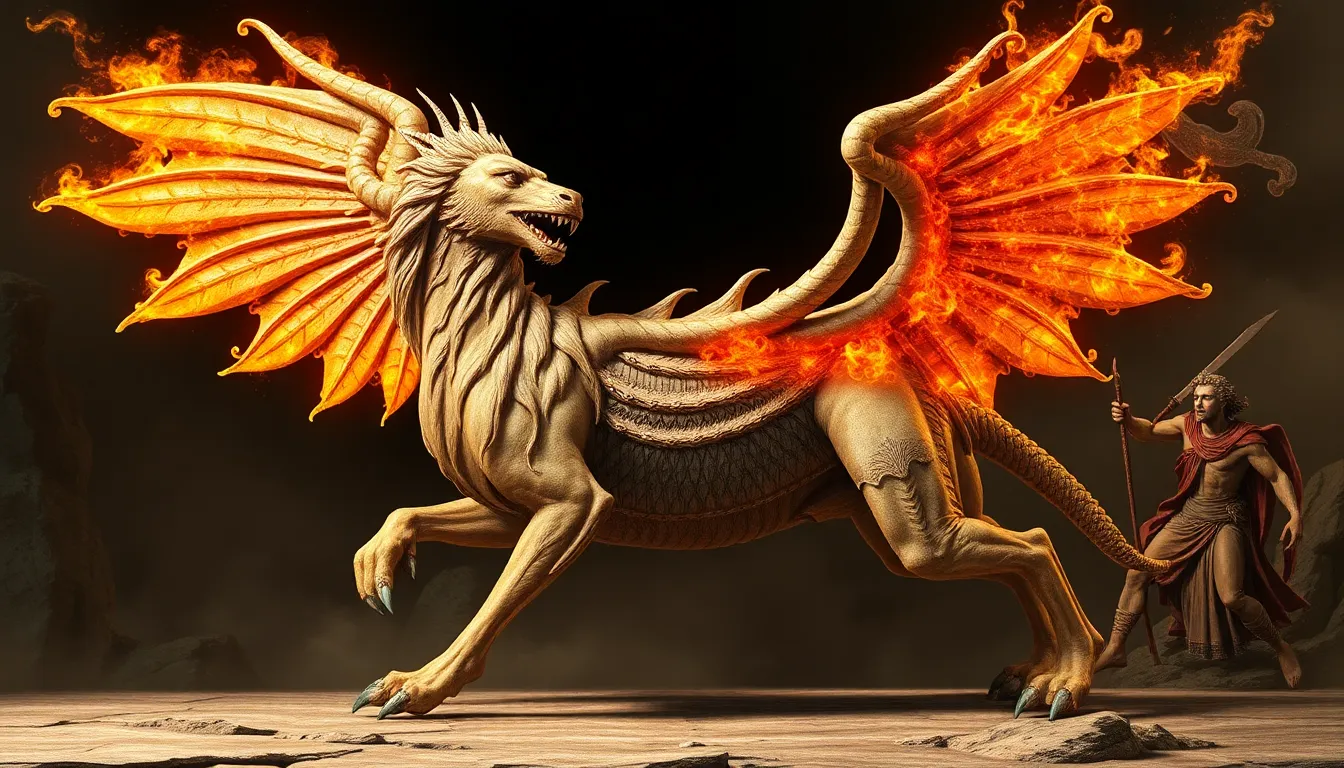
The Chimera, a fearsome creature from Greek mythology, is often depicted as a monstrous hybrid, embodying the chaotic forces of nature and the unknown. It is typically described as having the body of a lion, the head of a goat protruding from its back, and a serpent for a tail. This terrifying combination of features not only makes the Chimera a formidable adversary but also symbolizes the unpredictability of life, blending elements of the natural and supernatural.
The significance of the Chimera extends beyond its physical form; it represents the challenges and trials that heroes must face in their journeys. This article aims to explore the Chimera’s interactions with Greek heroes, particularly focusing on its role in the heroic narrative and the lessons learned from these encounters.
II. The Myth of the Chimera
The Chimera’s origin can be traced back to the ancient texts, where it is often associated with the region of Lycia in Asia Minor. According to myth, the Chimera was the offspring of Typhon and Echidna, both of whom were themselves monstrous figures in Greek mythology. As a creature of chaos, the Chimera was known for its ability to breathe fire, terrorizing the lands and causing destruction wherever it went.
In the broader context of Greek mythology, the Chimera serves as a representation of the struggles between order and chaos. It is a reminder of the dangers that lurk in the world, challenging heroes to confront their fears and prove their worth. As such, the Chimera holds a vital place in the tapestry of Greek myth, serving as both a foe and a catalyst for heroism.
III. Bellerophon: The Hero Who Defeated the Chimera
Bellerophon, a hero known for his bravery and skill, is perhaps the most famous figure associated with the Chimera. Born in Corinth, he was the son of the mortal Glaucus and the daughter of the king of Corinth. His early life was marked by adventure and misfortune, as he found himself exiled due to misunderstandings and accusations.
Determined to clear his name and prove his valor, Bellerophon sought the help of the gods. He was granted the gift of Pegasus, a magnificent winged horse, which would aid him in his quest to defeat the Chimera. The journey to confront the beast was fraught with challenges, including navigating treacherous terrain and overcoming self-doubt.
The epic battle between Bellerophon and the Chimera is one of the most celebrated moments in Greek mythology. Using his aerial advantage aboard Pegasus, Bellerophon launched a series of attacks from above, ultimately striking the Chimera down. This victory not only established Bellerophon as a legendary hero but also symbolized the triumph of order over chaos.
IV. The Chimera’s Symbolism in Heroic Narratives
The Chimera can be interpreted as a representation of chaos and destruction, embodying the fears and uncertainties that heroes must confront. In many heroic narratives, the monster acts as a test of the hero’s strength, courage, and virtue. The act of defeating the Chimera is not just a physical battle; it is also a metaphor for overcoming personal challenges and fears.
Moreover, the Chimera’s defeat signifies the hero’s journey towards self-discovery and growth. It reflects the idea that true heroism involves facing one’s demons, both external and internal. The struggle against the Chimera teaches valuable lessons about resilience, bravery, and the importance of confronting adversity.
V. The Chimera and Other Monsters in Greek Mythology
In Greek mythology, the Chimera is often compared to other legendary creatures, such as the Hydra and the Minotaur. Each of these monsters plays a crucial role in shaping the narrative arcs of their respective heroes:
- Hydra: A multi-headed serpent that grows two heads for every one that is cut off, representing regeneration and the complexity of challenges.
- Minotaur: A creature that dwells in the labyrinth, symbolizing the struggle against one’s inner fears and the journey towards self-acceptance.
These monsters, including the Chimera, serve to highlight the hero’s journey, illustrating the various forms of chaos that must be confronted. The interconnections between these beings enrich the tapestry of Greek mythology, emphasizing the recurring themes of struggle, growth, and triumph.
VI. The Influence of the Chimera on Later Literature and Art
The Chimera’s legacy extends far beyond ancient Greece, influencing classical literature and the visual arts. In antiquity, poets and playwrights often referenced the Chimera as a symbol of the monstrous and the unknown. In art, the Chimera has been depicted in various forms, showcasing its fearsome nature and its place in the hero’s journey.
Moreover, the Chimera has inspired later interpretations of heroism and monstrosity. It serves as a reminder that heroes are often defined not just by their victories, but also by their encounters with darkness and chaos. The dichotomy of hero versus monster continues to resonate in modern adaptations of Greek mythology.
VII. The Chimera in Modern Culture
Today, the Chimera remains a potent symbol in contemporary media, appearing in films, literature, and video games. Its representation often reflects the complexities of heroism, exploring themes of identity, conflict, and transformation.
Some notable representations include:
- Films that reinterpret Greek myths, showcasing the Chimera as a formidable antagonist.
- Literature that draws on the Chimera’s symbolism to explore character struggles and societal challenges.
- Video games that incorporate the Chimera as a boss character, testing players’ skills and strategies.
The Chimera continues to inspire stories and characters, reminding us of the timeless struggle between order and chaos and the hero’s journey in confronting the unknown.
VIII. Conclusion
In conclusion, the Chimera holds a significant place in Greek mythology as a symbol of chaos and a formidable foe for heroes like Bellerophon. Its interactions with these heroes reveal valuable lessons about bravery, resilience, and the nature of heroism itself. As we reflect on the enduring legacy of the Chimera, we recognize its profound impact on storytelling, art, and modern interpretations of myth.
The story of the Chimera and its heroes teaches us that confronting our fears and challenges is an essential part of the human experience. Whether in ancient times or today, the lessons learned from the Chimera’s tale continue to resonate, reminding us of the strength that lies within us all.