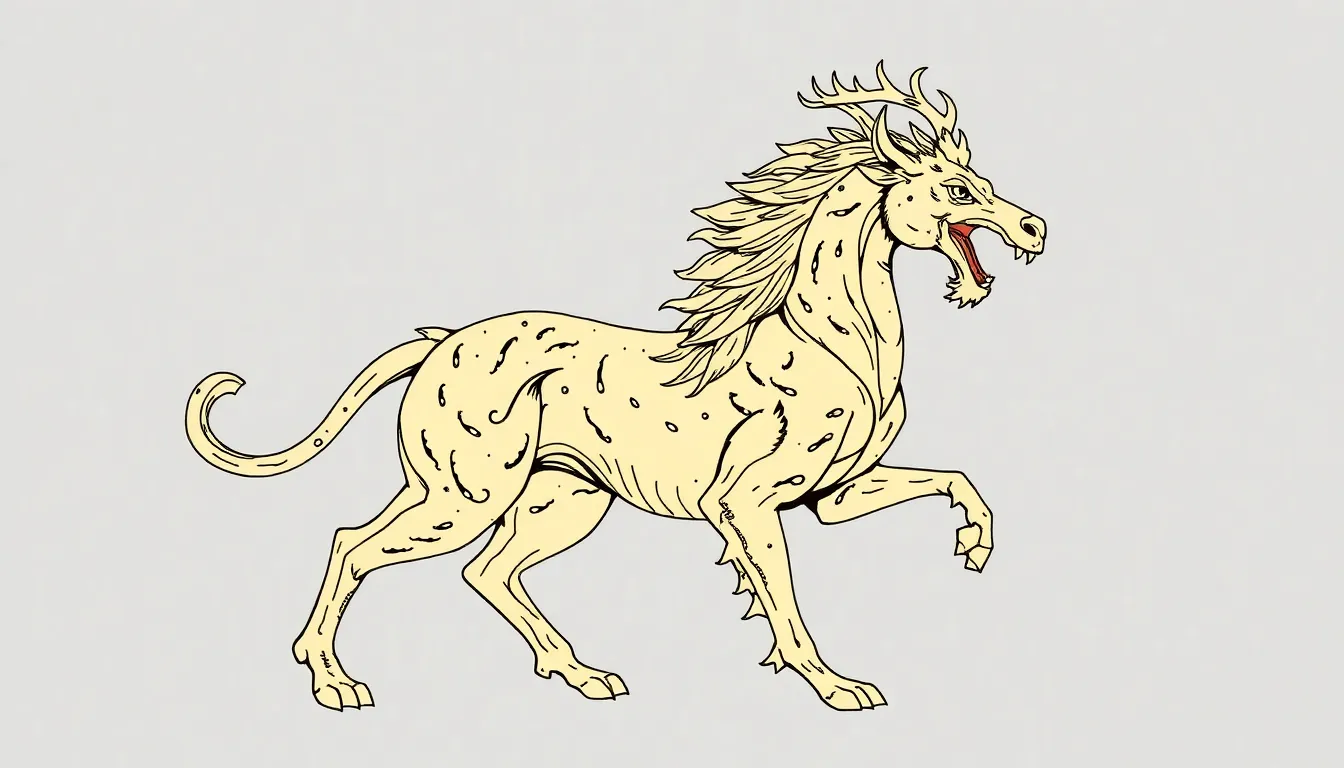
The Chimera’s Physical Characteristics: Descriptions from Ancient Sources
I. Introduction
The Chimera is one of the most fascinating creatures in Greek mythology, embodying the concept of hybridization and the chaotic nature of the world. Defined as a monstrous fire-breathing creature composed of parts from different animals, the Chimera has captured the imagination of many throughout history. Its significance extends beyond mere folklore; it serves as a powerful symbol of chaos and the unknown.
This article aims to explore the various descriptions of the Chimera’s physical characteristics as detailed in ancient sources, including epic poetry and artistic representations. By examining these texts and artworks, we can gain a deeper understanding of how the Chimera was perceived in ancient cultures.
II. Historical Context of the Chimera
The Chimera’s origins can be traced back to ancient Greek mythology, where it was first described as a fearsome beast that terrorized the land. Its name, derived from the Greek word “chimaira” (χίμαιρα), refers to a creature made up of different animal parts, showcasing the Greeks’ fascination with hybrid beings.
In ancient literature and art, the Chimera often symbolizes the struggle between man and nature, as well as the battle against chaos. Its depiction in various forms highlights its cultural significance, illustrating how ancient civilizations viewed the relationship between humanity and monstrous entities.
III. Descriptions from Homeric Texts
Homer’s contributions to the narrative of the Chimera are pivotal. In “The Iliad,” the creature is mentioned briefly, yet its presence holds substantial weight in the epic’s exploration of heroism and monstrosity.
Physical traits of the Chimera as depicted in “The Iliad” include:
- A lion’s head, representing strength and ferocity
- A goat’s body, signifying duality and unpredictability
- A serpent’s tail, symbolizing danger and treachery
The symbolism associated with the Chimera in Homeric writings goes beyond its terrifying appearance; it represents the chaos of war and the unpredictability of fate. The Chimera becomes a metaphor for the multifaceted nature of existence, embodying both beauty and horror.
IV. Depictions in Hesiod’s Works
In Hesiod’s “Theogony,” the Chimera is presented in a different light. While it shares some of the same characteristics as described by Homer, Hesiod provides a more detailed account of its origins and role in the cosmic order.
Key differences in Hesiod’s portrayal include:
- A more elaborate backstory involving its parentage from the monstrous Typhon and Echidna
- A focus on the Chimera’s place within the hierarchy of divine beings and monsters
The Chimera’s role in Hesiod’s cosmology illustrates the interconnectedness of gods, monsters, and humanity, showcasing its significance in the ancient Greek worldview.
V. Artistic Representations in Ancient Pottery
The Chimera’s physical characteristics are further illustrated through ancient pottery. Various pieces of pottery feature the Chimera in dynamic scenes, showcasing its fierce nature and hybrid form.
Some notable pottery pieces include:
- The “Chimera Vase,” which depicts the creature in battle with a hero
- Black-figure amphorae that illustrate the Chimera alongside other mythological figures
These artistic interpretations provide valuable insights into the Chimera’s physical features, emphasizing its monstrous traits and the fear it inspired among ancient peoples. The visual representations serve to reinforce the narratives found in literary sources.
VI. The Chimera in Later Ancient Texts
Later ancient texts, including those by Apollodorus and other historians, continue to describe the Chimera with varying details. These descriptions often build upon the earlier works of Homer and Hesiod, adding to the creature’s mythos.
When examining these later descriptions, we notice:
- A consistent depiction of the Chimera’s hybrid anatomy
- Variations in its abilities, such as its fire-breathing capabilities
This evolution of the Chimera’s depiction over time reflects the shifting cultural perceptions of monsters and their roles in mythology.
VII. Interpretations and Symbolism
The Chimera’s hybrid features carry profound symbolic meanings. The combination of animal parts signifies:
- The chaos of nature and the unpredictability of life
- The fears and anxieties of ancient peoples regarding the unknown
- The struggle between civilization and the monstrous, representing inner and outer conflicts
As a representation of chaos and monstrosity, the Chimera has influenced later interpretations of mythical creatures, becoming a template for hybrid beings in folklore and fantasy literature.
VIII. Conclusion
In summary, the Chimera’s physical characteristics are richly documented across various ancient sources, each contributing to the creature’s legacy in mythology. From the epic narratives of Homer to the poetic verses of Hesiod, and visually through ancient art, the Chimera remains a powerful symbol of chaos and complexity.
The Chimera’s lasting legacy continues to inspire modern interpretations of mythical creatures, highlighting the importance of ancient texts in understanding humanity’s relationship with the monstrous. Future research on mythical creatures in ancient texts promises to uncover even more about the complexities of these fascinating beings.