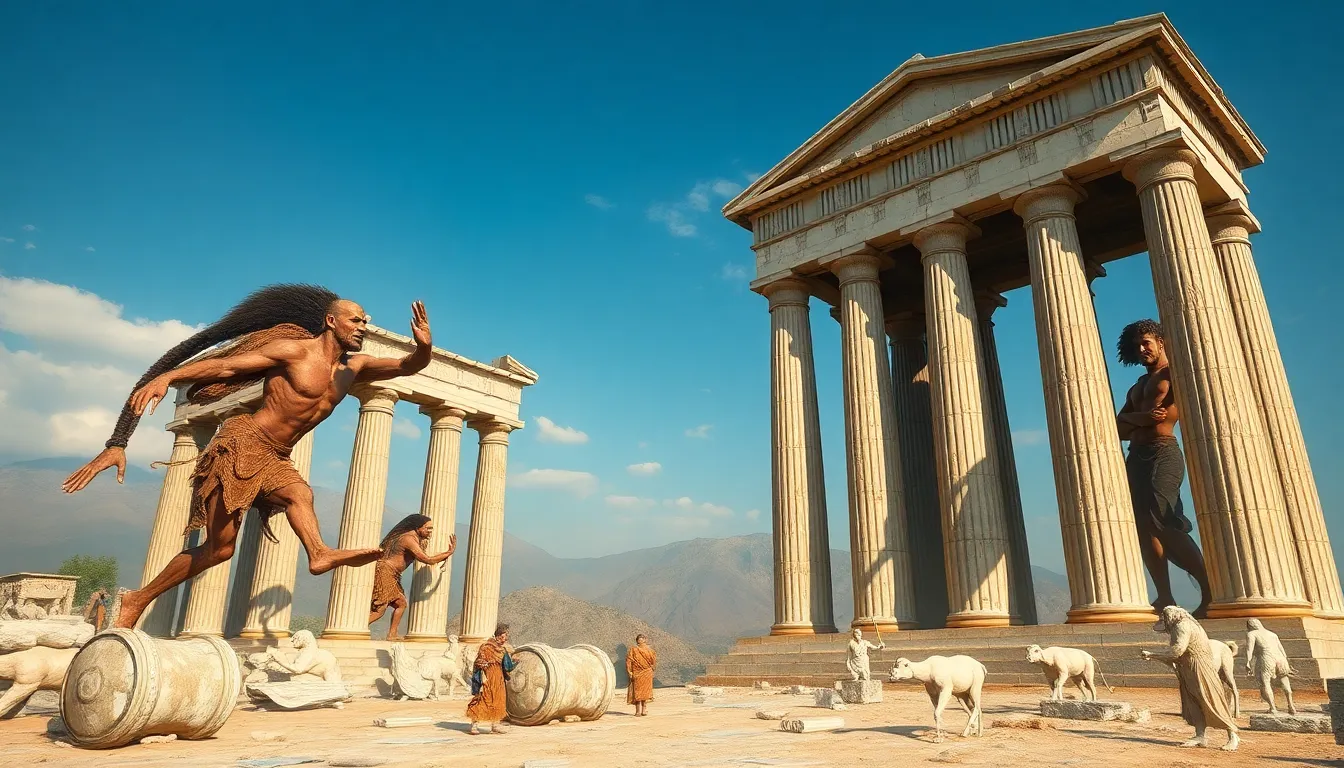
The Gigantomachy: A Clash of Cultures in Ancient Greece
I. Introduction to the Gigantomachy
The Gigantomachy is one of the most significant and dramatic battles in Greek mythology, symbolizing the struggle between the gods of Olympus and the Giants. This mythological conflict not only encapsulates the physical clash between these two powerful forces but also reflects the deeper cultural and ideological battles present in Ancient Greek society.
The significance of the Gigantomachy lies in its representation of the transition from chaos to order, mirroring the societal shifts occurring during the time it was popularized. As Ancient Greece evolved, so did its myths, which often served as allegories for contemporary issues, values, and conflicts.
II. Mythological Background of the Gigantomachy
The origin of the Giants in the context of the Gigantomachy is intertwined with the birth of Greek mythology itself. According to myth, the Giants were born from Gaia (Earth) when she was angry at the Olympian gods for imprisoning her children, the Titans, in Tartarus.
As a result, the Giants, often depicted as fierce and powerful beings, rose up against the Olympians in a bid to overthrow them and reclaim their mother’s glory. Key players in this myth include:
- Zeus: The king of the gods, who leads the charge against the Giants.
- Hera: The queen of the gods, who plays a crucial role in the battle.
- The Giants: Various powerful beings, each with unique strengths and characteristics, who challenge the Olympian order.
III. Symbolism and Themes in the Gigantomachy
The Gigantomachy symbolizes the eternal struggle between order and chaos. The Olympians represent order, civilization, and the established social structures of Ancient Greece, while the Giants embody chaos, primal forces, and the challenges to societal norms.
This myth also serves as a representation of cultural identity. The victory of the Olympians over the Giants can be interpreted as a metaphor for the triumph of Greek culture and civilization over barbarism and disorder, reinforcing the values of strength, unity, and divine justice that were central to Ancient Greek society.

IV. Artistic Representations of the Gigantomachy
Throughout history, the Gigantomachy has inspired numerous artistic representations, with the Pergamon Altar being one of the most famous examples. This monumental structure, built in the Hellenistic period, features intricate reliefs depicting the battle between the gods and the Giants, showcasing the tension and drama of the myth.
Artistic representations often emphasize the physicality and emotional intensity of the struggle, using dynamic poses and expressions to convey the fierce conflict. The role of sculpture and pottery in depicting the Gigantomachy is significant, as these mediums allowed artists to explore the themes of the myth in a visually compelling way.
V. Historical Context: The Rise of Hellenism
The Gigantomachy reflects the cultural dynamics of Hellenistic Greece, a period marked by the expansion of Greek culture and influence following the conquests of Alexander the Great. During this time, there was a blending of different cultural elements, and the myth served as a means to express Greek identity amidst a diverse cultural landscape.
Additionally, the influence of earlier cultures, such as the Minoans and Mycenaeans, can be seen in the Gigantomachy. Elements of their myths and artistic styles were incorporated into the narrative, creating a rich tapestry of cultural history that informed the storytelling of the Gigantomachy.
VI. The Gigantomachy in Literature and Philosophy
The Gigantomachy is referenced in several ancient texts, with notable mentions in the works of Hesiod and Apollodorus. These texts provide various accounts of the battle, detailing the actions of the gods and the Giants, and offering insight into the moral and philosophical lessons derived from the myth.
Philosophical interpretations of the Gigantomachy have also emerged, exploring its relevance to Greek thought. The myth can be seen as a reflection on the nature of power, the role of the divine in human affairs, and the consequences of rebellion against established order. Such themes resonate with the philosophical inquiries of figures such as Plato and Aristotle, who examined the relationship between the individual, society, and the cosmos.
VII. The Legacy of the Gigantomachy in Modern Culture
The influence of the Gigantomachy extends into modern culture, where its themes of conflict, order, and identity continue to resonate. Contemporary art, literature, and popular culture often draw on the motifs of the Gigantomachy, using them to explore current societal issues and cultural conflicts.
For instance, the myth has inspired countless adaptations in film and literature, where the battle between good and evil is a recurring theme. Additionally, discussions surrounding the Gigantomachy often reflect on the nature of cultural conflict, making it relevant in today’s globalized world.
VIII. Conclusion
In conclusion, the Gigantomachy serves as a vital lens through which we can understand Ancient Greek culture and its values. This myth encapsulates the struggles between chaos and order, the significance of cultural identity, and the enduring nature of conflict.
Moreover, the ongoing impact of the Gigantomachy in modern society highlights its relevance as a tool for examining cultural narratives and the human condition. As we continue to engage with this ancient myth, we find echoes of its themes in our own lives, reminding us of the timeless nature of these stories and their ability to shape cultural identity through the ages.