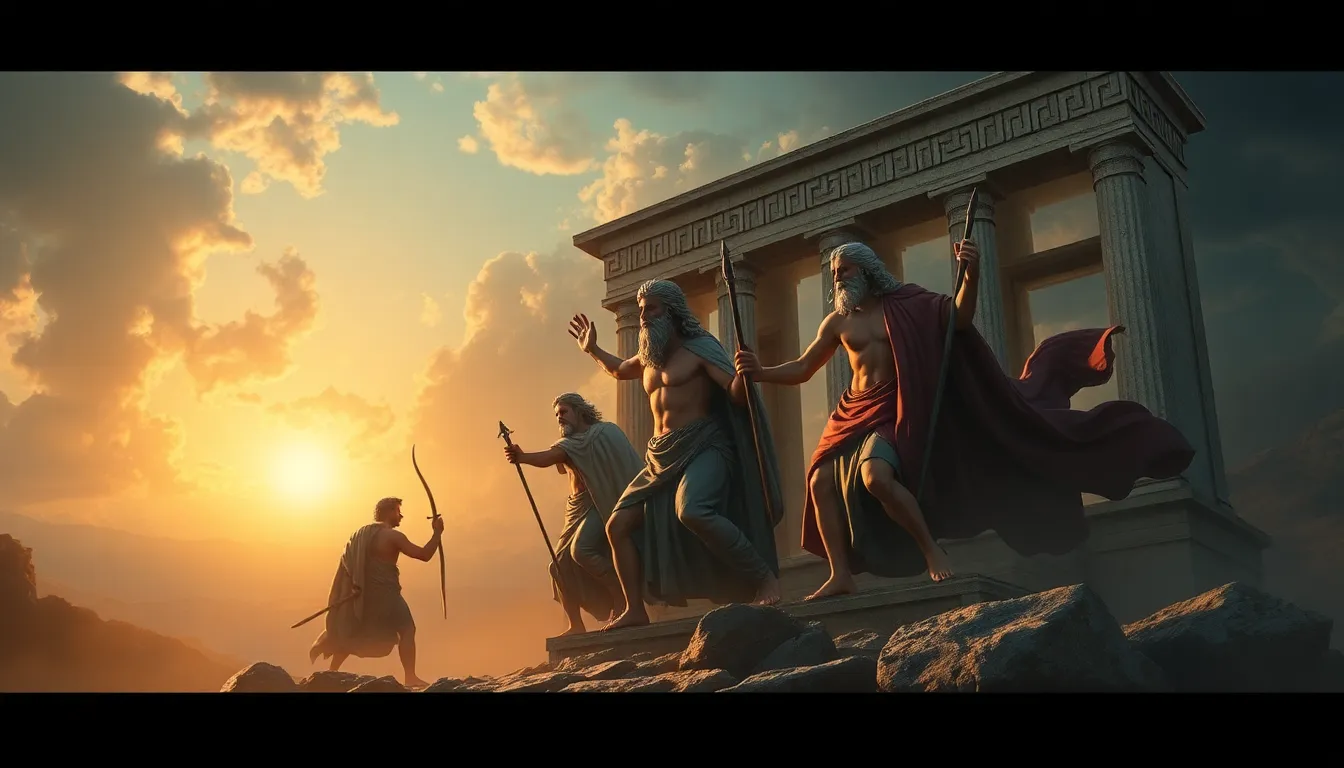
The Labors of the Gods: Trials That Tested Their Might and Morality
I. Introduction
In the tapestry of ancient civilizations, mythological gods stand as monumental figures, embodying the values, fears, and aspirations of the cultures that worshipped them. These deities were not merely omnipotent beings; they were also subject to trials that tested their strength, wisdom, and moral compass. This article delves into the various trials faced by gods in mythology, exploring how these challenges shaped their character and our understanding of might and morality.
The concept of divine trials serves as a lens through which we can examine the complexities of power and ethics in ancient narratives. The gods’ experiences often mirror human struggles, providing valuable lessons about the consequences of actions and the importance of moral integrity.
II. Defining the Concept of “Labors” in Mythology
The term “labors” in mythology refers to the arduous tasks or challenges that deities or heroes undertake, often to prove their worth, attain wisdom, or rectify past mistakes. These trials serve multiple purposes:
- They highlight the virtues and flaws of the gods.
- They reflect the societal values and moral dilemmas of the time.
- They often lead to personal growth or redemption through hardship.
Historically, the origins of these trials can be traced back to ancient narratives that sought to explain natural phenomena, moral lessons, or the human condition. The trials often act as pivotal moments in myths, shaping the characters and destinies of the gods involved. By overcoming these challenges, gods often exemplify ideals of strength, bravery, wisdom, and sacrifice, reinforcing their roles as figures of reverence.
III. The Twelve Labors of Heracles: A Testament to Strength and Redemption
Heracles, also known as Hercules in Roman mythology, is perhaps one of the most celebrated heroes of Greek mythology. Born to Zeus and the mortal Alcmene, Heracles was destined for greatness but also faced immense challenges. His labors were a consequence of a fit of madness sent by Hera, which led him to commit a tragic act. To atone for his sins, he undertook twelve labors that tested his strength and character.
Here’s a brief overview of each of the Twelve Labors:
- The Nemean Lion: Heracles had to slay a lion with impenetrable skin and return with its hide.
- The Lernaean Hydra: A multi-headed serpent that regrew two heads for every one that was cut off.
- The Ceryneian Hind: A sacred deer that was incredibly swift, which Heracles had to capture alive.
- The Erymanthian Boar: A giant boar that terrorized the region, which he was tasked to capture.
- The Augean Stables: Cleaning the stables of King Augeas in a single day by rerouting rivers.
- The Stymphalian Birds: Man-eating birds that Heracles had to drive away with noise and arrows.
- The Cretan Bull: Capturing the bull that fathered the Minotaur.
- The Mares of Diomedes: Taming man-eating horses by feeding them their master.
- The Girdle of Hippolyta: Obtaining the belt of the Amazon queen, which involved both combat and diplomacy.
- The Cattle of Geryon: Retrieving the cattle from a three-bodied giant.
- The Apples of the Hesperides: Stealing golden apples guarded by a dragon.
- Capturing Cerberus: The three-headed dog guarding the underworld, which he was to bring back alive.
Each of these labors not only tested Heracles’ physical strength but also his ingenuity, resilience, and moral character. Through these trials, he not only sought redemption but also grew into a figure of heroism, embodying the themes of strength and moral growth through hardship.

IV. The Trials of Odin: Wisdom Through Sacrifice
In Norse mythology, Odin stands out as the Allfather, the god of wisdom, war, and death. His quest for knowledge is one of the most profound trials in mythology, reflecting a deep desire to understand the universe and the fate of the gods. Odin’s trials often involved sacrifices that emphasize the importance of wisdom over brute strength.
One of Odin’s most notable trials was the sacrifice of his eye at Mimir’s Well, a source of wisdom. In exchange for a sip of the water that granted him profound knowledge, he willingly gave up one of his eyes. This act symbolizes the value of wisdom and the lengths one must go to attain it.
Additionally, Odin endured the trials of hanging from the World Tree, Yggdrasil, for nine days and nights, pierced by his own spear. This self-sacrifice was aimed at gaining the knowledge of runes, the magical symbols that held great power in his realm. Through these trials, Odin demonstrates the balance between power and wisdom, teaching us that true strength lies in understanding and sacrifice.
V. The Challenges of Zeus: Power, Justice, and Moral Dilemmas
As the king of the gods, Zeus faced numerous challenges in maintaining order among gods and mortals. His trials often revolved around the themes of power, justice, and moral dilemmas that shaped his reign. Zeus’s authority was frequently tested by both external threats and internal conflicts among the deities.
Two notable stories exemplify his trials:
- The Titanomachy: The epic battle between the Olympian gods led by Zeus and the Titans. This conflict was not just a struggle for power but also a fight for justice, as Zeus sought to overthrow the oppressive rule of the Titans.
- The Judgment of Paris: This incident involved Zeus mediating a dispute among the goddesses Hera, Athena, and Aphrodite, each vying for the title of the fairest. His decision to award the golden apple to Aphrodite, in exchange for the love of Helen, ignited the Trojan War, showcasing the complexities of his moral decisions.
Zeus’s trials reflect the delicate interplay between might and moral choices, as he navigated the responsibilities of leadership and the consequences of his decisions. His journey illustrates the burdens of power and the moral dilemmas that come with it.
VI. The Struggles of Prometheus: Defiance and Consequences
Prometheus, a Titan known for his intelligence and cunning, stands as a symbol of defiance against divine authority. His most famous act was stealing fire from the gods and giving it to humanity, an act that represented the gift of knowledge and enlightenment. However, this bold defiance came with severe consequences.
Zeus, enraged by Prometheus’s actions, punished him by having him bound to a rock where an eagle would eat his liver daily, only for it to regenerate each night. This eternal torment highlights the themes of sacrifice and the conflict between divine authority and justice. Prometheus’s plight serves as a cautionary tale about the price of defiance and the struggle for humanity’s progress against oppressive forces.
Through Prometheus’s story, we learn about the moral implications of challenging authority and the sacrifices made in the pursuit of knowledge and freedom. His legacy continues to resonate as a symbol of resistance and the quest for justice.
VII. The Labors of Kali: Embracing Chaos and Compassion
In Hindu mythology, Kali is a complex goddess known for her fierce nature as well as her nurturing aspects. Often depicted as a destroyer of evil forces, Kali embodies the duality of creation and destruction. Her trials revolve around balancing chaos with compassion, revealing the moral lessons derived from her fierce yet nurturing nature.
Kali’s most notable trials include:
- Defeating the Demon Raktabija: Kali faced this formidable foe who could multiply with every drop of his blood. By consuming him completely, she demonstrated the necessity of decisive action against malevolence.
- The Dance of Destruction: In her dance, Kali annihilates negative forces, symbolizing the importance of embracing chaos to foster renewal and transformation.
Kali’s trials teach us that embracing chaos can lead to growth and compassion. Her fierce persona challenges societal norms by showing that destruction can also be an act of love and