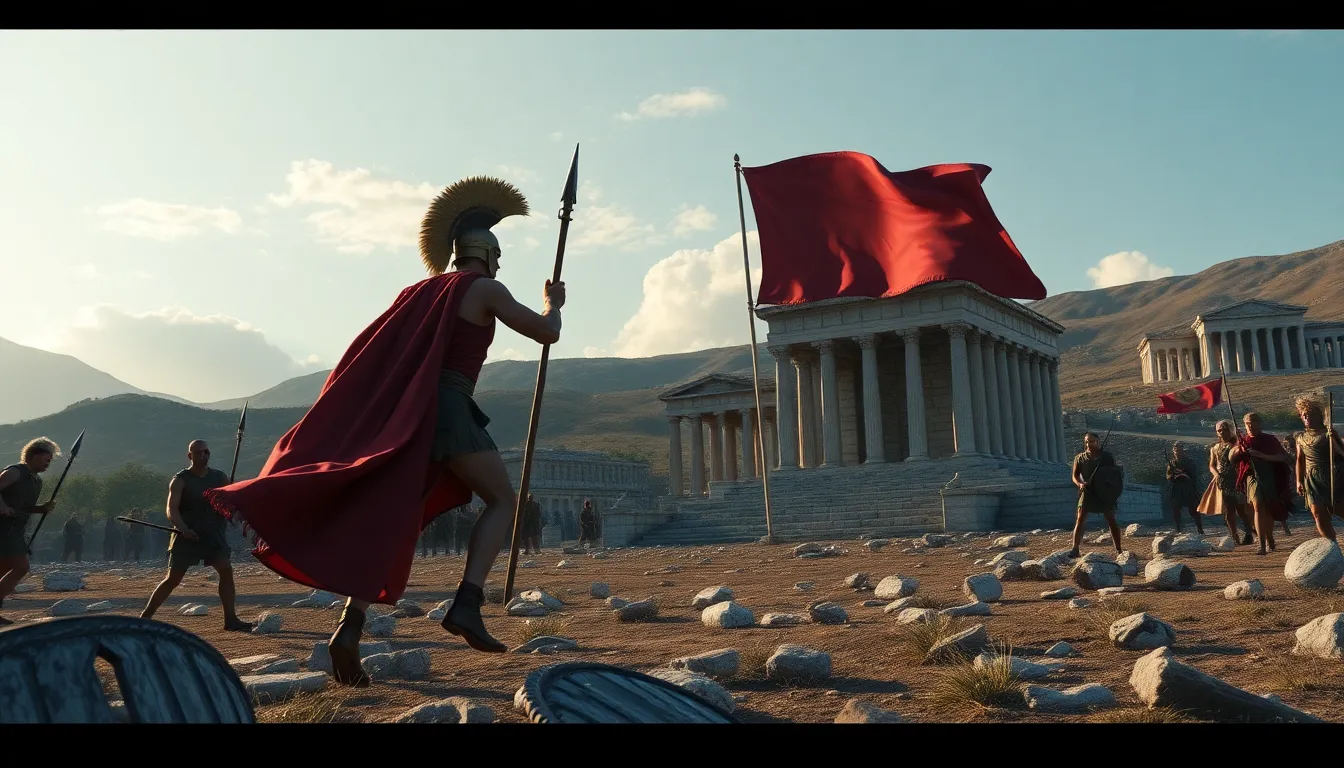
The Legacy of the Battle of Thermopylae: Myths of Heroism
I. Introduction
The Battle of Thermopylae, fought in 480 BCE, stands as one of the most iconic confrontations in ancient history. It symbolizes the struggle between the Greek city-states and the invading Persian Empire, led by Xerxes I. This battle is not just a military engagement; it represents the clash of cultures, the defense of freedom, and the undying spirit of heroism.
The significance of Thermopylae extends beyond its immediate military outcomes. It has played a crucial role in shaping Western historical consciousness, exemplifying the virtues of courage, sacrifice, and camaraderie. This article aims to delve into the myths of heroism that surround the Battle of Thermopylae, exploring how these narratives have evolved over time and their impact on cultural identity.
II. Historical Context of the Battle
To fully appreciate the Battle of Thermopylae, one must understand the political landscape of ancient Greece and Persia. The Persian Empire, at its height, was a colossal entity that sought to expand its territories and influence. Meanwhile, Greece was a collection of city-states, each with its own governance, culture, and military practices.
A. Political Landscape of Ancient Greece and Persia
The tensions between the Greek city-states and Persia escalated following the Ionian Revolt (499-494 BCE), where Greek cities in Asia Minor rebelled against Persian rule. The subsequent Persian Wars saw numerous conflicts, culminating in the invasion led by Xerxes.
B. Key Figures Involved: Leonidas, Xerxes, and the Greek City-States
- Leonidas: The king of Sparta, renowned for his leadership and bravery.
- Xerxes I: The Persian king, determined to subjugate the Greeks.
- Greek City-States: An alliance formed by various states, including Athens and Sparta, to resist the Persian advance.
C. Overview of the Events Leading Up to the Battle
As the Persian army advanced toward Greece, the Greek city-states recognized the need for unity. The decision to make a stand at Thermopylae was strategic, taking advantage of the narrow pass that would limit the effectiveness of the much larger Persian forces.
III. The Heroic Narrative: Spartans at Thermopylae
The narrative surrounding the Spartans at Thermopylae is steeped in heroism and valor. Central to this story is the figure of Leonidas, whose leadership and unwavering spirit became synonymous with Spartan bravery.
A. Leonidas and the Concept of Spartan Bravery
Leonidas, a warrior king, epitomized the Spartan ideal. His approach to leadership was characterized by a profound sense of duty and a commitment to his men, inspiring them to fight against overwhelming odds.
B. The 300 Spartans: Symbolism and Significance
The 300 Spartans, who stood alongside Leonidas, have become legendary. Their sacrifice is often viewed as the ultimate expression of loyalty and courage. This small group of warriors faced the might of the Persian army, symbolizing the fight for freedom and justice.
C. The Role of Sacrifice in the Heroic Narrative
The concept of sacrifice plays a pivotal role in the heroic narrative of Thermopylae. The willingness of the Spartans to lay down their lives for their homeland and comrades has been immortalized in literature and art, serving as a testament to the human spirit’s resilience.
IV. Myths vs. Reality: What Really Happened
While the heroic narrative is compelling, it is essential to differentiate between myth and reality. Historical accounts and modern interpretations often blur these lines.
A. Analyzing Historical Accounts and Modern Interpretations
Primary sources, such as Herodotus, provide insights into the events at Thermopylae. However, these accounts are often colored by the author’s biases and the oral traditions that preceded them.
B. The Impact of Storytelling and Oral Tradition on the Perception of the Battle
Oral traditions played a significant role in shaping the narrative of Thermopylae. As stories of heroism were passed down through generations, embellishments and alterations became commonplace, enhancing the mythos surrounding the battle.
C. Differentiating Between Fact and Embellishment in the Thermopylae Narrative
- Fact: The battle occurred in 480 BCE and involved a small force of Greek soldiers.
- Embellishment: The portrayal of the Spartans as invincible warriors has often overshadowed the broader context of the conflict.
V. The Role of Myth in Shaping Cultural Identity
The Battle of Thermopylae has had a profound impact on Greek identity and has resonated throughout Western literature and art.
A. How the Battle of Thermopylae Influenced Greek Identity
The battle became a symbol of Greek unity and resistance against tyranny. It fostered a sense of national pride that would influence future generations in their struggles for independence and freedom.
B. The Battle’s Significance in Later Western Literature and Art
Throughout history, Thermopylae has inspired countless works of literature and art, from ancient tragedies to modern films. This narrative continues to resonate, emphasizing the values of honor, sacrifice, and resistance.
C. The Enduring Appeal of Heroism and Sacrifice in Popular Culture
- Films like “300” have popularized the story of Thermopylae, albeit with a degree of artistic license.
- Literature often revisits themes of heroism, drawing parallels to contemporary struggles.
VI. Comparative Analysis: Other Battles and Myths of Heroism
Thermopylae is not unique in its narrative of heroism; many battles throughout history share similar themes.
A. Similarities and Differences with Other Historical Battles
Comparing Thermopylae with battles such as Marathon or Agincourt reveals both commonalities and distinctions in how heroism is portrayed:
- Marathon: Focused on the victory of the underdog against a larger force.
- Agincourt: Highlighted the strategic genius and valor of English forces against the French.
B. The Universal Themes of Heroism and Sacrifice Across Cultures
Across various cultures, themes of heroism and sacrifice resonate, reflecting humanity’s collective admiration for those who stand against overwhelming odds.
C. How Different Societies Reinterpret Heroic Narratives
Different societies reinterpret these narratives based on their cultural contexts, values, and historical experiences, ensuring that the themes of courage and sacrifice remain relevant.
VII. The Modern Legacy of Thermopylae
The legacy of Thermopylae continues to influence contemporary discussions around heroism, nationalism, and identity.
A. The Battle’s Influence on Contemporary Discussions of Heroism and Nationalism
In modern discourse, Thermopylae is often invoked in debates about national pride and the concept of heroism, particularly in the context of military engagements and national defense.
B. Thermopylae in Modern Media: Films, Books, and Documentaries
The battle has been depicted in various forms of media, capturing the imagination of audiences worldwide and encouraging reflections on sacrifice and valor.
C. Lessons from Thermopylae in Today’s Geopolitical Context
The lessons of Thermopylae, particularly the importance of unity and resilience, remain pertinent in today’s complex geopolitical landscape, where issues of freedom and tyranny continue to be at the forefront of global discourse.
VIII. Conclusion
The myths surrounding the Battle of Thermopylae serve as powerful narratives of heroism and sacrifice that have endured throughout history. Understanding these myths, as well as the historical context in which they arose, is crucial for grasping the evolving nature of cultural identities and values.
In reflecting on the Battle of Thermopylae, we recognize that the legacy of heroism is not merely a relic of the past but a living narrative that continues to inspire and challenge us in the face of adversity. The stories of those who fought at Thermopylae remind us of the profound impact of courage and sacrifice in shaping the human experience.
</