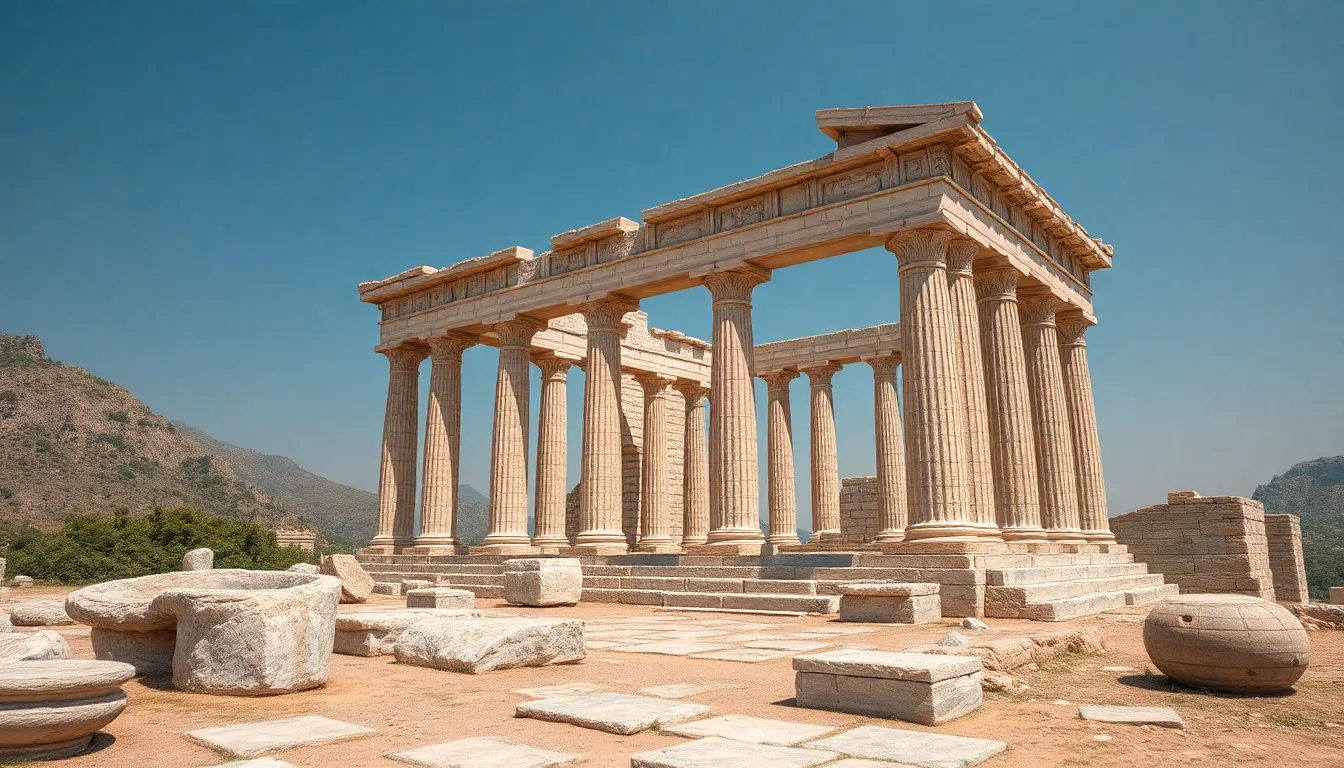
The Lost Temples of Ancient Greece: Discovering Forgotten Sanctuaries
I. Introduction
Ancient Greece, a civilization that flourished from the 8th century BC to the end of antiquity, is renowned for its rich cultural heritage, philosophy, and monumental architecture. Central to their societal structure was a complex system of religious practices that revolved around a pantheon of gods and goddesses. Temples played a crucial role in this religious framework, serving not only as places of worship but also as community centers that fostered social cohesion.
This article aims to explore the forgotten temples of Ancient Greece, examining their historical significance, architectural marvels, and the myths that breathed life into these sacred spaces. Through this exploration, we seek to illuminate the importance of these lost sanctuaries in the broader context of Greek civilization.
II. Historical Context of Greek Temples
The architectural evolution of Greek temples reflects the changing religious and cultural priorities of the society. From the Mycenaean period, characterized by grand palatial complexes, to the classical and Hellenistic eras, temple architecture underwent significant transformations.
A. Evolution of temple architecture from the Mycenaean period to the Hellenistic era
Initially, Mycenaean temples were simple structures, often built in a megaron style. As the centuries progressed, particularly during the Archaic and Classical periods, temples became more elaborate with the introduction of the Doric, Ionic, and Corinthian orders. The Hellenistic era saw the rise of grandiose temples with intricate decorations and larger-than-life statues.
B. Significance of temples as centers of worship and community
Temples were not just religious sites; they were also integral to the community’s social fabric. They hosted festivals, athletic contests, and artistic performances, making them vital centers of civic life. Additionally, many temples housed precious offerings and served as treasuries for the city-states.
C. Notable temples and their deities
- The Parthenon in Athens, dedicated to Athena
- The Temple of Apollo at Delphi, home to the Oracle of Delphi
- The Temple of Zeus at Olympia, where the ancient Olympic Games were celebrated
III. The Archaeological Journey: Uncovering Lost Temples
The quest to uncover lost temples involves meticulous archaeological work, employing various methods to locate and excavate these ancient sites.
A. Overview of archaeological methods used in temple discovery
Modern archaeology employs techniques such as ground-penetrating radar, aerial surveys, and site excavation. These methods help researchers identify potential locations of ancient temples that may have been buried or destroyed over time.
B. Key archaeological sites that have revealed forgotten temples
Several archaeological sites across Greece have yielded significant discoveries of lost temples:
- The sanctuary of Zeus at Nemea
- The Temple of Artemis at Ephesus
- The recently uncovered site at Kato Paphos in Cyprus
C. Case studies: Noteworthy discoveries in lesser-known locations
One remarkable case is the discovery of a small temple dedicated to Hermes in the region of Aetolia. This temple, adorned with intricate frescoes, revealed insights into local worship practices and the community’s connection to the deity.
Another notable find was a sanctuary of Demeter and Persephone near Eleusis, which provided evidence of the Eleusinian Mysteries, a series of secretive rites celebrating the cycle of life and death.
IV. The Architectural Marvels of Forgotten Sanctuaries
The architectural features of lost temples often differ from their more famous counterparts, providing a glimpse into regional variations and local materials.
A. Unique features of lost temples compared to well-known counterparts
Many lesser-known temples incorporated distinct regional styles, using local stone and materials that set them apart from the grand temples of Athens and Corinth. For instance, some temples in Crete were characterized by their use of multi-colored columns and frescoed interiors.
B. The influence of regional styles on temple architecture
Regional styles significantly influenced temple design. For example, the temples of the Cyclades often featured simple, austere lines, while those in the Peloponnese showcased more elaborate decorations and sculptures.
C. Artistic elements and inscriptions found in these sites
Inscriptions and artistic elements found in these lost temples provide invaluable information about worship practices, local deities, and historical events. For instance, inscriptions dedicated to lesser-known local gods have been discovered, shedding light on regional religious practices.
V. The Role of Myths and Legends in Temple Sites
Mythology played a pivotal role in the establishment and significance of temples in Ancient Greece, intertwining the physical structures with the rich tapestry of myths and legends.
A. Connection between temples and local mythology
Many temples were constructed in locations tied to local myths, often believed to be the dwelling places of deities or sites of significant mythological events. For example, the Temple of Apollo at Delphi was built over the chasm where the Pythia, or Oracle, delivered her prophecies, rooted in the myth of Apollo’s conquest over the serpent Python.
B. How myths influenced the construction and dedication of temples
Myths not only influenced the choice of deities to whom temples were dedicated but also dictated architectural elements. For instance, the Temple of Athena Nike in Athens commemorates the victory of the Athenians in the Battle of Marathon, reflecting the myth of Athena as the protector of the city.
C. Examples of temples tied to specific legends
- The Temple of Hera at Olympia, linked to the myth of Hera’s marriage to Zeus
- The Sanctuary of Asclepius at Epidaurus, associated with healing legends
- The Temple of Artemis at Ephesus, connected to the myth of her birth
VI. Cultural Significance of Rediscovered Temples
The rediscovery of ancient temples has profound implications for our understanding of Ancient Greek religion and society, offering insights into their cultural practices and communal life.
A. Impact on our understanding of Ancient Greek religion and society
Rediscovered temples provide a clearer picture of the complex relationship between the Greeks and their deities. They reveal how rituals, festivals, and communal gatherings centered around these sacred sites.
B. The role of temples in local communities and their rituals
Temples were vital to local communities, serving as venues for festivals, sacrifices, and civic gatherings. The rituals performed in these spaces fostered a sense of identity and belonging among the populace.
C. Contributions to the cultural heritage of Greece
The rediscovery of temples contributes significantly to Greece’s cultural heritage, allowing for a deeper appreciation of ancient practices and beliefs. They serve as reminders of the enduring legacy of Greek civilization and its influence on Western culture.
VII. Preservation Challenges and Efforts
Despite their importance, many ancient temples face significant challenges regarding preservation and conservation, necessitating urgent efforts to protect these historical treasures.
A. Threats to the preservation of ancient temples (natural disasters, urban development)
Natural disasters, such as earthquakes and floods, pose significant threats to ancient structures. Additionally, urban development and tourism can lead to the deterioration of these sites, often resulting in irreparable damage.
B. Current conservation initiatives and their importance
Various conservation initiatives are underway to protect ancient temples. These efforts include:
- Restoration projects funded by the Greek government and international organizations
- Public awareness campaigns to promote the significance of preserving cultural heritage
- Collaborations between archaeologists and local communities to foster stewardship of sites
C. Future prospects for lost temples and archaeological research
The future of lost temples lies in continued archaeological research and conservation efforts. Advances in technology, such as 3D scanning and virtual reality, offer exciting prospects for exploring and preserving these ancient wonders.
VIII. Conclusion
Exploring the lost temples of Ancient Greece is not only a journey into the past but also an essential endeavor to understand the cultural and religious fabric of this remarkable civilization. These forgotten sanctuaries provide invaluable insights into the lives of the ancients, their beliefs, and their communal practices.
As we continue to unearth and study these sites, it becomes evident