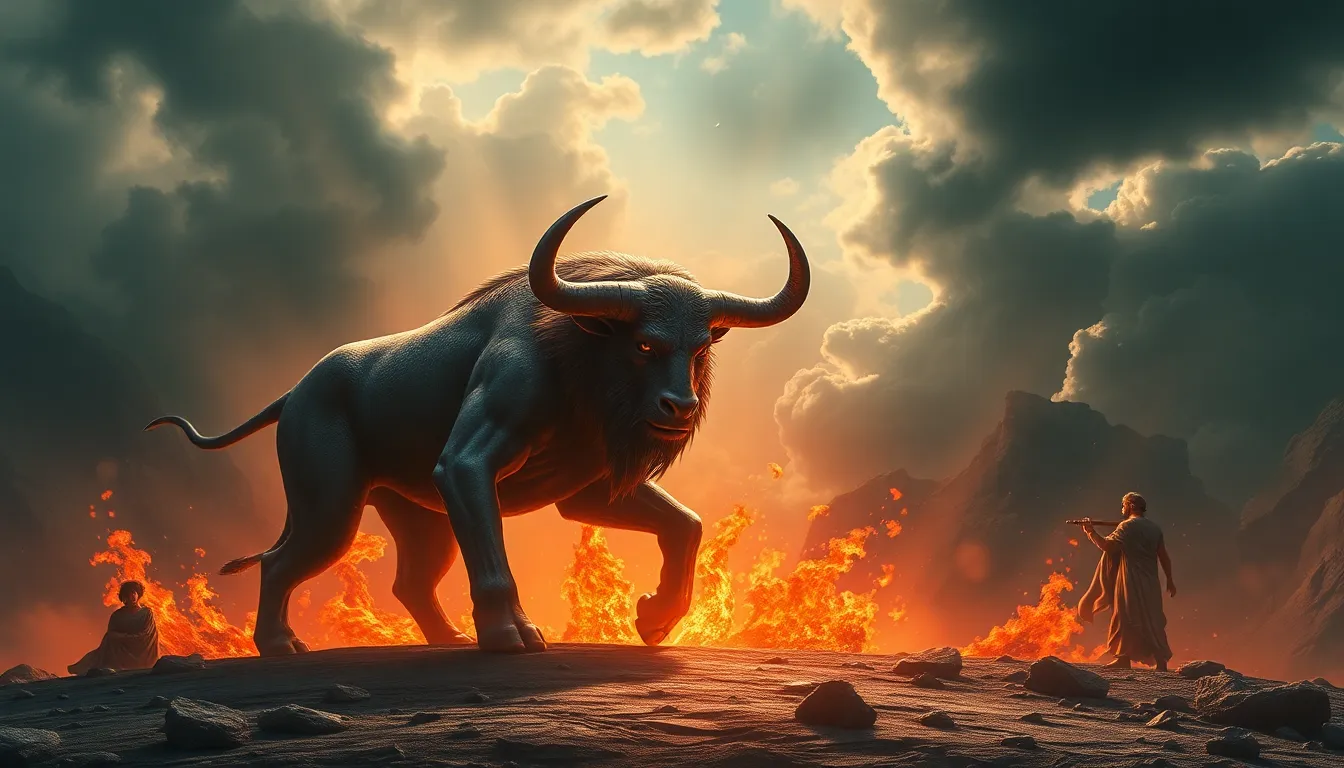
The Minotaur: An Archetype of the Tragic Hero in Mythology
I. Introduction
A tragic hero is typically defined as a character of noble stature who experiences a fall from grace due to a personal flaw or fate. In Greek mythology, the Minotaur is a compelling figure that embodies the essence of a tragic hero. This half-man, half-bull creature, confined within the labyrinth, serves as a poignant example of themes such as fate, identity, and the human condition. In this exploration, we will argue that the Minotaur not only reflects these characteristics but also captivates audiences with his tragic narrative.
II. The Origins of the Minotaur
The Minotaur’s origin is steeped in mythological intrigue, beginning with the union of Pasiphaë, the wife of King Minos, and a magnificent bull sent by the god Poseidon. This unnatural coupling resulted in the birth of the Minotaur, a creature that represents both the monstrosity of human desires and the consequences of divine retribution.
A. Birth and lineage: Pasiphaë and the bull
Pasiphaë’s infatuation with the bull was a punishment from Poseidon, who sought to humiliate Minos for failing to sacrifice the beast. As a result, the Minotaur was born, a being that was both a product of divine wrath and a symbol of the consequences of unchecked desires.
B. The symbolic significance of the Minotaur’s birth
The Minotaur’s birth is rich in symbolism, representing the duality of human nature—the conflict between civilization and savagery. The creature itself embodies the chaos that arises from the merging of human and animalistic traits.
C. The role of the labyrinth as a prison and a symbol
Minos, to contain the monstrous offspring, commissioned the architect Daedalus to build a labyrinth—a complex maze that served as both a prison for the Minotaur and a representation of the intricate web of fate that entraps the tragic hero.
III. The Minotaur as a Tragic Figure
The Minotaur is not merely a monster; he is a tragic figure, marked by profound isolation and a loss of identity.
A. Exploring the Minotaur’s isolation and loneliness
Confined within the labyrinth, the Minotaur experiences profound loneliness. He is separated from the world, both physically and emotionally, echoing the plight of many tragic heroes who face isolation due to circumstances beyond their control.
B. The loss of identity: Human vs. monster
The Minotaur represents a loss of identity. He is the offspring of a human queen and a divine bull, caught between two worlds. This duality creates a perpetual conflict within him, as he struggles to reconcile his human side with his monstrous nature.
C. The Minotaur’s role as a victim of circumstance
Ultimately, the Minotaur is a victim of fate and circumstance—his existence is dictated by the actions of others, from the gods to his own mother. This aspect of his character emphasizes the themes of helplessness and tragedy that define his story.
IV. The Minotaur’s Actions and Consequences
The Minotaur’s actions, particularly the demand for sacrifices from Athenian youth, highlight the tragic necessity of his existence.
A. The sacrifice of Athenian youth: A tragic necessity?
To appease the Minotaur and prevent further destruction, King Minos instituted a horrific tribute of youth from Athens. This demand raises questions about the nature of sacrifice and the moral dilemmas faced by societies in the face of monstrous threats.
B. The moral implications of the Minotaur’s actions
- The Minotaur acts out of instinct rather than malice, embodying the tragedy of being a pawn in a larger game.
- His existence forces society to confront the consequences of their actions and the monsters they create.
C. The Minotaur as a reflection of societal fears and desires
In many ways, the Minotaur reflects the fears and desires of ancient societies—fear of the unknown, the monstrous, and the consequences of unchecked power. He embodies the chaos that lies just beneath the surface of civilization.
V. The Heroic Quest of Theseus
While the Minotaur represents tragedy, Theseus symbolizes heroism and the struggle against fate.
A. Theseus as the counterpoint to the Minotaur
Theseus, the hero who confronts the Minotaur, serves as a counterpoint to the tragic figure. His journey reflects the classic hero’s quest, filled with challenges and moral choices.
B. The journey into the labyrinth: Symbolism and significance
The labyrinth itself is a powerful symbol of the inner journey each hero must undertake. For Theseus, navigating the maze mirrors his quest for identity and purpose, as he confronts both the Minotaur and his own fears.
C. The interplay between heroism and tragedy in Theseus’ success
Theseus’ triumph over the Minotaur is tinged with tragedy; he emerges victorious, yet the cost of his victory reflects the complexities of heroism in the face of inevitable fate.
VI. Themes of Fate and Free Will
The Minotaur’s story delves deeply into the themes of fate and free will, illustrating the interplay between divine will and personal choice.
A. The role of the gods in the Minotaur’s story
The gods play a pivotal role in the Minotaur’s narrative, manipulating events and influencing the characters involved. Their interventions emphasize the idea that fate is often beyond human control.
B. The tension between predestined fate and personal choice
While the Minotaur is bound by his monstrous nature, the choices of those around him—particularly King Minos—illustrate the tension between fate and personal agency. This duality is central to the tragic hero’s journey.
C. The broader implications of fate in tragic narratives
In tragic narratives, fate often serves as a cruel master, dictating the paths of heroes and monsters alike. The Minotaur’s existence is a testament to the idea that one’s lineage and circumstances can irrevocably shape one’s destiny.
VII. The Minotaur in Modern Interpretations
The Minotaur continues to capture the imagination of contemporary audiences, appearing in various forms of literature and art.
A. The Minotaur in contemporary literature and art
Modern interpretations often explore the Minotaur as a symbol of inner conflict and the struggle for identity. Artists and writers have reimagined the creature, highlighting his tragic dimensions while questioning societal norms.
B. Reinterpretations of the Minotaur as a tragic hero
Contemporary narratives frequently reinterpret the Minotaur as a tragic hero, emphasizing his humanity and the circumstances that led to his monstrous form. This shift allows audiences to empathize with his plight.
C. The relevance of the Minotaur archetype in modern society
The Minotaur archetype resonates in modern society, reflecting ongoing themes of alienation, the search for identity, and the consequences of societal fears. His story serves as a cautionary tale about the nature of monstrosity and the human condition.
VIII. Conclusion
In conclusion, the Minotaur stands as a profound archetype of the tragic hero, embodying the complexities of fate, identity, and the human condition. His narrative serves as a reminder of the fragility of existence and the often-blurred lines between heroism and monstrosity. The enduring legacy of the Minotaur in mythology invites reflection on the lessons learned from his tragic journey, resonating with audiences across time and culture.