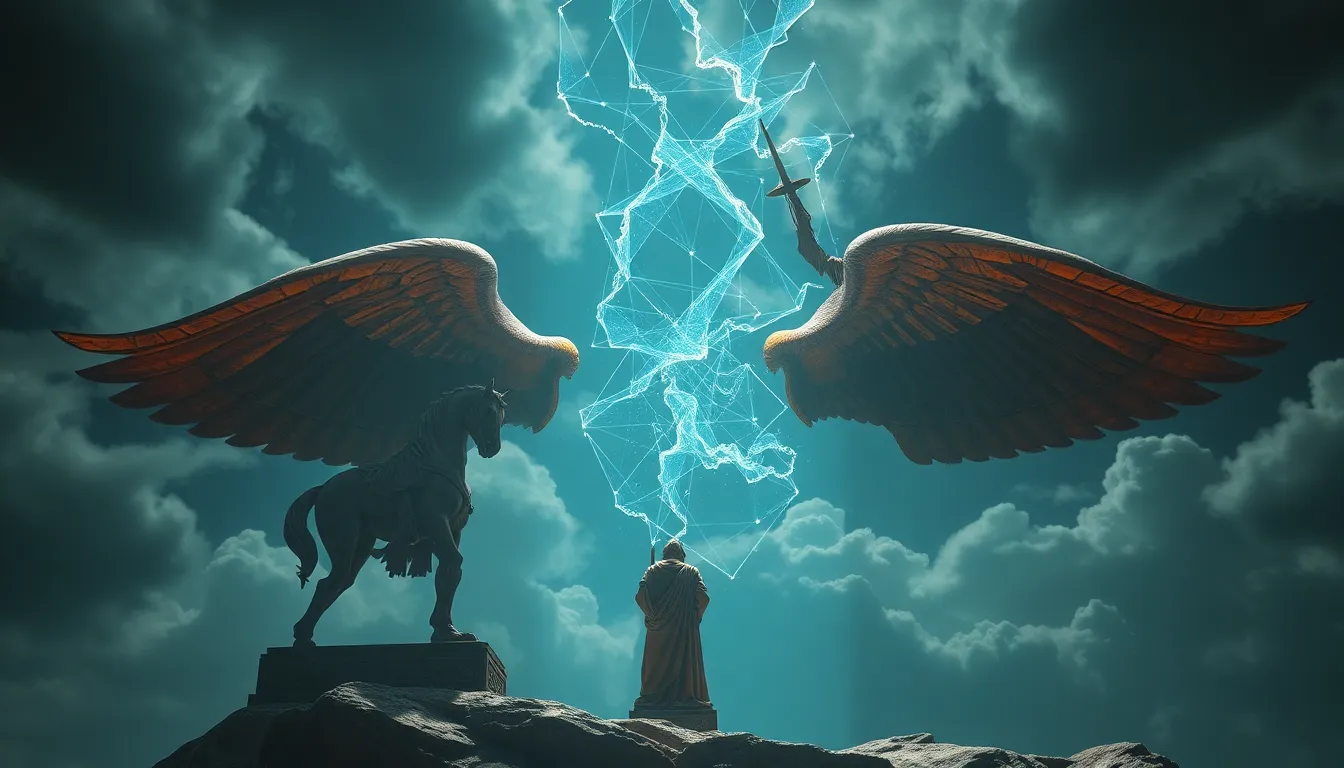
The Myth of Daedalus: Innovation and Creativity in Modern Times
I. Introduction
In the rich tapestry of Greek mythology, few figures encapsulate the spirit of innovation and creativity as profoundly as Daedalus. Known as an exceptional craftsman and inventor, Daedalus is often depicted as a symbol of human ingenuity and the complexities that accompany it. His story weaves together themes of brilliance, ambition, and the consequences of hubris, making him a timeless figure whose relevance extends well beyond the ancient world.
This article aims to explore the significance of Daedalus in the context of modern innovation and creativity. By examining his legendary contributions and the lessons gleaned from his narrative, we will uncover how Daedalus’s myth continues to resonate in today’s world, inspiring contemporary creators to push the boundaries of what is possible.
II. The Legend of Daedalus: A Brief Recap
Daedalus, the son of Eupalamus, is renowned for his extraordinary skills as a craftsman and inventor in Greek mythology. His most famous tale involves the construction of the Labyrinth on the island of Crete, a complex maze designed to contain the Minotaur—a creature that was half-man, half-bull. The Labyrinth was so intricate that even Daedalus himself struggled to escape it once he had completed his creation.
Key elements of Daedalus’s story include:
- The Labyrinth: A marvel of engineering, showcasing Daedalus’s ingenuity and creativity.
- The Wings of Icarus: Perhaps one of the most iconic inventions attributed to Daedalus, these wings allowed him and his son Icarus to escape from the island of Crete.
- Hubris and Tragedy: Icarus’s tragic fall, a consequence of his overambition, serves as a cautionary tale about the dangers of hubris.
Through these elements, Daedalus’s narrative vividly illustrates the dual nature of innovation—its potential for greatness and the perils that may accompany unchecked ambition.
III. Lessons from Daedalus: The Nature of Innovation
The story of Daedalus offers several profound lessons about the nature of innovation, particularly relevant in our rapidly changing world.

A. The balance between creativity and ethical considerations
Daedalus’s inventions, while groundbreaking, also raise questions about ethical responsibility. The Labyrinth, designed to contain a monstrous being, reflects a moral dilemma of innovation—what should one do with the power to create?
B. The impact of failure and learning in the innovation process
Daedalus’s journey is not without failure. Icarus’s tragic end serves as a reminder that failure is often an integral part of the innovative process. Learning from mistakes can lead to greater insights and future successes.
C. The importance of adaptability and resilience
Throughout his life, Daedalus faced numerous challenges, from the wrath of King Minos to the loss of his son. His ability to adapt to changing circumstances and his resilience in the face of adversity are qualities that modern innovators must embrace.
IV. Modern Parallels: Contemporary Innovators Inspired by Daedalus
In the modern world, many inventors and creators embody the spirit of Daedalus, pushing boundaries and redefining what is possible. Here are a few notable figures:
- Elon Musk: A pioneer in technology and space exploration, Musk’s ventures—such as Tesla and SpaceX—reflect a Daedalian spirit of innovation.
- Steve Jobs: The co-founder of Apple, Jobs revolutionized technology and design, emphasizing creativity and user experience.
- Marie Curie: A scientist whose groundbreaking work in radioactivity exemplifies the intersection of science and innovation.
Case studies of their successes often reveal backstories filled with challenges, failures, and moments of inspiration that echo Daedalus’s journey:
- SpaceX: Musk’s ambitious plan to colonize Mars faced numerous setbacks, yet his resilience has led to unprecedented advancements in space travel.
- Apple’s Design Philosophy: Jobs’s insistence on aesthetics and functionality transformed technology into an art form, illustrating the fusion of creativity and innovation.
Furthermore, interdisciplinary collaboration plays a crucial role in modern inventiveness, as seen in projects that bring together diverse fields—art, science, and technology—to create groundbreaking solutions.
V. The Role of Technology in Fostering Creativity
In today’s digital age, technology serves as a powerful catalyst for creativity and innovation.
A. How technology enhances creative processes
Tools such as computer-aided design (CAD) software, digital fabrication methods, and collaborative platforms have revolutionized the way creators work, enabling them to bring their visions to life more efficiently and effectively.
B. The impact of digital tools and platforms on innovation
Social media, online communities, and open-source platforms allow creators to share ideas, receive feedback, and collaborate across geographical boundaries, fostering a global culture of innovation.
C. The potential downsides of technology in the creative landscape
However, the rise of technology also presents challenges. Issues such as digital distraction, information overload, and the commodification of creativity can stifle genuine innovation and artistic expression.
VI. Daedalus’s Legacy in the Arts and Sciences
The legacy of Daedalus extends beyond mythology; it permeates various fields, influencing both the arts and sciences.
A. Exploration of Daedalian themes in modern literature and film
Many contemporary works of literature and film draw inspiration from Daedalian themes, exploring the complexities of creativity, innovation, and the consequences of ambition. Examples include:
- Films: Movies like “The Imitation Game” and “Inception” reflect the intricate balance between innovation and ethical dilemmas.
- Literature: Novels that delve into the lives of inventors and creators often echo Daedalus’s journey, highlighting the struggles and triumphs of the human spirit.
B. The influence of Daedalus on scientific discovery and engineering
In engineering and scientific fields, Daedalus’s spirit of innovation inspires countless professionals to explore new frontiers, emphasizing the importance of creativity in problem-solving and discovery.
C. The intersection of art and technology in contemporary creativity
The fusion of art and technology, seen in fields like digital art and interactive installations, exemplifies the Daedalian legacy of blending creativity with technical prowess.
VII. Challenges to Innovation in the Modern Era
Despite the advancements in technology and the spirit of innovation that permeates our society, several challenges hinder creative expression today.
A. Societal and cultural barriers to creative expression
Many individuals face societal pressures that may stifle their creativity, including cultural norms that prioritize conventional paths over innovative pursuits.
B. The pressure of commercialization on innovative pursuits
In a market-driven world, the commercialization of ideas can lead to a focus on profit over creativity, often pushing innovators to compromise their visions for marketability.
C. Navigating intellectual property and ethical dilemmas
As technology evolves, the complexities surrounding intellectual property rights and ethical considerations in innovation become increasingly challenging, requiring careful navigation by creators.
VIII. Conclusion
In conclusion, the myth of Daedalus serves as a powerful reminder of the duality of innovation—its potential for greatness and the ethical responsibilities that accompany it. Daedalus’s legacy continues to inspire modern innovators to embrace creativity and push boundaries across various fields.
As we move forward in an era characterized by rapid technological advancements and complex societal challenges, it is essential to cultivate a spirit of creativity and resilience, much like Daedalus himself. By doing so, we can honor his legacy and shape a future that values innovation, ethical considerations, and the transformative power of human ingenuity.