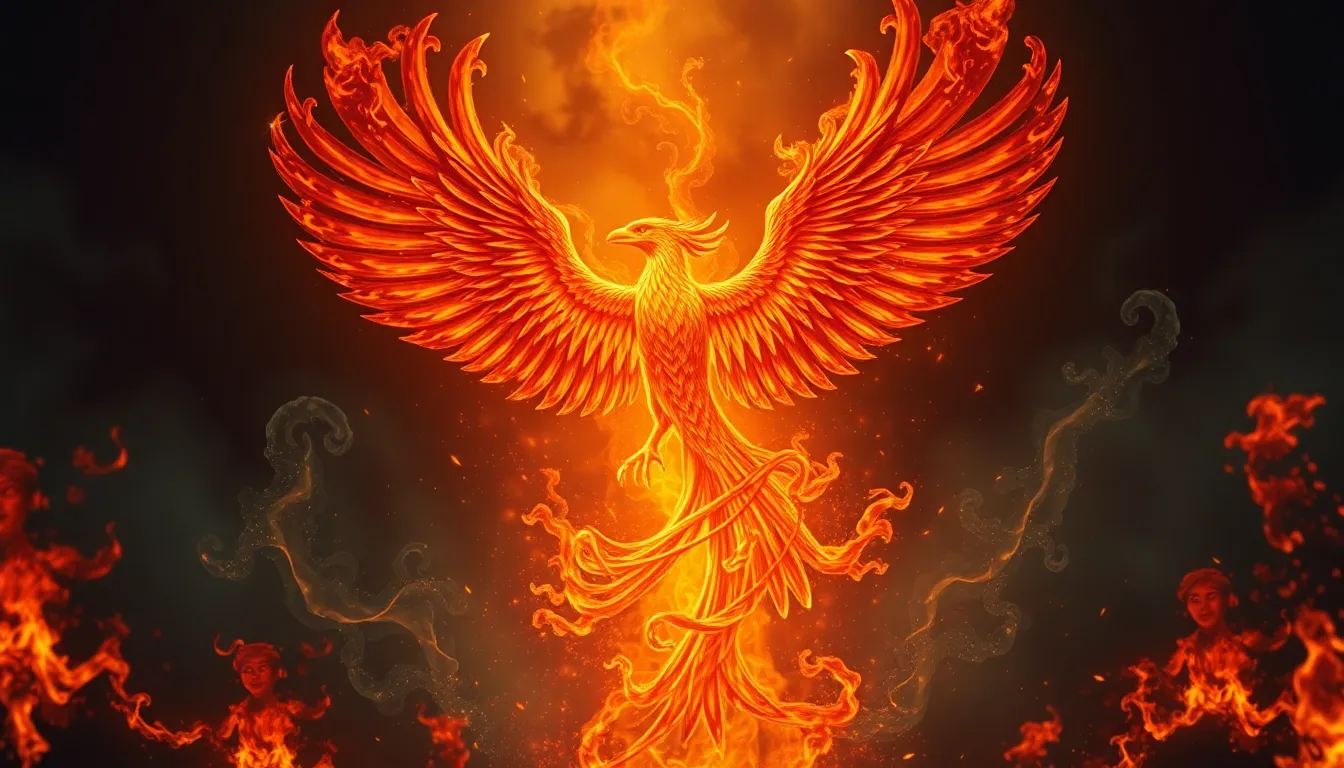
The Myth of the Phoenix: Rebirth Through Hades’ Flames
I. Introduction to the Phoenix Myth
The Phoenix is one of the most enduring symbols in mythology, representing the cycle of life, death, and rebirth. This mythical bird, known for its incredible ability to rise from its ashes after being consumed by flames, has captivated the imaginations of cultures throughout history.
Across various civilizations, the themes of renewal and transformation play a significant role. The Phoenix myth serves as a poignant reminder of the potential for regeneration after destruction, a concept that resonates deeply in human experience.
This article will explore the intricate symbolism and interpretations of the Phoenix myth, shedding light on its historical origins, its connection to Hades, and its relevance in contemporary society.
II. Historical Origins of the Phoenix Legend
The roots of the Phoenix legend can be traced back to ancient civilizations, with one of the earliest mentions found in Egyptian mythology.
A. Ancient Egyptian roots and the Bennu bird
The Bennu bird, often associated with the sun and rebirth, is considered a precursor to the Phoenix. It was depicted as a heron and was believed to have risen from the ashes of its predecessor. The Bennu bird symbolized the cyclical nature of life and death, linking closely to the sun’s daily rebirth.

B. Greek adaptations and literary references
The Greeks adapted the Phoenix myth, emphasizing its connection to fire and resurrection. The Roman poet Ovid, in his work “Metamorphoses,” famously described the Phoenix’s life cycle, elaborating on its ability to rise anew from its ashes every 500 years. This adaptation solidified the Phoenix’s identity as a symbol of immortality and renewal.
C. Transition of the myth through different cultures over time
- In Persian mythology, the Phoenix is known as the Simurgh, a benevolent creature that helps the righteous.
- In Chinese culture, the Fenghuang, often referred to as the Chinese Phoenix, represents virtue and grace, embodying duality and harmony.
- In modern contexts, the Phoenix continues to inspire various narratives in literature and film, showcasing its timeless appeal.
III. Symbolism of Fire in the Phoenix Myth
Fire plays a crucial role in the Phoenix myth, representing both destruction and the potential for creation.
A. Fire as a representation of destruction and creation
The flames that consume the Phoenix symbolize the end of a cycle, while simultaneously facilitating the birth of a new one. This duality highlights the transformative power of fire, which can dismantle yet also rejuvenate.
B. The duality of flames: painful endings vs. transformative beginnings
The fiery demise of the Phoenix is a painful process, yet it heralds the arrival of a new life. This cycle exemplifies the inevitability of change and the beauty that can arise from endings.
C. Connections to Hades and the underworld
The flames of the Phoenix can be metaphorically linked to Hades, the Greek god of the underworld. In this context, the fire reflects not only destruction but also purification—a passage through Hades’ realm that leads to rebirth.
IV. The Cycle of Death and Rebirth
The life cycle of the Phoenix encapsulates the essence of death and rebirth, offering profound insights into the human condition.
A. Understanding the life cycle of the Phoenix
The Phoenix lives for several centuries before it feels the call to return to the source of its creation. It builds a nest of aromatic wood, ignites it, and is consumed in the flames, only to emerge renewed and powerful.
B. Concept of cyclical time in mythology
Many mythologies embrace the idea of cyclical time, where endings are merely the precursors to new beginnings. The Phoenix exemplifies this belief, illustrating that death is not the final chapter but rather a necessary step toward rebirth.
C. Parallels with human experiences of loss and transformation
Just as the Phoenix rises from its ashes, individuals often experience personal transformations following significant losses. These moments of despair can lead to profound growth and new beginnings, mirroring the mythological journey of the Phoenix.
V. The Role of Hades in the Mythological Framework
Hades, the Greek god of the underworld, plays a pivotal role in the mythology surrounding the Phoenix.
A. Hades as the realm of the dead and its significance
Hades is not merely a place of despair; it is a realm that holds the potential for transformation. The journey through Hades can be seen as a necessary passage that prepares the soul for rebirth.
B. The interplay between life, death, and resurrection
The Phoenix’s association with Hades underscores the interconnectedness of life and death. It highlights the idea that one must confront mortality to truly appreciate and embrace life.
C. The Phoenix’s journey through Hades’ flames
The flames of the Phoenix can be viewed as a metaphor for the trials faced in Hades. These flames purify the spirit, preparing it for rebirth and renewal, reinforcing the notion that adversity can lead to personal growth.
VI. Cultural Interpretations and Adaptations
The Phoenix myth has inspired a myriad of interpretations across different cultures and eras.
A. Variations of the Phoenix myth across different cultures
- Egyptian Mythology: The Bennu bird, as previously mentioned, represents resurrection and the sun.
- Chinese Culture: The Fenghuang symbolizes harmony and the union of yin and yang.
- Modern Literature: Authors and filmmakers continue to draw on the Phoenix myth to depict themes of resilience and renewal.
B. Modern reinterpretations in literature and popular media
In contemporary society, the Phoenix has become a symbol of hope and perseverance. From fantasy novels to superhero films, the Phoenix archetype is often employed to illustrate the journey of overcoming great odds and emerging stronger.
C. The Phoenix as a symbol of hope and resilience in contemporary society
The imagery of the Phoenix rising from the ashes resonates deeply in today’s world, serving as a powerful reminder that individuals can endure hardships and emerge renewed. This symbolic representation encourages people to embrace their struggles as opportunities for growth.
VII. Lessons from the Phoenix Myth
The lessons derived from the Phoenix myth are both timeless and relevant to our lives today.
A. Embracing personal transformation and growth
The Phoenix encourages individuals to embrace change and seek personal transformation. It serves as a reminder that growth often arises from challenges, and that one can find strength in vulnerability.
B. The importance of facing challenges and adversity
Facing adversity is an integral part of the human experience, and like the Phoenix, we can emerge from our trials renewed and empowered. The myth emphasizes that every ending is a precursor to a new beginning.
C. Finding inspiration in the myth for modern life
The story of the Phoenix can inspire individuals to pursue their dreams, overcome obstacles, and rise above difficulties. It serves as a beacon of hope for those navigating through their own personal challenges.
VIII. Conclusion: The Enduring Legacy of the Phoenix
In summary, the Phoenix myth encapsulates essential themes of rebirth, resilience, and transformation. Its origins in ancient mythology, its symbolism of fire, and its connection to Hades all contribute to its enduring legacy.
The relevance of the Phoenix myth in today’s world is profound, reminding us of the cyclical nature of life and the beauty that can emerge from destruction. As we face our own challenges, may we take inspiration from the Phoenix, embracing the journey of renewal and the eternal cycle of life.