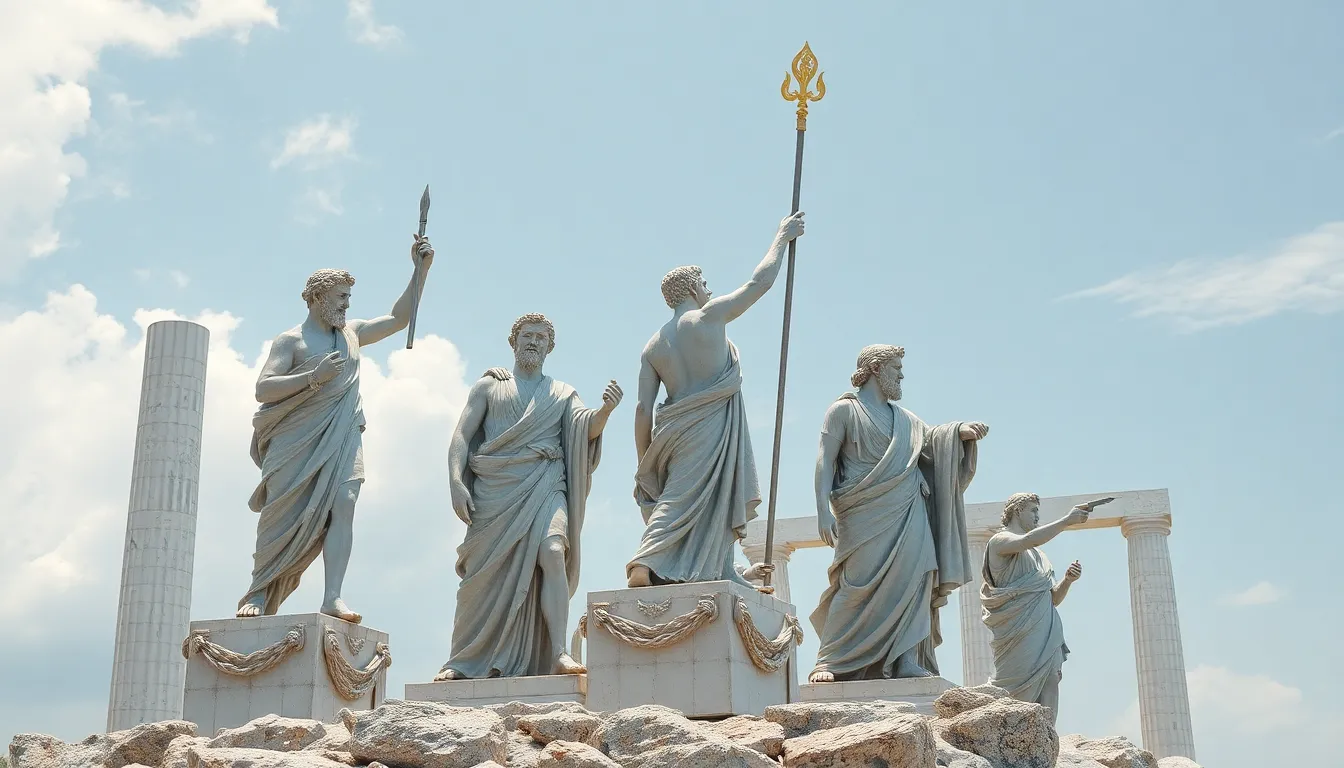
The Relevance of Greek Myths in Today’s Scientific Discourse
I. Introduction
Greek mythology, a rich tapestry of stories about gods, heroes, and creatures, has captivated human imagination for centuries. These myths served not only as entertainment but also as profound narratives that shaped the values, beliefs, and understanding of the ancient Greeks. They offered explanations for the mysteries of the world and provided moral lessons that resonated with the human experience. This article explores the intersection of Greek myths and modern science, revealing how ancient narratives can illuminate contemporary scientific discourse.
II. The Historical Context of Greek Myths
A. Origins and evolution of Greek myths
Greek myths originated in a time when the natural world was largely unexplained. As oral traditions, these stories evolved over centuries, reflecting the changing beliefs and values of Greek society. The earliest myths were likely rooted in local folklore and later expanded through the works of poets such as Homer and Hesiod, who wove complex tales that included gods and heroes.

B. Myths as explanations for natural phenomena
In ancient Greece, myths served as a means to explain natural phenomena that were otherwise incomprehensible. For example:
- Zeus and lightning: The god of thunder was believed to control storms and lightning, providing an explanation for these powerful and unpredictable forces.
- Demeter and the seasons: The myth of Demeter and her daughter Persephone explained the cycle of the seasons, linking agricultural practices to divine actions.
- Poseidon and earthquakes: As the god of the sea, Poseidon was attributed with causing earthquakes, reflecting humanity’s awe of geological events.
C. The role of mythology in ancient Greek society
Greek mythology was integral to ancient society, influencing religion, art, and politics. Myths provided a shared cultural framework, offering lessons in morality and human behavior. They were depicted in literature, sculpture, and theater, serving as both a reflection of societal values and a means to transmit those values through generations.
III. Symbolism and Archetypes in Greek Myths
A. Common themes and motifs in Greek mythology
Greek myths are rich with common themes that resonate with the human experience. Some of these include:
- The hero’s journey: Many myths follow a hero’s quest, representing the struggle for identity and purpose.
- Love and betrayal: Stories often explore the complexities of love, loyalty, and the consequences of betrayal.
- Fate vs. free will: Characters frequently grapple with their destinies, raising questions about human agency and the nature of existence.
B. Archetypes and their relevance to human experience
Archetypes in Greek mythology, such as the hero, the mentor, and the trickster, mirror universal human experiences and emotions. They serve as psychological frameworks through which we can understand ourselves and our interactions with others, providing a deeper insight into our motivations and behaviors.
C. How these symbols can inform scientific understanding
The symbols and archetypes found in Greek myths can enhance scientific understanding by offering metaphors for complex concepts. For instance, the archetype of the hero can be likened to scientists who embark on quests for knowledge, facing challenges and making sacrifices for the greater good of humanity.
IV. Mythology and the Scientific Method
A. Comparing mythological storytelling to scientific hypotheses
Both mythology and science rely on storytelling to convey ideas. In mythology, stories explain the world through narrative; in science, hypotheses propose explanations for observed phenomena. Both processes involve:
- Observation of the world around us.
- Formulating narratives that explain those observations.
- Testing these narratives against reality to determine their validity.
B. The narrative structure in both fields
The narrative structures found in mythology can parallel scientific inquiry. For example, the structure of a myth often includes a challenge, a journey, and a resolution, similar to the scientific method, which involves identifying a problem, conducting experiments, and reaching conclusions.
C. Lessons from mythology that enhance scientific inquiry
Mythology teaches us about the importance of questioning and exploring the unknown. The stories of Icarus, who flew too close to the sun, or Prometheus, who stole fire from the gods, remind us of the consequences of hubris but also inspire innovation and the pursuit of knowledge.
V. Greek Myths in Modern Scientific Concepts
A. Examples of mythology influencing scientific terminology and ideas
Many scientific terms and concepts are derived from Greek mythology, showcasing its lasting influence. For instance:
- Herculean: Referring to tasks that require immense strength, named after the hero Hercules.
- Achilles’ heel: A term for a vulnerability, stemming from the myth of Achilles.
- Odyssey: Used to describe a long, adventurous journey, inspired by Homer’s epic.
B. Case studies: Prometheus, Icarus, and their implications in ethics and innovation
The stories of Prometheus and Icarus serve as powerful metaphors in modern discussions of ethics and innovation:
- Prometheus: His theft of fire symbolizes the quest for knowledge and the ethical dilemmas that accompany scientific advancement, particularly in fields like genetics and artificial intelligence.
- Icarus: His flight represents the dangers of overreaching ambition and the importance of caution in scientific exploration and technological development.
C. The role of storytelling in communicating scientific concepts
Storytelling is a vital tool in science communication. Just as myths conveyed complex ideas through engaging narratives, scientists today use storytelling to make their research accessible and relatable to the public. By framing scientific concepts within narratives, researchers can inspire curiosity and understanding.
VI. Interdisciplinary Approaches: Science and Humanities
A. The importance of integrating mythology in scientific education
Integrating mythology into scientific education can enrich students’ understanding of both fields. It encourages critical thinking and fosters creativity, allowing students to draw connections between disparate ideas. For example, discussions about ethical implications of scientific advancements can be informed by mythological narratives.
B. Case for a collaborative approach between science and the humanities
A collaborative approach between science and humanities can lead to innovative solutions and a more holistic understanding of complex issues. By combining the analytical rigor of science with the interpretative insights of the humanities, we can address challenges such as climate change and bioethics more effectively.
C. Examples of successful interdisciplinary projects or programs
Several successful interdisciplinary projects illustrate the potential of integrating mythology and science:
- Theater of Science: Programs that use drama to explore scientific concepts, making them more engaging and relatable.
- STEAM initiatives: Educational programs that combine science, technology, engineering, arts, and mathematics to foster creativity and innovation.
- Mythology in science communication: Workshops that train scientists to use storytelling techniques inspired by mythology to effectively convey their research.
VII. The Impact of Greek Myths on Contemporary Science
A. Modern interpretations and adaptations of Greek myths in scientific discourse
Modern interpretations of Greek myths often find their way into scientific discourse, providing frameworks for discussing contemporary issues. For instance, the narrative of Prometheus is frequently referenced in bioethics debates concerning genetic engineering and artificial intelligence.
B. Influential scientists and their engagement with mythology
Many influential scientists have drawn inspiration from mythology, using it to frame their ideas and ethical considerations. Figures such as Carl Sagan and Richard Dawkins have referenced mythological themes in their work, highlighting the interplay between science and human culture.
C. The relevance of myths in discussions on ethics, responsibility, and future challenges
As we face unprecedented challenges such as climate change and technological advancements, the lessons embedded in Greek myths remain relevant. They remind us of the ethical responsibilities that come with knowledge and the need for humility in the face of the unknown.
VIII. Conclusion
In conclusion, Greek myths hold significant relevance in today’s scientific discourse. They provide timeless narratives that illuminate the