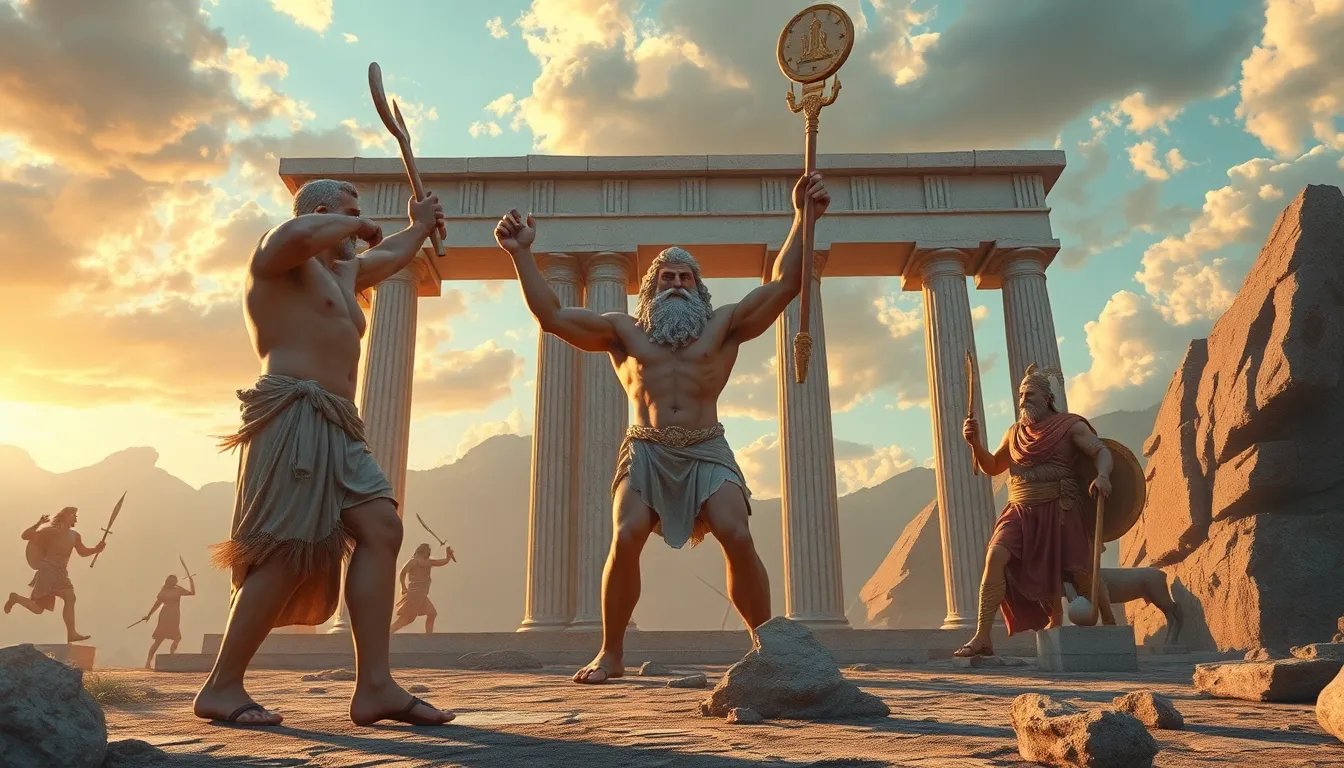
The Role of Fate in the Gigantomachy: Were the Giants Doomed?
I. Introduction
The Gigantomachy is a significant event in Greek mythology, depicting the epic battle between the Olympian gods and the Giants, offspring of Gaia. This mythological conflict not only illustrates the struggle for divine supremacy but also serves as a poignant reflection on the nature of fate and destiny.
In Greek mythology, fate, or Moira, plays a crucial role in determining the outcomes of both divine and mortal endeavors. The intricate relationship between fate and free will raises questions about the inevitability of events and the autonomy of characters within these narratives. This article will analyze the role of fate in the Gigantomachy, revealing whether the Giants were indeed destined for defeat.
II. The Mythological Context of the Gigantomachy
A. Background of the Titans and Giants in Greek Mythology
The Giants emerged after the Titanomachy, the war between the Titans and the Olympian gods, which led to the overthrow of the Titans. According to myth, the Giants were born from Gaia, fueled by her desire to avenge the defeat of her Titan offspring. They represent the chaotic forces of nature, often depicted as monstrous beings with immense strength.

B. Key Events Leading to the Gigantomachy
Prior to the Gigantomachy, tensions escalated between the Olympians and the Giants. The Giants, feeling wronged by the gods who had usurped their predecessors, sought to challenge the Olympians. This culminated in a series of confrontations, leading to the eventual declaration of war known as the Gigantomachy.
C. Divine Beings Involved: The Olympian Gods vs. the Giants
The Olympian gods, led by Zeus, represented order, civilization, and the established cosmic order. In contrast, the Giants symbolized chaos and rebellion. This dichotomy set the stage for a monumental struggle, as the forces of order clashed with those of disorder.
III. Understanding Fate in Greek Mythology
A. Definition and Significance of Fate (Moira)
Fate, or Moira, in Greek mythology refers to the predetermined course of events that govern both mortal and divine lives. The Moirai, or Fates, are often depicted as three sisters who spin, measure, and cut the thread of life, symbolizing the inescapable nature of destiny.
B. Contrast Between Fate and Free Will in Ancient Beliefs
The tension between fate and free will is a recurring theme in Greek mythology. While characters often believe they can exercise agency, their paths are frequently influenced by the whims of the gods or the decrees of fate. This interplay raises questions about the nature of choice and predestination.
C. The Role of Oracles and Prophecies
Oracles and prophecies play a significant role in shaping the narratives of Greek mythology. They serve as warnings or insights into the future, often guiding characters’ decisions. In the context of the Gigantomachy, prophecies regarding the Giants’ defeat foreshadow their ultimate doom.
IV. The Giants: Characteristics and Motivations
A. Depiction of the Giants in Ancient Texts and Art
The Giants are often depicted as formidable creatures, towering over gods and mortals alike. In ancient art, they are shown with exaggerated features, embodying both physical prowess and a sense of menace. Their imagery conveys the chaos they represent, often depicted in battle against the Olympians.
B. Their Motivations for Rebelling Against the Olympians
The Giants’ motivations stemmed from a mix of vengeance and ambition. They sought to reclaim what they believed was rightfully theirs—the power and dominion over the cosmos. Their rebellion against the Olympians was not merely an act of defiance but a quest for legitimacy and restoration of their perceived rightful order.
C. The Symbolic Representation of Chaos and Disorder
In the mythological narrative, the Giants symbolize the chaotic forces that challenge the established order of the universe. Their existence and rebellion serve as a reminder of the potential for disorder that lurks beneath the surface of civilization, reflecting humanity’s own struggles against chaos.
V. The Prophecy of the Giants’ Defeat
A. Analysis of the Prophecy Regarding the Giants
According to myth, a prophecy foretold that the Giants could only be defeated with the help of a mortal. This prophecy served as a critical narrative device that underscored the themes of fate and foreordained outcomes. The necessity of a mortal’s assistance hints at the intertwining of human and divine destinies.
B. Key Figures: Gaia and Other Prophetic Entities
Gaia, the primordial earth goddess and mother of the Giants, played a crucial role in the events leading up to the Gigantomachy. Her desire for revenge against the Olympians spurred the Giants into action. Additionally, figures like the Oracle of Delphi provided prophecies that shaped the actions of both the Giants and the gods.
C. Interpretations of the Prophecy and Its Implications for the Giants’ Fate
The prophecy served as a double-edged sword; while it motivated the Giants to engage in battle, it also hinted at their inevitable defeat. This highlights the tragic irony of their struggle—despite their immense strength, they were ultimately powerless against the predetermined narrative of fate.
VI. The Role of the Olympians in Shaping Fate
A. Strategies Employed by the Olympian Gods to Counter the Giants
The Olympian gods employed various strategies to combat the Giants, including forming alliances with other beings and utilizing their unique powers. For example, Athena played a pivotal role by providing guidance and tactical support during the battle.
B. The Interplay of Divine Intervention and Predetermined Outcomes
While the Olympians actively intervened in the battle, their actions were also bound by fate. This interplay raises questions about the extent to which the gods could alter predetermined outcomes. In many instances, their efforts served to fulfill the prophecy rather than change it.
C. How the Gods’ Actions Reflect the Concept of Fate
The Olympians’ actions during the Gigantomachy illustrate the complex relationship between free will and fate. Their strategies, although seemingly independent, were ultimately aligned with the prophecy, reinforcing the idea that fate governs even the gods’ decisions.
VII. The Philosophical Implications of Fate and Doom
A. Discussion of Determinism in the Context of the Gigantomachy
The Gigantomachy serves as a narrative exploration of determinism, illustrating how predetermined events unfold despite characters’ attempts to assert their will. The Giants’ rebellion reflects the futility of resisting fate, emphasizing the philosophical implications of their doomed struggle.
B. The Moral Lessons Regarding Hubris and Rebellion Against Fate
The fate of the Giants serves as a cautionary tale about hubris and the consequences of rebelling against established order. Their ambition and desire for power ultimately led to their downfall, reinforcing the notion that overstepping one’s bounds invites divine retribution.
C. Cultural Reflections on Fate and Destiny in Ancient Greece
The Gigantomachy and its themes of fate and doom resonate deeply within ancient Greek culture. The struggle between order and chaos mirrors societal concerns about power, governance, and the limits of human agency. These narratives continue to shape contemporary interpretations of destiny and fate.
VIII. Conclusion
In summary, the exploration of fate in the Gigantomachy reveals a complex interplay between predetermined outcomes and individual agency. The Giants, despite their formidable strength and motivations, were ultimately bound by the prophecies that foretold their defeat.
While their rebellion against the Olympians serves as a testament to their ambition, it also underscores the inevitability of their doom. The lasting impact of the Gigantomachy on contemporary interpretations of fate in mythology invites reflection on the nature of destiny and the human condition.