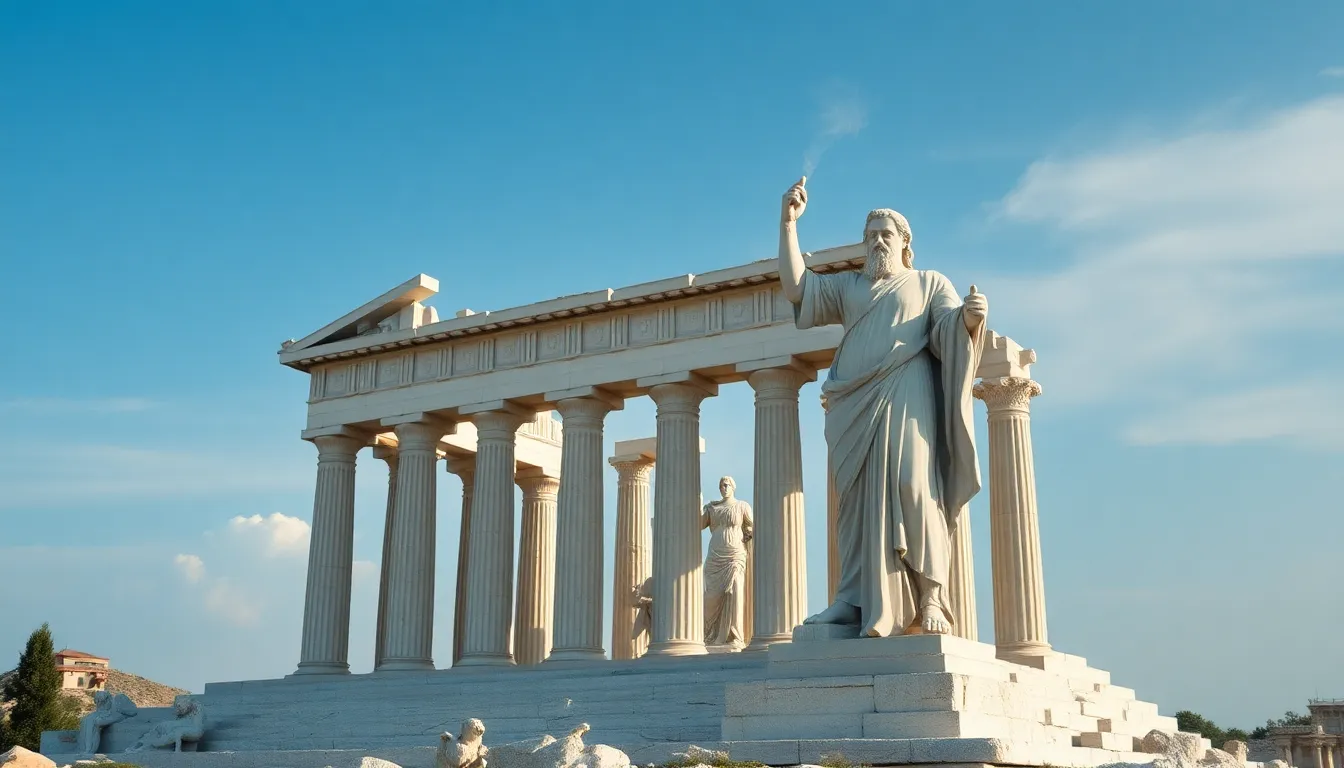
The Role of Greek Myths in Shaping Today’s Economic Narratives
I. Introduction
Greek mythology, with its rich tapestry of gods, heroes, and moral tales, has significantly shaped human culture and thought throughout history. These ancient stories, passed down through generations, serve not only as entertainment but also as a lens through which we can examine human nature and societal values.
In contemporary society, economic narratives play a critical role in shaping our understanding of wealth, value, and success. These narratives influence how we behave as consumers, investors, and entrepreneurs, guiding our decisions and shaping our economic landscape.
This article explores the profound influence of Greek myths on modern economic thought and storytelling, illustrating how these ancient tales continue to resonate in today’s complex economic environment.
II. The Foundation of Greek Myths
A. Brief history and overview of Greek mythology
Greek mythology is a collection of stories and legends that were part of the ancient Greek religion. These myths involve a pantheon of gods and goddesses, mythical creatures, and heroic figures, each embodying various aspects of life and human experience.
The origins of these myths can be traced back to the early Greeks, who used them to explain natural phenomena, human behavior, and the mysteries of life and death. Over time, these narratives were chronicled by poets and philosophers, such as Homer and Hesiod, solidifying their place in Western literary and cultural tradition.
B. Key themes and characters in Greek myths
Key themes in Greek mythology include the struggle between fate and free will, the quest for knowledge, the nature of heroism, and the consequences of hubris. Prominent characters such as Zeus, Athena, Odysseus, and Hercules exemplify these themes, providing archetypes that continue to resonate with audiences today.
C. The role of myths in ancient Greek society and economy
In ancient Greece, myths were integral to the social fabric. They were used to teach moral lessons, reinforce social norms, and explain the workings of the economy. Myths provided a shared cultural narrative that helped to unify communities and guide individual behavior, influencing everything from trade practices to personal ambition.
III. Archetypes and Economic Behavioral Models
A. Identification of archetypes in Greek myths
Greek myths are rich in archetypes—universal symbols and characters that embody fundamental human experiences. Some key archetypes include:
- The Hero: Represents courage and the quest for achievement.
- The Trickster: Embodies cunning and resourcefulness.
- The Sage: Symbolizes wisdom and guidance.
- The Victim: Reflects vulnerability and the consequences of fate.
B. Analysis of how these archetypes reflect human behavior in economic contexts
These archetypes resonate in economic contexts as they reflect the motivations and behaviors of individuals and groups. For example, the Hero archetype can be seen in entrepreneurs who take risks to innovate and create new markets, while the Trickster may represent those who navigate economic systems with cleverness, sometimes bending rules to their advantage.
C. Case studies of specific myths and their economic implications
One notable example is the myth of King Midas, whose touch turned everything to gold. This story illustrates the dangers of greed and the unintended consequences of wealth accumulation, echoing contemporary discussions about the pitfalls of excessive consumerism and the moral responsibilities of wealth.
IV. Moral Lessons and Economic Ethics
A. Examination of ethical teachings in Greek myths
Greek myths often contain moral lessons that highlight the importance of ethical behavior. Stories such as that of Prometheus, who defied the gods to bring fire to humanity, underscore the value of sacrifice for the greater good, while also warning against the hubris of defying divine order.
B. Impact of these moral lessons on contemporary economic practices
The ethical teachings embedded in Greek myths have influenced contemporary economic practices, emphasizing the need for integrity, fairness, and social responsibility in business. Modern enterprises increasingly recognize the importance of corporate ethics, which echoes the moral lessons from these ancient stories.
C. The connection between mythological ethics and modern corporate social responsibility
As businesses navigate the complexities of globalization and consumer expectations, the ethical frameworks derived from Greek myths serve as guiding principles. Companies that embody values such as transparency, accountability, and community engagement are often viewed more favorably, reflecting the mythological emphasis on moral conduct.
V. The Myth of the Hero and Economic Narratives
A. Understanding the hero archetype in Greek mythology
The hero archetype is central to Greek mythology and represents individuals who embark on transformative journeys, facing challenges and overcoming obstacles. This narrative structure resonates deeply with audiences, offering a blueprint for personal and professional success.
B. Application of the hero’s journey to modern entrepreneurs and business leaders
Modern entrepreneurs often mirror the hero’s journey, encountering trials that test their resolve and commitment. The stories of figures such as Steve Jobs or Oprah Winfrey exemplify how overcoming adversity can lead to remarkable achievements, reinforcing the idea that success is often a product of perseverance and resilience.
C. How success stories in the economy mirror mythological hero narratives
Just as Greek heroes achieved greatness through their trials, contemporary success stories in business often highlight the same themes of struggle, growth, and ultimate triumph. These narratives shape public perception and inspire future generations to pursue their aspirations.
VI. The Influence of Greek Myths on Economic Theories
A. Exploration of economic theories inspired by mythological concepts
Various economic theories have drawn inspiration from mythological concepts, illustrating the enduring relevance of Greek myths in shaping economic thought. For instance, the concept of the “Invisible Hand” in capitalism can be likened to the divine order found in myths, where unseen forces guide human behavior towards beneficial outcomes.
B. The relevance of myths in shaping economic models (e.g., capitalism, socialism)
Myths have played a role in shaping economic models by providing narratives that justify certain systems. Capitalism, with its emphasis on individualism and competition, echoes the heroic qualities found in mythological tales, while socialism’s focus on community and cooperation can be seen as a response to the cautionary tales of individual greed in myths.
C. Discussion on the lasting legacy of Greek myths in economic thought leaders’ philosophies
Influential economists and thinkers have often referenced Greek myths in their writings and speeches. Figures such as Adam Smith and Karl Marx utilized mythological themes to articulate their ideas, demonstrating how these ancient narratives continue to inform modern economic discourse.
VII. Case Studies: Myths in Contemporary Economic Discourse
A. Examples of Greek myths in advertising, media, and corporate branding
Greek myths have found their way into contemporary advertising and branding, where companies leverage mythological themes to create compelling narratives. For example, brands like Nike often evoke the spirit of the hero, inspiring consumers to aspire to greatness.
B. Analysis of how these myths resonate in public perception and consumer behavior
The use of mythological references can significantly impact public perception and consumer behavior. Audiences are drawn to brands that resonate with the archetypal stories of struggle and triumph, leading to stronger emotional connections and brand loyalty.
C. The role of storytelling in shaping economic policies and public opinion
Storytelling, rooted in mythological tradition, plays a crucial role in shaping economic policies and public opinion. Policymakers often frame their initiatives within narratives that resonate with the public, drawing on the themes of heroism, sacrifice, and collective good found in Greek myths.
VIII. Conclusion
In conclusion, Greek myths have profoundly influenced modern economic