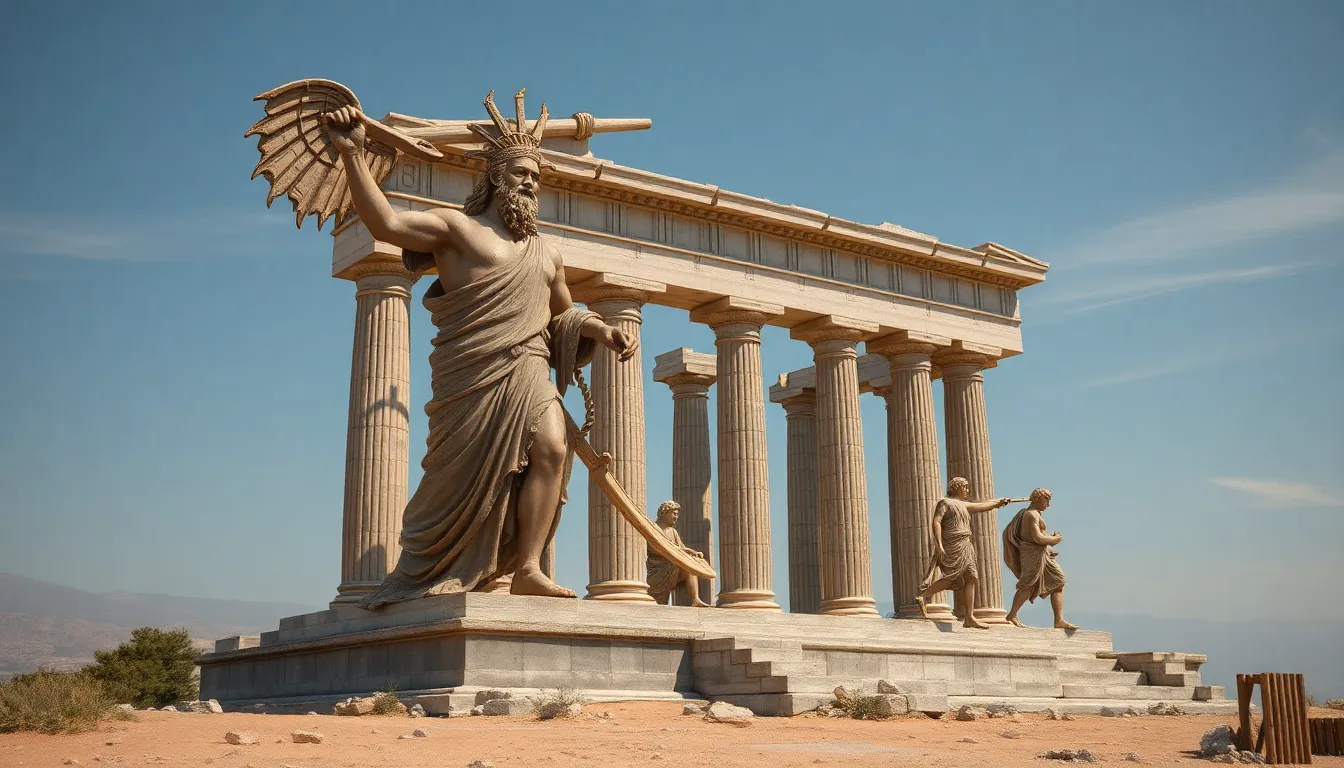
The Role of Myth in Shaping Greek Concepts of Community
I. Introduction
Myth, in the context of ancient Greek culture, refers to the traditional stories that explain the origins of the world, the nature of deities, and the heroic deeds of legendary figures. These narratives were not merely fanciful tales; they were foundational to understanding the world and the human experience. Myths served as a lens through which the Greeks interpreted their lives, moral dilemmas, and communal relationships.
In ancient Greece, community was of paramount importance. The polis, or city-state, was a central aspect of Greek life, fostering a sense of belonging among its citizens. This social unit was often defined by shared customs, religious practices, and collective identities. The communal aspect of Greek society was crucial, as it influenced everything from politics to daily interactions.
This article posits that myths served as a foundational element in shaping Greek concepts of community through shared values, identity, and social cohesion. By examining the nature of Greek myths and their societal implications, we can better understand how these ancient stories continue to resonate in modern contexts.
II. The Nature of Greek Myths
A. Characteristics of Greek mythology
Greek mythology is characterized by its rich tapestry of gods, goddesses, heroes, and monsters. These myths often explain natural phenomena, human behavior, and cultural practices. The stories are marked by:
- A pantheon of deities with human-like traits and emotions.
- An emphasis on moral lessons and the consequences of actions.
- A connection to the physical landscape of Greece, with specific locations tied to mythological events.

B. Key figures and narratives in Greek myths
Key figures in Greek mythology include gods such as Zeus, Hera, Athena, and Poseidon, along with legendary heroes like Hercules, Odysseus, and Perseus. Notable narratives include:
- The Iliad and The Odyssey, epic poems that explore themes of honor, loyalty, and the human condition.
- The Labors of Hercules, showcasing bravery and perseverance.
- The myth of Prometheus, which reflects on themes of sacrifice and the nature of divine punishment.
C. The relationship between myth and religion in ancient Greece
Myths were intrinsically linked to the religious practices of the Greeks. They provided the narratives that framed worship and rituals, connecting the community to the divine. Temples, festivals, and sacrifices were often direct expressions of the myths, reinforcing communal bonds and shared beliefs.
III. Myths as a Reflection of Social Values
A. Exploration of moral lessons in Greek myths
Greek myths often conveyed moral lessons that reflected the values of the society. These stories served as a guide for acceptable behavior and the consequences of transgressions. For example:
- The tale of Icarus warns against hubris and disobedience.
- The story of the Trojan War illustrates the devastating effects of pride and vengeance.
B. Examples of myths that embody communal values
Myths frequently embodied communal values such as hospitality, bravery, and loyalty. The concept of xenia, or hospitality, is prominent in many tales, emphasizing the importance of welcoming guests and treating them with respect. The story of Odysseus and his encounters with various hosts serves as a prime example of this value.
C. The role of heroes and their influence on societal ideals
Heroes in Greek mythology often personified societal ideals. Figures such as Achilles and Theseus became models of bravery, strength, and honor. Their journeys and struggles resonated with the community, inspiring individuals to emulate these virtues in their own lives.
IV. Myths and the Construction of Identity
A. How myths contributed to a shared Greek identity
Myths played a crucial role in constructing a shared identity among the Greek city-states. The collective narratives of gods and heroes fostered a sense of belonging and unity among diverse groups, as these stories transcended regional boundaries.
B. Regional variations in myth and their impact on local communities
While many myths were widespread, regional variations existed that reflected local customs and beliefs. These differences allowed communities to assert their unique identities while still being part of the broader Greek cultural framework. For instance:
- Local variations of the Heracles myth could emphasize different aspects of his character.
- Cult practices might vary, leading to distinct interpretations of shared myths.
C. The role of myths in fostering a sense of belonging among citizens
Myths fostered a sense of belonging and community cohesion. By participating in mythological narratives through festivals, rituals, and storytelling, citizens reinforced their connection to one another and their shared heritage. This collective engagement was vital for maintaining social order and identity.
V. Myths in Civic Life and Rituals
A. The integration of myths into public ceremonies and festivals
Mythology was deeply integrated into the civic life of ancient Greece. Many public ceremonies and festivals celebrated mythological events, allowing citizens to connect with their heritage. Major festivals such as the Panathenaea and the Dionysia included performances of tragedies and comedies based on mythological themes.
B. The role of myth in political and legal contexts
Myths also played a significant role in shaping political and legal frameworks. Leaders often invoked myths to legitimize their authority or to promote civic virtues. Legal decisions could be influenced by mythological precedents, reflecting the society’s values and beliefs.
C. Case studies of specific city-states and their mythological traditions
Different city-states had unique mythological traditions that reflected their identities:
- Athens celebrated the myth of Athena, emphasizing wisdom and civic responsibility.
- Sparta revered the heroic valor of its warriors, centering its myths around strength and discipline.
VI. Myths and Social Cohesion
A. The unifying power of shared myths in times of crisis
Shared myths served as a unifying force during times of crisis. In the face of wars or disasters, communities turned to their myths for solace and guidance. These stories provided a framework for understanding suffering and resilience, reinforcing the bonds among citizens.
B. Myths as a means of conflict resolution and community harmony
Myths also functioned as a means of conflict resolution. By referencing shared stories and values, communities could negotiate disagreements and restore harmony. The narrative of the Argonauts illustrates themes of teamwork and cooperation, emphasizing the importance of collaboration in overcoming challenges.
C. The impact of myth on inter-city relations and alliances
Inter-city relations were often influenced by shared myths. Alliances could be formed based on common mythological heritage, fostering cooperation among city-states. The shared admiration for heroes like Heracles could create bonds between communities, facilitating peaceful relations.
VII. The Evolution of Myths and Community Concepts
A. Changes in mythological narratives over time
Mythological narratives evolved over time, adapting to changing social and political landscapes. As Greece transitioned from a collection of city-states to a more unified entity, myths were reinterpreted to reflect new realities and ideals.
B. The influence of historical events on myth and community perceptions
Historical events, such as wars and migrations, influenced both myths and community perceptions. The rise of democracy in Athens altered the way myths were understood, emphasizing collective decision-making and civic participation. Myths began to reflect the aspirations and challenges of a changing society.
C. The legacy of ancient Greek myths in contemporary understandings of community
The legacy of ancient Greek myths continues to shape contemporary understandings of community. Modern literature, art, and psychology often draw upon these myths to explore themes of identity, belonging, and moral values. The enduring power of these narratives speaks to their fundamental role in shaping human experience.
VIII. Conclusion
In conclusion, Greek myths were not merely stories of gods and heroes; they were fundamental to the fabric of Greek community life. By reflecting social values, constructing identity, and fostering social cohesion, myths served as a vital tool for understanding and navigating the complexities of human relationships.
The enduring impact of these myths on community dynamics in ancient Greece is a testament to their power. As we reflect on the relevance of Greek myths in modern society, we recognize their potential to inform contemporary community