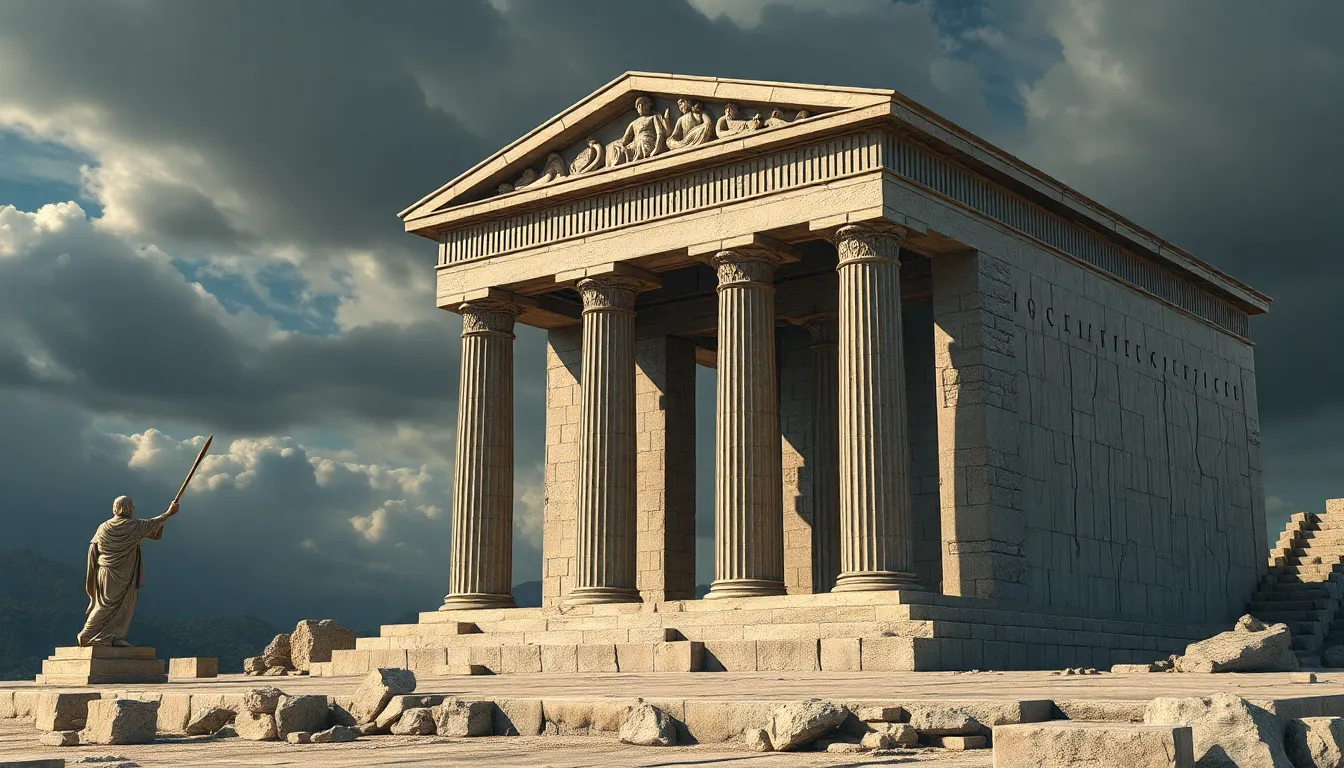
The Role of Myth in Shaping Greek Concepts of Destiny
I. Introduction
Myth has always held a significant place in ancient Greek culture, serving as a powerful means of storytelling that conveyed the beliefs, values, and experiences of the people. Myths were not merely fanciful tales; they encapsulated the essence of Greek identity and provided explanations for the mysteries of existence. Among the many themes explored in Greek mythology, the concept of destiny, known as moira, stands out as a central tenet of Greek thought.
This article aims to explore how Greek myths shaped and influenced perceptions of destiny. Through an examination of historical context, the nature of moira, and its representation in literature and art, we will uncover the profound impact of mythology on understanding fate and human agency in ancient Greece.
II. Historical Context of Greek Mythology
The origins of Greek mythology can be traced back to the oral traditions of storytelling that predate written records. Over time, these myths evolved, influenced by various historical and cultural shifts. Myths served multiple functions in ancient society, including:
- Explaining natural phenomena
- Providing moral lessons
- Establishing cultural identity
- Offering a framework for understanding the divine
Greek mythology was deeply intertwined with religion; the gods and goddesses portrayed in these myths were not just characters in stories but deities to be worshipped and appeased. This interplay between mythology and religion fostered a worldview that emphasized the significance of fate and the limitations of human agency.
III. The Concept of Moira: Fate and Destiny in Greek Thought
The term moira refers to the concept of fate or destiny in Greek mythology. It embodies the idea that each individual has a predetermined path that is often beyond their control. The implications of moira are profound, as they suggest a complex relationship between individual agency and predestination.
In mythology, the Moirai, or Fates, are three sisters who personify destiny:
- Clotho: the spinner of the thread of life
- Lachesis: the allotter who measures the length of the thread
- Atropos: the cutter who determines the end of life
These figures exemplify the belief that human lives are governed by forces beyond personal control, thus shaping the Greek understanding of destiny as an inescapable reality.

IV. Mythical Narratives Illustrating Destiny
Several prominent myths exemplify the theme of destiny and its impact on characters’ lives. Two of the most significant narratives that illustrate this concept are the story of Oedipus and the tale of Achilles.
A. The Story of Oedipus
The myth of Oedipus is a tragic exploration of fate and free will. According to the legend, Oedipus, the son of Laius and Jocasta, is destined to kill his father and marry his mother. Despite his parents’ attempts to thwart this prophecy by abandoning him, Oedipus ultimately fulfills it through a series of choices that lead him to unknowingly kill Laius and marry Jocasta. This tragedy illustrates the inescapable nature of destiny and the futility of attempting to alter it.
B. The Tale of Achilles
Achilles, the greatest warrior of the Trojan War, is another prime example of the interplay between destiny and individual choice. According to prophecy, Achilles is destined to die young but achieve eternal glory. His mother, Thetis, tries to protect him by hiding him among women, but he eventually chooses to join the battle at Troy, leading to his fateful end. Achilles’ story emphasizes the tension between personal desires and the unavoidable fate that shapes his life.
C. The Role of Prophecies and Omens
In both myths, prophecies and omens play crucial roles in shaping the characters’ destinies. These forewarnings serve as reminders of the limits of human agency and the power of fate. They illustrate how knowledge of one’s destiny can lead to tragic outcomes, as characters strive to avoid their foretold fates but inadvertently fulfill them.
V. The Influence of Myth on Greek Philosophy
Greek philosophers, such as Plato and Aristotle, engaged with myths of destiny, interpreting them through a philosophical lens. They explored the implications of fate and free will, often transitioning from mythological narratives to more abstract notions of ethics and morality.
Plato, for instance, viewed myths as allegorical truths that could convey deeper philosophical insights. In works like the “Myth of Er,” he illustrates concepts of the soul’s journey and the choices individuals must make regarding their destinies in the afterlife. Aristotle, on the other hand, examined the nature of causality and individual agency, arguing that while fate exists, humans still possess the ability to make choices that influence their lives.
The impact of mythological narratives on ethical considerations of destiny is significant. Philosophers recognized that understanding fate required grappling with moral responsibility, ultimately shaping the discourse on human agency in the context of predetermined outcomes.
VI. The Role of Myth in Literature and Art
Greek mythology has profoundly influenced literature and art, particularly in the representation of destiny. Greek tragedies, in particular, highlight the consequences of fate on human lives, often showcasing characters grappling with their predetermined paths.
In plays by Sophocles and Euripides, themes of fate and free will are central. For example:
- Antigone: The titular character defies the king’s orders, believing her actions are guided by moral destiny.
- Orestes: The protagonist is tormented by the Furies as he seeks to escape his fateful lineage.
Visual arts also depict fateful encounters, often illustrating moments of critical choice or the intervention of the gods. These representations serve as a reminder of the interplay between destiny and human action.
VII. Contemporary Interpretations of Greek Myths and Destiny
In modern times, Greek myths continue to resonate, inspiring retellings and adaptations across various media. Films, literature, and art draw on these ancient stories, often exploring the themes of fate and free will in contemporary contexts.
The relevance of Greek concepts of destiny remains significant in current discussions surrounding fate and personal agency. Questions of whether our paths are predetermined or shaped by our choices echo through various philosophical and psychological debates today.
The enduring legacy of Greek mythology is evident in popular culture, where characters embodying the struggle against fate continue to captivate audiences, reflecting the timeless nature of these ancient narratives.
VIII. Conclusion
In summary, Greek mythology plays a vital role in shaping concepts of destiny in ancient Greek thought. Through the exploration of moira and the narratives that illustrate its implications, we gain a deeper understanding of how these myths influenced perceptions of fate and free will.
Understanding these myths is essential in the context of human experience, as they reflect the complexities of life, choice, and the inevitability of fate. The intersection of myth, destiny, and human agency in Greek thought continues to offer valuable insights into our own lives, reminding us of the enduring power of storytelling.