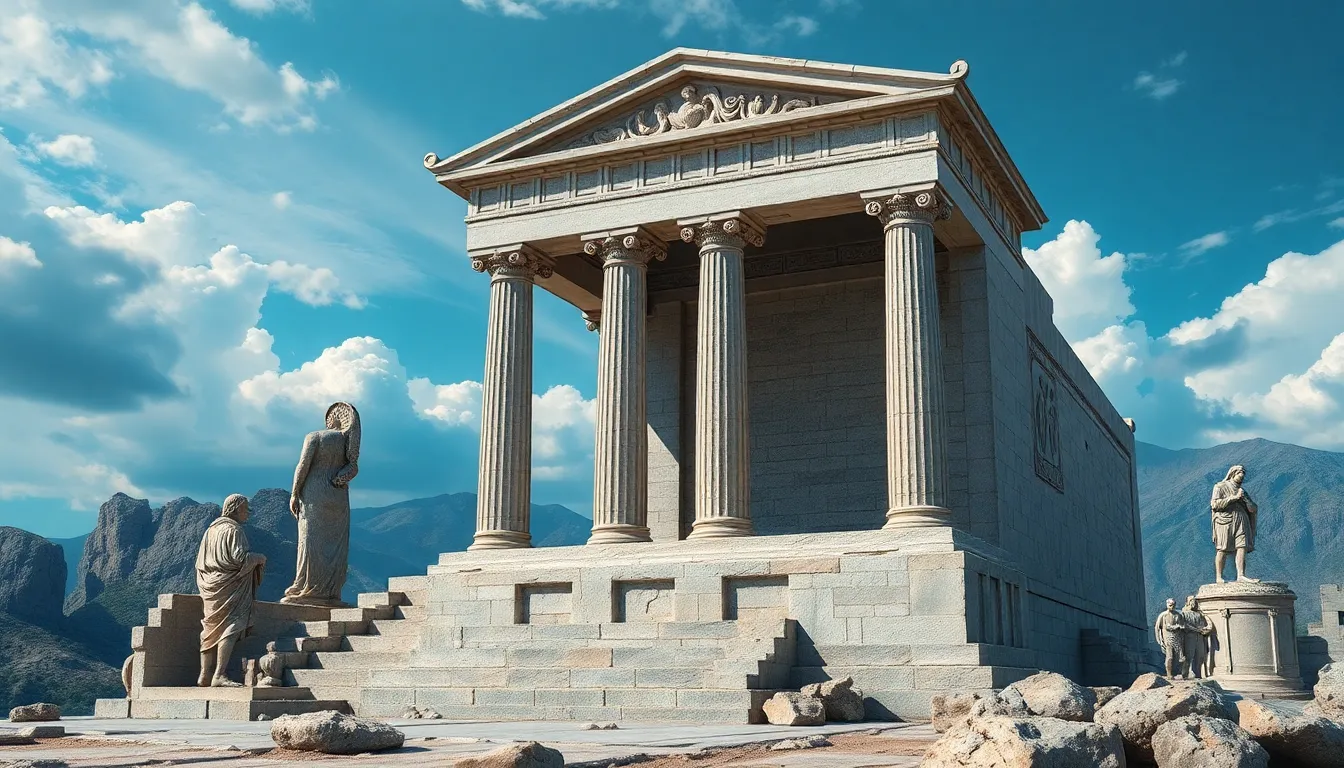
The Role of Myth in the Development of Greek Rhetoric
Introduction
Rhetoric in ancient Greece is defined as the art of persuasive speaking and writing, a skill that was highly valued in the democratic society of Athens and other city-states. Rhetoric encompassed various techniques and principles that enabled speakers to persuade audiences effectively. Within this context, myths played a crucial role in Greek culture, serving not only as stories of gods and heroes but also as vehicles for conveying cultural values and ethical lessons. This article explores how myth served as a foundational element that shaped the principles and practices of Greek rhetoric.
Historical Context of Greek Rhetoric
The emergence of rhetoric in ancient Greece can be traced back to the 5th century BCE, during a time when democratic ideals flourished. The rise of the polis (city-state) necessitated a new form of public discourse, and rhetoric became essential for participation in civic life. Key figures such as Aristotle, Gorgias, and Isocrates significantly contributed to its development.
- Aristotle: Defined rhetoric as the faculty of observing in any given case the available means of persuasion, highlighting its systematic nature.
- Gorgias: A Sophist known for his eloquent speeches, Gorgias emphasized the power of language and persuasion, often using mythological themes to captivate his audience.
- Isocrates: He viewed rhetoric as a means of educating citizens and promoting virtue, often integrating myth to strengthen his arguments.
Rhetoric was deeply intertwined with public life; it was not only a tool for persuasion but also a means for individuals to assert their identities and influence the community.
Understanding Myth: Definition and Characteristics
In the Greek context, a myth is defined as a traditional story that explains natural or social phenomena, often involving gods, heroes, and mythical creatures. Myths served to convey cultural values, beliefs, and ethical lessons that were integral to Greek identity.
Some characteristics of Greek myths include:
- They often involve divine beings and supernatural events.
- Myths serve as allegories for human experiences and moral dilemmas.
- They reflect the values and beliefs of the society from which they originate.
Prominent Greek myths, such as the stories of Hercules, Persephone, and Odysseus, not only entertained but also imparted lessons on bravery, sacrifice, and the consequences of hubris.

Myth as a Persuasive Tool in Rhetoric
Myths have the power to enhance persuasive speech and argumentation in several ways. They evoke emotional and ethical appeals, known in rhetoric as pathos and ethos, which are essential for convincing an audience.
For instance:
- Pathos: Myths often elicit strong emotional responses, allowing speakers to connect with their audience on a deeper level. The story of Achilles, for example, evokes themes of honor and loss.
- Ethos: By referencing well-known myths, speakers can establish their credibility and authority. Invoking the wisdom of Athena or the strength of Hercules can lend weight to an argument.
Case studies of rhetoricians using myth effectively include:
- In his “On the Crown,” Demosthenes references the myth of Hercules to underscore the virtues of bravery and honor in public service.
- Gorgias, in his speeches, often employed mythological allusions to captivate and persuade his audiences, enhancing his rhetorical impact.
Myth and the Construction of Identity
Myth plays a significant role in shaping both personal and communal identities in Greek society. Rhetoricians frequently used myth to establish credibility and authority, drawing from shared cultural narratives that resonated with their audiences.
For example:
- Through storytelling, speakers could align themselves with heroic figures from myth, thus enhancing their own status and legitimacy.
- Myths contributed to collective memory, reinforcing community values, and fostering a sense of belonging among citizens.
By invoking myths, rhetoricians could effectively bridge the gap between personal experience and the broader cultural narrative, thus solidifying their connection to the audience.
The Influence of Myth on Rhetorical Techniques
Myth has significantly influenced various rhetorical techniques, enriching the art of persuasion. Rhetorical devices such as allegory and allusion often draw from mythological sources, allowing speakers to engage their audiences more effectively.
Some examples include:
- Allegory: Many myths serve as allegories for complex human experiences, enabling speakers to convey profound truths through familiar narratives.
- Allusion: Rhetoricians frequently allude to myths to provide context or emphasize a point. For example, a speaker might reference the Trojan War to illustrate themes of conflict and resolution.
Specific speeches that illustrate these techniques include:
- Cicero’s “On the Republic,” where he alludes to the myth of Romulus and Remus to discuss the foundations of the state.
- Pericles’ funeral oration, which invokes the myths of the Athenian heroes to inspire civic pride and unity.
Critique of Myth in Rhetorical Discourse
Despite the powerful role of myth in rhetoric, philosophical critiques have emerged over time. One of the most notable critiques comes from Plato, who questioned the reliance on myth in persuasive discourse.
Key points of critique include:
- Plato argued that myths could mislead audiences by appealing to emotions rather than reason, thereby undermining rational argumentation.
- The tension between rational argumentation and mythic storytelling raises important questions about the nature of truth and persuasion.
Critics of rhetoric often viewed the use of myth as a means of manipulation, suggesting that reliance on myth could weaken the integrity of argumentation.
Conclusion
In summary, the intersection of myth and rhetoric in ancient Greece reveals a complex relationship that shaped the art of persuasion. Myths enriched rhetorical practices, serving as tools for emotional appeal, identity construction, and cultural expression. The legacy of myth continues to influence modern rhetorical practices, reminding us of the enduring power of storytelling in human communication.
As we reflect on the role of myth in understanding human communication and persuasion today, it becomes evident that myths are not merely relics of the past but vital components of our collective narrative. They continue to inform our values, beliefs, and the ways we connect with one another.