The Role of Myth in Understanding Greek Concepts of Harmony
I. Introduction
In the context of Greek culture, harmony is understood as a state of balance and proportion that permeates both the natural world and human interactions. It is a concept that embodies not just aesthetic beauty but also ethical and social stability, crucial for the flourishing of both individuals and communities.
Myth plays a significant role in Greek society, serving as a medium through which complex ideas about life, morality, and the universe were transmitted. Greek myths encapsulate the values and beliefs of the ancient Greeks, providing insight into their understanding of harmony and order.
The purpose of this article is to explore the multifaceted role of myth in conveying Greek concepts of harmony, from historical origins to philosophical interpretations, and to illustrate how these ideas continue to resonate in contemporary culture.
II. Historical Background of Greek Myths
A. Origins and evolution of Greek mythology
Greek mythology has its roots in ancient oral traditions, with tales that were passed down through generations. These myths evolved over centuries, influenced by various cultural interactions, including the Minoan and Mycenaean civilizations, leading to a rich tapestry of stories that explained the world around the Greeks.
B. The role of oral tradition in myth transmission
Oral tradition was crucial in the transmission of Greek myths. Bards and storytellers played a vital role in preserving these narratives, which were often recited in public gatherings and religious ceremonies. This oral culture ensured that myths remained dynamic, adapting to the needs and values of the society.
C. Connection between myth and ancient Greek religion
Myth and religion were intertwined in ancient Greece, with myths providing the narratives that underpinned religious practices and beliefs. The gods and goddesses featured in these myths were not merely characters in stories; they were worshipped and invoked in rituals, embodying the principles of harmony and order that the Greeks valued.
III. Key Concepts of Harmony in Greek Philosophy
A. Overview of harmony in pre-Socratic thought
Pre-Socratic philosophers such as Pythagoras and Heraclitus emphasized the importance of harmony in understanding the cosmos. Pythagoras, in particular, proposed that numerical relationships and proportions were fundamental to the harmony of the universe, linking mathematical concepts to natural phenomena.
B. Contributions of Plato and Aristotle to the concept of harmony
Plato further developed the idea of harmony in his works, particularly in “The Republic,” where he described a harmonious society as one where each class performs its appropriate role. Aristotle, on the other hand, viewed harmony as the balance of opposites, influencing his ethical theories and the concept of virtue.
C. The relationship between harmony and order in the cosmos
In both philosophical and mythological contexts, harmony is closely linked to the notion of cosmic order. The Greeks believed that the universe was governed by rational principles, and achieving harmony meant aligning human existence with these universal laws.
IV. Myths Illustrating Harmony in Nature
A. Examples of myths depicting harmony in the natural world
Many Greek myths illustrate the concept of harmony in nature. For instance, the myth of Demeter and Persephone highlights the seasonal cycle and the harmony between life and death. The return of Persephone from the underworld symbolizes the renewal of life, demonstrating the balance inherent in nature.
B. The role of gods and goddesses in maintaining cosmic balance
The gods and goddesses of Greek mythology often embodied aspects of harmony. For example:
- Gaia: The personification of Earth, representing the nurturing aspect of nature.
- Poseidon: The god of the sea, who governed the waters and maintained their balance.
- Athena: The goddess of wisdom, who represented strategic warfare and just governance.
C. Interpretations of natural phenomena through myth
Greek myths served as explanations for natural phenomena, attributing harmony to the actions of the gods. For instance, the myth of Helios driving the sun across the sky illustrates the daily order of celestial bodies, reinforcing the idea that divine forces maintain harmony in the universe.
V. Human Relationships and Social Harmony in Myth
A. Myths that explore human relationships and societal order
Greek mythology often reflects the complexities of human relationships and the quest for social harmony. Myths such as the story of Orpheus and Eurydice explore themes of love, loss, and the desire for reconciliation, highlighting the importance of emotional bonds in maintaining social harmony.
B. The importance of community and collective harmony in myths
Many myths emphasize the significance of community and collective harmony. The concept of xenia, or hospitality, is central in myths like that of Odysseus and the Cyclops, where the breakdown of social norms leads to chaos and conflict.
C. Lessons from Greek myths on conflict resolution and cooperation
Greek myths often provide lessons on conflict resolution and the importance of cooperation. The story of the Argonauts illustrates how diverse individuals can come together for a common goal, achieving harmony despite their differences.
VI. The Artistic Representation of Harmony in Myths
A. Overview of artistic expressions influenced by myths (sculpture, pottery, drama)
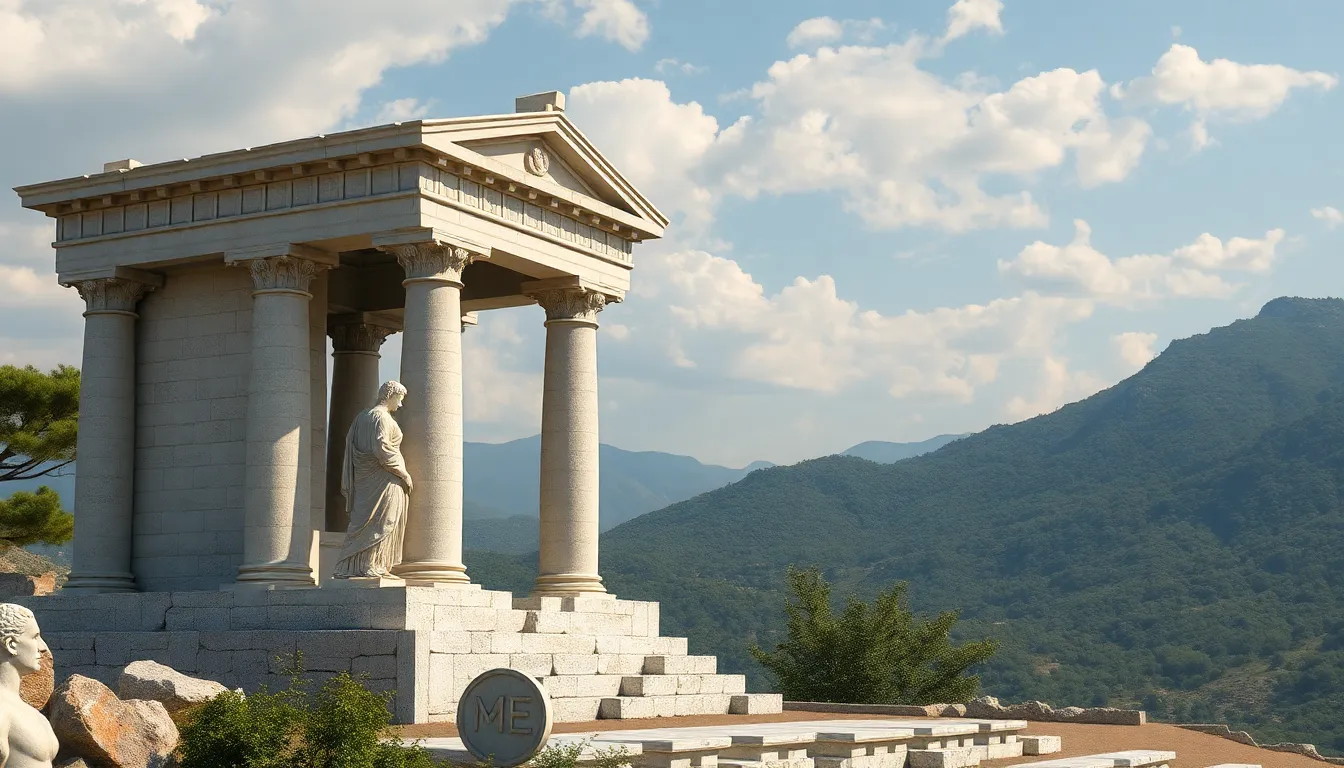
The artistic expressions of ancient Greece were heavily influenced by mythology, with sculptors, potters, and playwrights drawing inspiration from mythological themes to explore the concept of harmony. The Parthenon, with its intricate sculptures depicting mythological scenes, serves as a testament to the harmony of art and architecture.
B. How art portrays the concept of harmony and its significance
Art in ancient Greece often depicted harmonious proportions and balance, reflecting the ideals of beauty rooted in mythology. The use of symmetry in sculpture and the harmony of lines and colors in pottery illustrate the Greeks’ pursuit of aesthetic and moral harmony.
C. The influence of mythological themes on later artistic movements
The influence of Greek mythology on later artistic movements cannot be overstated. The Renaissance, for example, saw a revival of classical themes, with artists like Raphael and Michelangelo drawing upon Greek myths to explore human emotions and ideals of harmony.
VII. The Legacy of Greek Myths on Modern Concepts of Harmony
A. Continuation of Greek mythological themes in contemporary culture
Greek myths continue to resonate in contemporary culture, influencing literature, film, and art. Modern adaptations of mythological stories often explore themes of harmony, conflict, and human relationships, demonstrating the timeless nature of these narratives.
B. The impact of Greek concepts of harmony on Western philosophy
The concepts of harmony articulated by Greek philosophers have profoundly impacted Western philosophy, shaping discussions on ethics, politics, and aesthetics. The pursuit of harmony remains a central theme in philosophical discourse, reflecting the enduring legacy of Greek thought.
C. Relevance of Greek myths in today’s discussions of balance and harmony
In today’s world, where social and environmental issues often disrupt harmony, Greek myths provide valuable insights into the importance of balance and cooperation. They encourage a reflection on the interconnectedness of human relationships and the natural world, underscoring the need for harmony in all aspects of life.
VIII. Conclusion
In summary, the exploration of Greek myths reveals a rich tapestry of ideas surrounding the concept of harmony. From their historical origins and philosophical implications to their representation in art and their relevance today, myths serve as a vital lens through which we can understand the complexities of harmony in both nature and human society.
The enduring nature of Greek myths underscores their significance in our quest for harmony, illustrating how ancient narratives continue to inform our understanding of balance in a modern context. Ultimately, the integration of myth and philosophy offers profound insights into the pursuit of harmony in our lives.