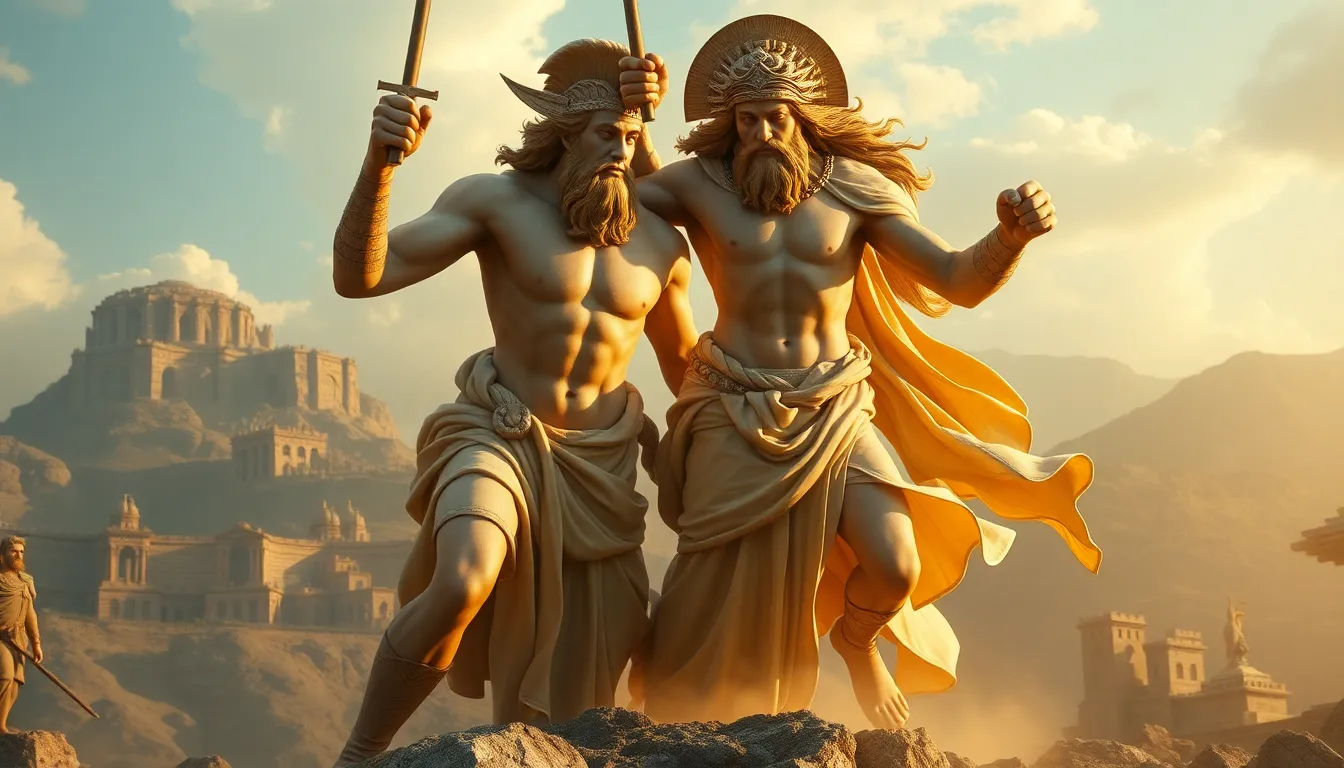
The Role of the Dioscuri in the Gigantomachy: Twin Heroes in Battle
I. Introduction
The Gigantomachy, a significant and dramatic episode in Greek mythology, depicts the epic battle between the Olympian gods and the giants born from Gaia, the Earth. This conflict symbolizes the struggle between order and chaos, civilization and barbarism. Among the heroes who participated in this monumental clash were the Dioscuri, twin brothers Castor and Pollux, who played a crucial role in aiding the gods.
The Dioscuri, known for their bravery and prowess in battle, are among the most celebrated figures in Greek mythology. Their significance extends beyond mere warriors; they embody the ideals of brotherhood, loyalty, and the duality of existence. This article explores the background of the Gigantomachy, the origins and mythological significance of the Dioscuri, their contributions during the battle, and their lasting impact on culture and art.
II. Background of the Gigantomachy
A. Definition and context of the Gigantomachy
The Gigantomachy refers to the legendary battle fought between the giants, offspring of Gaia, and the Olympian gods led by Zeus. This struggle was more than just a physical confrontation; it represented the transition from primordial chaos to the ordered world of the gods. The giants, symbolizing chaos and disorder, sought to overthrow the Olympians and claim the heavens for themselves.
B. Key figures involved in the conflict
Among the key figures in this mythic battle were:
- Zeus – The king of the gods and the primary leader of the Olympian forces.
- Hera – The queen of the gods, who played a significant role in strategizing against the giants.
- Athena – The goddess of wisdom and war, who was pivotal in the battle tactics.
- Heracles – A demigod known for his strength, who fought valiantly against the giants.
- The Dioscuri (Castor and Pollux) – The twin brothers who provided crucial support to the Olympian gods.
C. Importance of the battle in Greek mythology and culture
The Gigantomachy is not only a tale of physical combat but also a narrative that illustrates the triumph of civilization over chaos. It was celebrated in various forms of art and literature, highlighting the moral and philosophical underpinnings of Greek society. The victory of the gods reinforced their authority and established the order of the cosmos, making it a foundational myth in Greek culture.
III. The Dioscuri: Origins and Mythological Significance
A. Birth and lineage of Castor and Pollux
Castor and Pollux, collectively known as the Dioscuri, are the sons of Leda, a mortal woman, and Zeus, the king of the gods. Their lineage is significant as it underscores the dual nature of their existence: Castor is mortal, while Pollux is immortal, leading to their complex relationship and complementary roles.
B. Exploration of their duality and complementary roles
The duality of the Dioscuri reflects the balance between life and death, human experience and divine intervention. While Castor represents the mortal aspect, known for his skills in horsemanship and agriculture, Pollux embodies the divine, celebrated for his boxing prowess and bravery in battle. Together, they symbolize the interdependence of the human and divine realms.
C. The Dioscuri’s status as patrons of sailors and athletes
The Dioscuri were revered as protectors of sailors and athletes, reflecting their dual nature and roles in society. They were often invoked for safe passage across the seas and success in athletic competitions. Festivals and dedications in their honor were common, showcasing their importance in both maritime and athletic contexts.
IV. The Dioscuri’s Involvement in the Gigantomachy
A. Their role in aiding the Olympian gods
During the Gigantomachy, the Dioscuri played a vital role in supporting the Olympian gods. Their bravery and combat skills were instrumental in turning the tide of battle against the giants. They fought alongside other heroes, showcasing their loyalty and valor.
B. Specific battles and feats attributed to the twins
Throughout the conflict, the Dioscuri were involved in several notable battles. Some of their feats include:
- Defeating the Giant Polybotes – The twins worked together to overwhelm this formidable foe, demonstrating their skill and teamwork.
- Rallying the troops – The Dioscuri inspired both mortals and gods, boosting morale during the fierce confrontations.
- Strategic maneuvers – Their keen sense of strategy allowed them to outsmart the giants on various occasions.
C. Analysis of their contributions to the victory of the gods
The contributions of the Dioscuri were not merely physical; they symbolized the unity and cooperation essential for victory. Their presence on the battlefield represented the strength of brotherhood and the importance of standing together against overwhelming odds. This camaraderie was pivotal in securing the ultimate triumph of the Olympians.
V. Symbolism of the Dioscuri in Battle
A. Representation of brotherhood and loyalty
The Dioscuri epitomize the values of brotherhood and loyalty in Greek mythology. Their unwavering support for each other, even in the face of death, serves as a powerful symbol of familial bonds. This representation resonates deeply within the context of battle, where trust and loyalty can determine victory or defeat.
B. The duality of life and death in their mythology
The myth of the Dioscuri also explores themes of life and death. Castor’s mortality juxtaposed with Pollux’s immortality highlights the fragility of human life and the enduring nature of the divine. This duality serves as a reminder of the inevitable fate that awaits all mortals, while also emphasizing the possibility of legacy through heroic deeds.
C. The Dioscuri as symbols of hope and protection
Throughout history, the Dioscuri have been regarded as symbols of hope and protection. Their successful interventions on behalf of the gods and mortals alike inspire confidence and courage. In times of peril, sailors and athletes alike would call upon them for guidance and support, reinforcing their role as guardians in both the physical and spiritual realms.
VI. Artistic Representations of the Dioscuri in the Gigantomachy
A. Overview of ancient artworks depicting the Dioscuri
Ancient Greek art frequently depicted the Dioscuri, showcasing their heroic stature and significance in the Gigantomachy. From vase paintings to sculptures, their images served to immortalize their contributions to mythology. Notable examples include:
- Vases illustrating scenes from the Gigantomachy featuring Castor and Pollux in combat.
- Sculptures in temples dedicated to the Dioscuri, often portraying them in dynamic poses that emphasize their martial prowess.
- Frescos and mosaics that depict the twins alongside other heroes in the battle against the giants.
B. Analysis of themes and styles in these representations
The artistic representations of the Dioscuri often highlight themes of heroism, duality, and divine favor. Artists used various styles to convey their significance:
- Dynamic poses – To emphasize their action-oriented roles in battle.
- Contrasting colors – Symbolizing the duality of their nature, with Castor often depicted in warmer hues representing mortality and Pollux in cooler tones representing divinity.
- Symbolic imagery – Elements such as stars or horses, signifying their roles as patrons of sailors and athletes.
C. The impact of these artistic expressions on cultural perceptions
The artistic portrayal of the Dioscuri significantly influenced cultural perceptions of heroism and kinship in ancient Greece. Their depiction in art not only reinforced their status as protectors but also served as a means of storytelling, educating the public about their myths and the values they represented. This artistic legacy helped cement their place in both popular and religious culture.
VII. Legacy of the Dioscuri in Later Traditions
A. The influence of