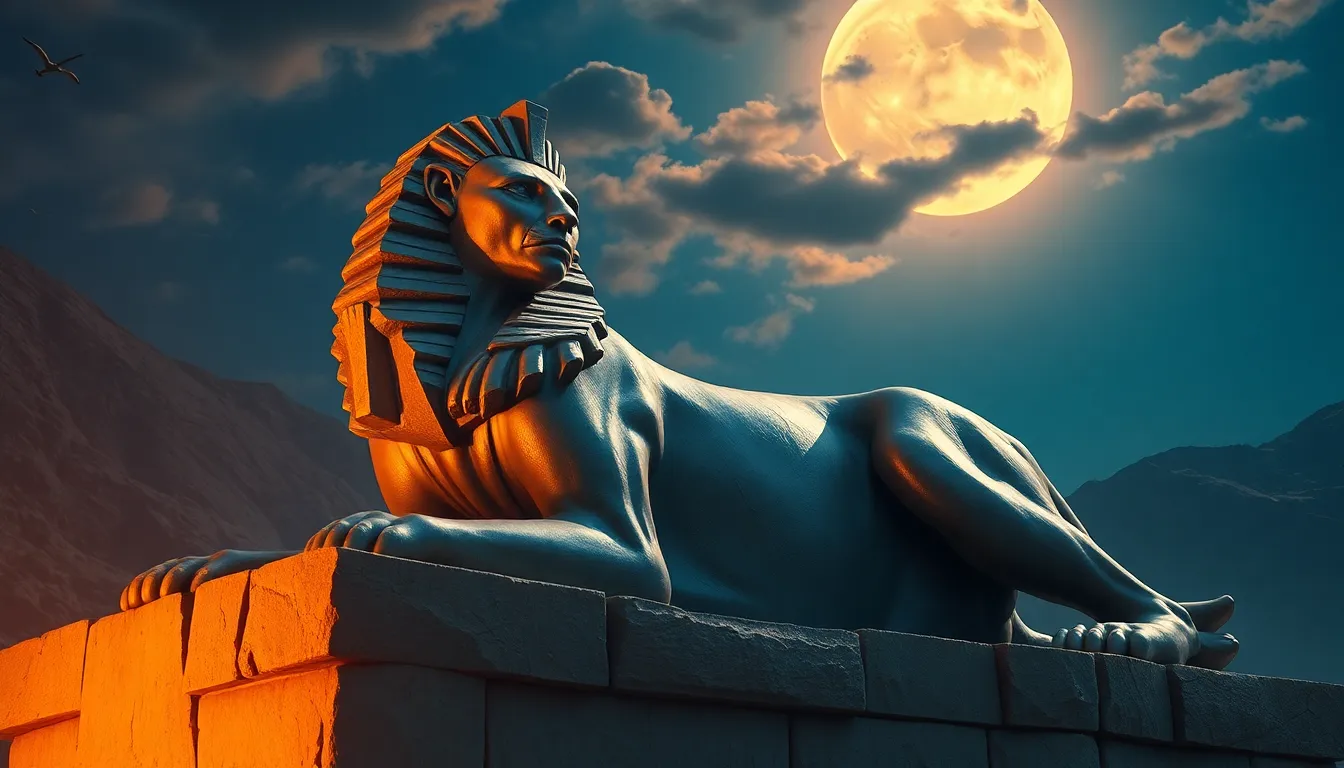
The Role of the Sphinx in the Gigantomachy: The Riddler’s Influence
I. Introduction
The Gigantomachy is one of the most significant battles in Greek mythology, representing the struggle between the Olympian gods and the giants born from Gaia. This epic conflict is imbued with themes of chaos versus order, as the gods strive to maintain their dominion over the cosmos. Within this rich tapestry of myth, the Sphinx stands out as a compelling figure, embodying both mystery and intellect.
This article aims to explore the Sphinx’s influence on the Gigantomachy, examining her role as a guardian of knowledge, the riddles she posed, and how these elements contributed to the overarching narrative of gods battling against the forces of chaos.
II. Understanding the Gigantomachy
The Gigantomachy, literally meaning “the battle of the giants,” is a central mythological episode that illustrates the struggle for supremacy between the Olympian deities and the monstrous giants. This conflict is not just a physical battle but also a representation of the cosmic order, where the gods symbolize civilization and the giants represent primitive chaos.
A. Definition and importance in Greek mythology
The Gigantomachy is a crucial mythological event that signifies the transition from chaos to order. It is often depicted in ancient art and literature, serving as a metaphor for the triumph of civilization over barbarism.
B. Key players: gods, giants, and heroes
- Gods: The Olympian deities, led by Zeus, played a central role in the conflict, using their powers to combat the giants.
- Giants: Born from Gaia, these formidable creatures sought to overthrow the gods and reclaim their dominion over the earth.
- Heroes: Figures like Heracles often assisted the gods during this conflict, showcasing the interplay between divine and human strength.
C. Thematic elements of chaos and order in the conflict
The Gigantomachy embodies the struggle between chaos and order, with the giants representing the chaotic forces of nature and the gods symbolizing order, civilization, and rationality. This theme resonates throughout Greek mythology, illustrating the necessity of balance in the universe.
III. The Sphinx: Mythical Background
The Sphinx is a fascinating creature in Greek mythology, often depicted with the body of a lion, the wings of an eagle, and the head of a woman. Her character is steeped in symbolism and reflects various themes prevalent in ancient culture.
A. Origins and characteristics of the Sphinx
The Sphinx is believed to have originated from Egyptian mythology, but the Greek version embodies unique characteristics. She is known for her role as a guardian of knowledge and as a harbinger of doom for those who cannot solve her riddles.
B. Symbolism of the Sphinx in ancient Greek culture
- Wisdom: The Sphinx represents the quest for knowledge, often testing the intelligence of those who encounter her.
- Enigma: Her riddles reflect the complexities of life and the challenges of understanding the world.
- Guardian: As a protector of sacred knowledge, the Sphinx embodies the idea that wisdom must be earned.
C. The Sphinx’s riddles: a reflection of knowledge and wisdom
The most famous of the Sphinx’s riddles is “What walks on four legs in the morning, two legs at noon, and three legs in the evening?” This riddle symbolizes the stages of human life, emphasizing the Sphinx’s role as a judge of intelligence and insight.
IV. The Sphinx’s Role in the Gigantomachy Narrative
In the context of the Gigantomachy, the Sphinx’s presence serves as a critical narrative device that enhances the story’s complexity and depth.
A. The Sphinx’s connection to the giants and their rebellion
The Sphinx can be seen as a reflection of the giants’ own chaotic nature. Just as the giants sought to overthrow the gods, the Sphinx challenged the heroes and mortals, testing their worthiness and intellect.
B. The metaphorical interpretation of the Sphinx as a guardian of knowledge
As a guardian of knowledge, the Sphinx represents the challenges that must be overcome to achieve enlightenment and victory. Her riddles symbolize the trials that the gods and heroes must face in their quest for power.
C. How the Sphinx’s riddles reflect the challenges faced by the gods
The riddles posed by the Sphinx serve as a metaphor for the larger challenges faced by the gods during the Gigantomachy. Just as heroes must use their wits to solve her riddles, the gods must utilize their intellect and cunning to defeat the giants.
V. The Riddler’s Influence: The Sphinx as a Catalyst for Conflict
The Sphinx’s riddles play a pivotal role in the narrative, influencing both the heroes and the gods in their strategies against the giants.
A. The Sphinx’s riddles as a test for heroes
Many heroes, including Oedipus, encountered the Sphinx and were compelled to solve her riddles. Their success or failure in this endeavor often determined their fate, highlighting the importance of wisdom in overcoming brute strength.
B. The impact of the riddles on the strategies of gods and giants
The Sphinx’s riddles served as a reminder that intelligence and strategy could be just as crucial as strength in battle. The gods, aware of the challenges posed by the giants, often devised clever plans to outsmart their foes.
C. The role of cunning and intellect in overcoming brute strength
- In many myths, the gods employed cunning tactics to outmaneuver the giants.
- The Sphinx’s riddles emphasized the need for wisdom in a world where raw power often threatened to overwhelm.
- Heroes who relied solely on strength were often met with failure, underscoring the importance of a balanced approach.
VI. Artistic Representations of the Sphinx in the Gigantomachy
The Sphinx has been a popular subject in ancient art, where her imagery has been used to convey deeper meanings related to knowledge, wisdom, and the struggle between chaos and order.
A. Analysis of ancient art depicting the Sphinx during the Gigantomachy
Ancient pottery, sculptures, and frescoes often depict the Sphinx alongside scenes of the Gigantomachy, emphasizing her role as a critical figure in the narrative. These artistic representations highlight the tension between the Sphinx’s enigmatic nature and the heroic endeavors of the gods.
B. How artists interpreted the Sphinx’s riddles and symbolism
Artists took creative liberties in portraying the Sphinx, often illustrating her riddles through symbolic imagery. This allowed viewers to engage with the deeper themes of knowledge and the quest for understanding.
C. The evolution of the Sphinx’s imagery through the ages
Over time, the depiction of the Sphinx has evolved, reflecting changing cultural attitudes towards knowledge and mystery. From ancient Greece to the modern era, she continues to fascinate artists and storytellers alike.
VII. The Legacy of the Sphinx and Its Riddles
The Sphinx’s influence extends beyond ancient mythology, impacting later myths, literature, and cultural expressions.
A. The Sphinx’s influence on later myths and literature
The archetype of the Sphinx has appeared in various cultures, often symbolizing the dual nature of wisdom and danger. Her riddles and challenges have inspired countless stories, including modern interpretations in literature and film.
B. Modern interpretations of the Sphinx as a symbol of enigma
In contemporary culture, the Sphinx is often viewed as a symbol of mystery and the unknown. Her riddles continue to captivate individuals, representing the universal quest for knowledge and understanding.
C. The enduring appeal of riddles in storytelling and culture
- Riddles have remained a popular form of storytelling, engaging audiences and prompting reflection.
- The Sphinx’s riddles exemplify the timeless nature of challenges that require intellect and insight.
- In various cultures, riddles serve as a means to convey deeper truths and moral lessons.
</