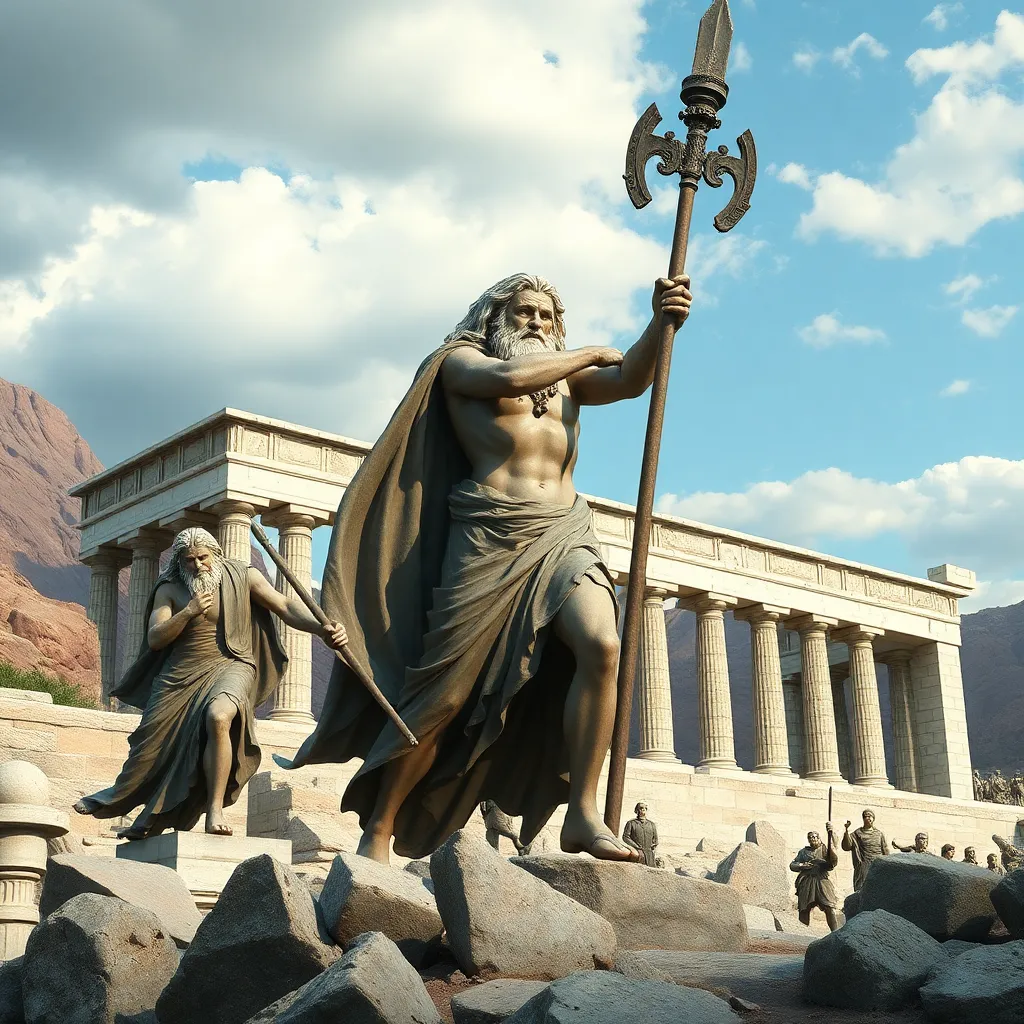
The Role of Titans in Greek Tragedies and Plays
I. Introduction
In Greek mythology, Titans are the primordial beings that preceded the Olympian gods. They are often depicted as powerful entities representing various aspects of nature and human experience. These colossal figures played a significant role in shaping the world and the myths that surround it.
Greek tragedies are dramatic works that explore profound themes of human existence, fate, and morality. They hold a significant place in the cultural heritage of ancient Greece, serving as both entertainment and a medium for philosophical exploration. The purpose of this article is to delve into the role of Titans in Greek theatrical works, examining their thematic significance and impact on character development.
II. Historical Context of Titans in Mythology
The origins of the Titan mythos can be traced back to ancient Greek cosmogony, where Titans were born from Gaia (Earth) and Uranus (Sky). They symbolize the forces of nature and the raw power of creation.
The Titanomachy, a legendary battle between the Titans and the Olympians, marked a pivotal moment in mythology. This conflict was not merely a struggle for power but also a representation of the transition from chaos to order in the universe.
- Cronus: The leader of the Titans, associated with time and harvest.
- Rhea: The mother of the Olympian gods, symbolizing fertility and motherhood.
- Oceanus: The Titan of the ocean, representing the vastness of water.
- Hyperion: The Titan of light, often associated with the sun.
- Prometheus: The Titan known for his intelligence and as a benefactor to humanity.
III. Thematic Significance of Titans in Greek Tragedies
The Titans in Greek tragedies often embody significant themes such as power, hubris, and the struggle between fate and free will. Their narratives frequently explore the consequences of defying divine order or the natural laws of the universe.
- Representations of power and hubris: Titans often personify immense power, and their stories reveal the dangers of excessive pride and ambition.
- The struggle between fate and free will: Many Titan narratives emphasize the tension between predestined outcomes and individual choices.
- Ethical dilemmas and moral lessons: The actions of Titans often lead to moral quandaries, forcing characters and audiences alike to reflect on ethical principles.
IV. Prominent Titans Featured in Greek Plays
Several Titans stand out in Greek tragedies, each with unique themes and implications:
- Cronus: Often depicted as a tyrannical father, his story highlights themes of authority, fear, and the cyclical nature of power.
- Prometheus: His act of defiance in bringing fire to humanity symbolizes rebellion against oppressive authority and the quest for knowledge.
- Atlas: Representing burden and endurance, Atlas embodies the struggle to bear the weight of responsibility and fate.
V. Case Studies: Titans in Specific Tragedies
The portrayal of Titans in specific tragedies underscores their thematic depth and complexity:
- Aeschylus’s “Prometheus Bound”: This play centers on Prometheus and his punishment for defying Zeus. It explores themes of justice, rebellion, and the consequences of enlightenment.
- Sophocles’s “Oedipus Rex”: While not focused solely on Titans, the influence of Titan themes is evident in Oedipus’s struggle against fate and his tragic downfall, paralleling the Titan’s hubris.
- Euripides’s “The Suppliants”: This play incorporates Titan themes through the lens of moral responsibility and the implications of divine power in human affairs.
VI. The Evolution of Titan Portrayals in Theater
The portrayal of Titans has evolved significantly from ancient to modern interpretations. In contemporary theater, the resonance of Titan themes continues to reflect societal issues and human psychology.
- From ancient to modern interpretations: Early representations focused on their raw power, while modern adaptations often emphasize their psychological complexity.
- The impact of Renaissance and contemporary adaptations: The Renaissance revived interest in classical themes, leading to reimaginings of Titan stories that highlight human experiences.
- The relevance of Titan themes in modern narratives: Many contemporary works echo the Titans’ struggles, reflecting ongoing societal themes of power, rebellion, and ethical dilemmas.
VII. The Influence of Titans on Character Development
Titans serve as archetypes for tragic heroes, influencing character development in profound ways:
- Titans as archetypes for tragic heroes: Characters inspired by Titans often embody strengths and flaws that lead to their downfall.
- The psychological complexity of Titan characters: Titans are portrayed with intricate motivations, showcasing their internal conflicts and moral ambiguities.
- Relationships between Titans and other mythological figures: The interactions between Titans and Olympians often reveal deeper insights into themes of power, loyalty, and betrayal.
VIII. Conclusion
In summary, the Titans hold a significant place in Greek tragedies, representing complex themes of power, fate, and moral dilemmas. Their narratives not only captivated ancient audiences but also continue to influence literature and theater today.
Reflecting on the lasting impact of Titans, we see their themes resonate in contemporary society, reminding us of the timeless struggle between ambition and responsibility. Ultimately, the exploration of Titan themes in Greek tragedies offers valuable insights into the human condition, making them relevant across generations.